Africa is a big trip from the United States, and it rewards careful planning. The flights are long, the time difference is real, and the best safari weeks tend to fall in the same school vacations everyone else is planning around. That is exactly where a human travel designer earns their keep: we plan your time on the ground around the flights, dates and pace that work for you.
Getting there is easier than many Americans expect. At the time of writing, Kenya Airways flies nonstop from New York to Nairobi; Delta and United fly nonstop to Johannesburg and Cape Town from Atlanta, Newark and Washington Dulles; and there are nonstops to Casablanca and Cairo too. Almost everywhere else is one connection away, through Europe, Istanbul, Addis Ababa or the Gulf.
The calendar is on your side, too. Summer vacation lines up with East Africa's dry season, when the Great Migration usually reaches Kenya's Maasai Mara. Winter break is high summer in Cape Town, and Thanksgiving week is a lovely time for Egypt's temples or Morocco's medinas.
Tell us what you're dreaming of: a first safari, a honeymoon that ends on a beach, a multigenerational trip for a big birthday. A travel designer builds a draft itinerary around your dates, accommodation style and budget, and every journey is customizable. Prices on our site are in US dollars, and you pay nothing until you've approved your itinerary and quote.
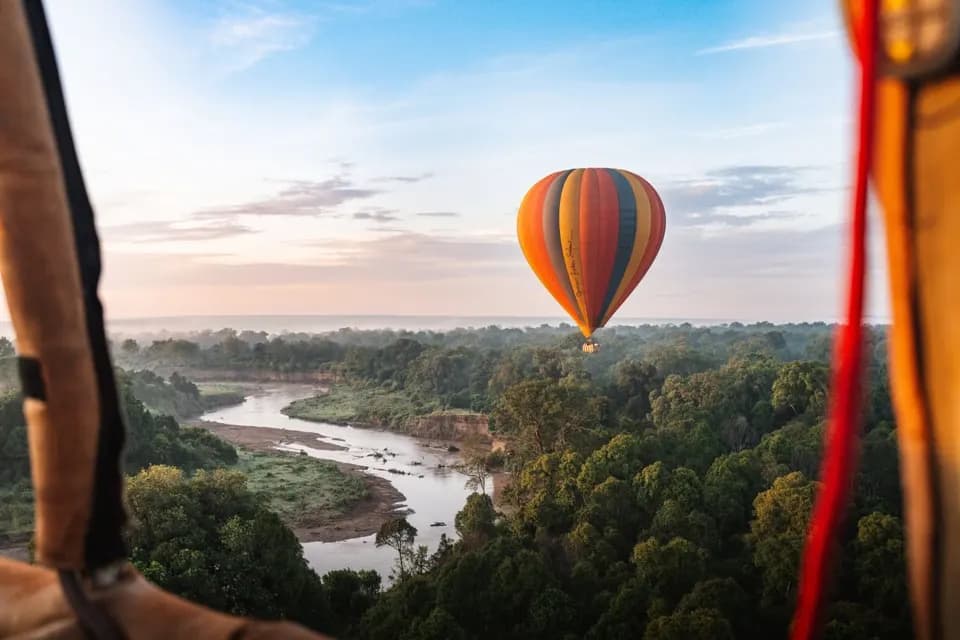
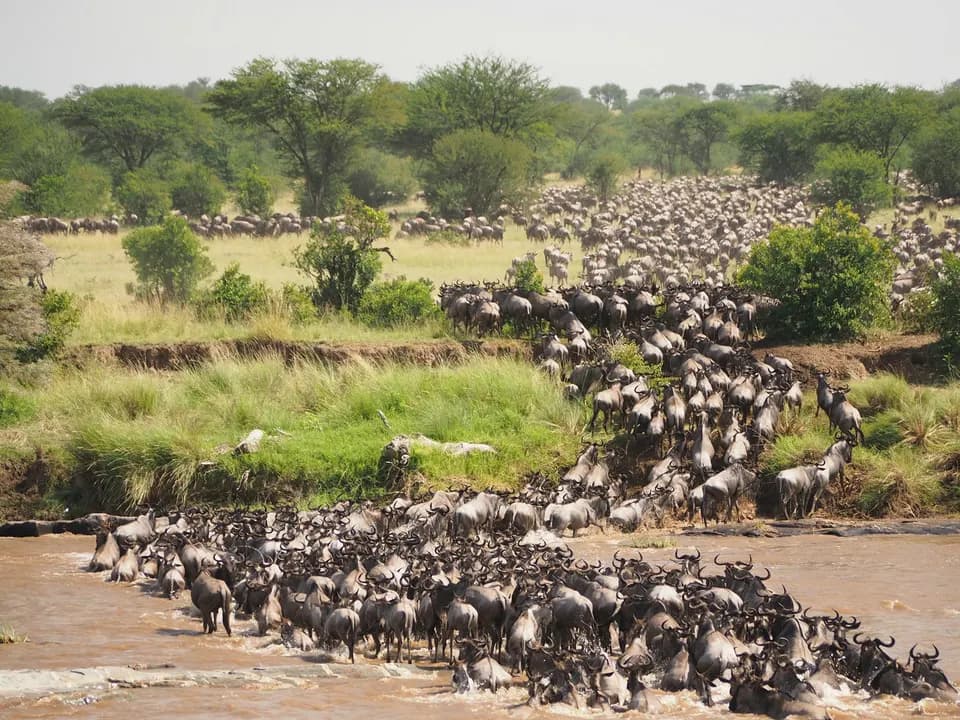
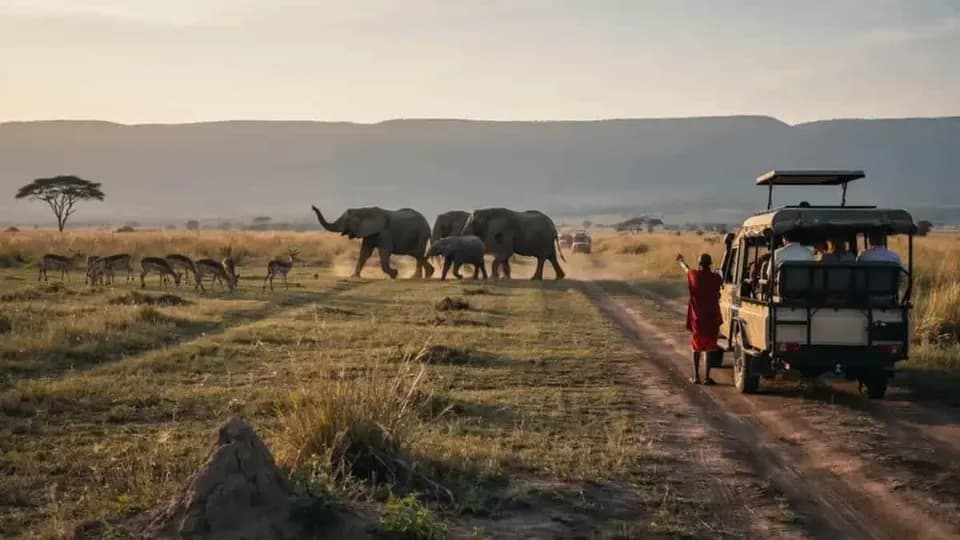
At the time of writing, Kenya is the only East African safari country with a nonstop from the U.S.: Kenya Airways flies from New York JFK to Nairobi in roughly 14 hours, and the Mara is a short light-aircraft hop from there. The migration herds usually arrive between July and October, which fits neatly into summer vacation.
The Serengeti is the big-sky safari many Americans picture. There is no nonstop from the U.S., but one-stop routings via Amsterdam, Istanbul, Addis Ababa or Nairobi reach Kilimanjaro airport, and a January–February calving safari is a rewarding alternative to busy summer weeks.
Nonstops from Atlanta, Newark and Washington Dulles make South Africa easy to combine: a private-reserve safari near Kruger plus Cape Town and the Winelands. It's only six or seven hours ahead of the East Coast, and its summer falls during our winter.
Morocco is the closest part of Africa to the East Coast: about seven hours nonstop to Casablanca, with seasonal winter nonstops to Marrakech, and at the time of writing only four or five hours ahead of New York. A medina-and-Sahara trip fits comfortably into a week and a half off.
EgyptAir flies nonstop to Cairo from several U.S. cities at the time of writing. October to April brings the most comfortable temperatures for temples and tombs, which puts Thanksgiving, winter break and spring break in the sweet spot.
Gorilla trekking is a memorable way to extend an East African safari. Kigali is a one-stop connection from the U.S. or a short regional flight from Nairobi, and trekking permits are limited each day, so it pays to secure them early.
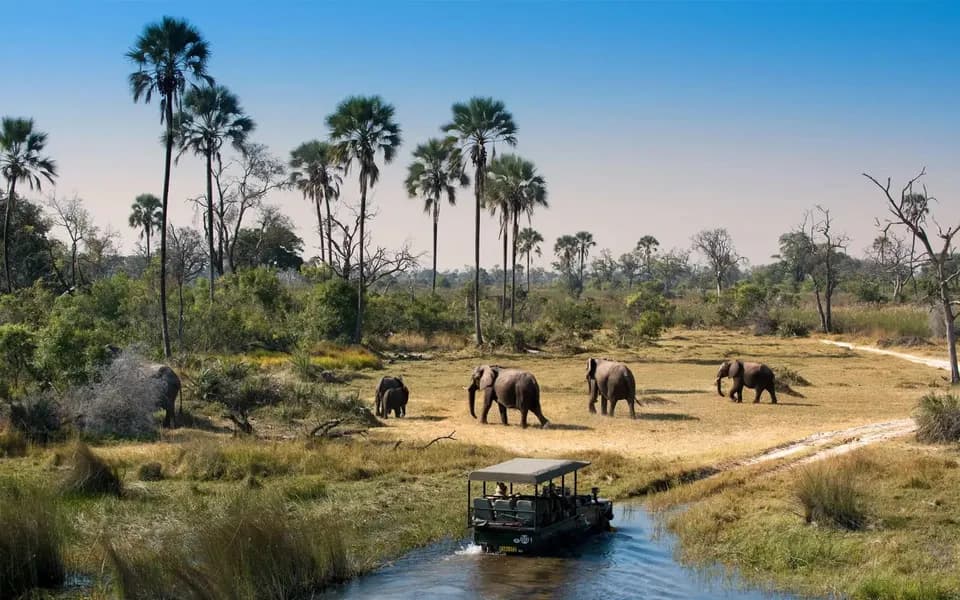
For second-time safari-goers, Botswana's water-based safaris feel completely different from East Africa: mokoro canoes, fly-in camps and very few vehicles. Maun is a short hop from Johannesburg, and the delta's floodwaters usually peak during the U.S. summer.
What travelers from the United States love
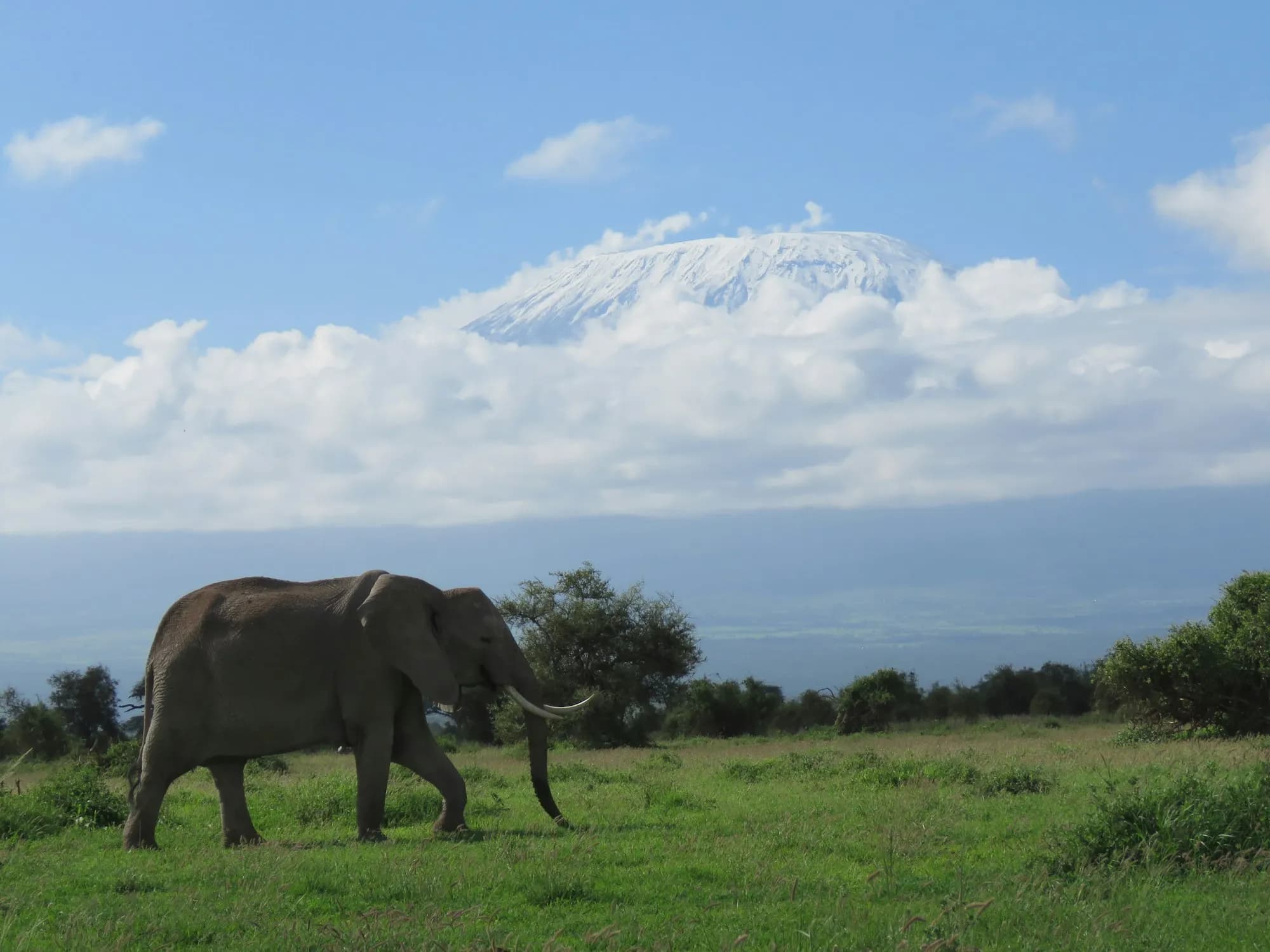
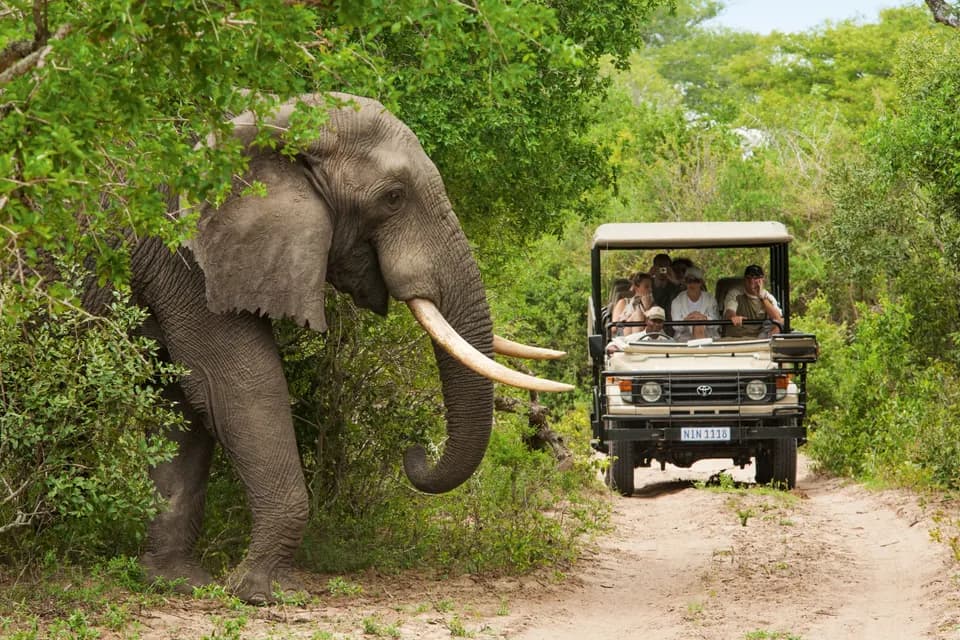
Safari & Wildlife — Often the heart of a first trip to Africa. We plan for quality over checklist speed: fewer, longer stays, the right season for the animals you care about, and a private vehicle when photography matters.
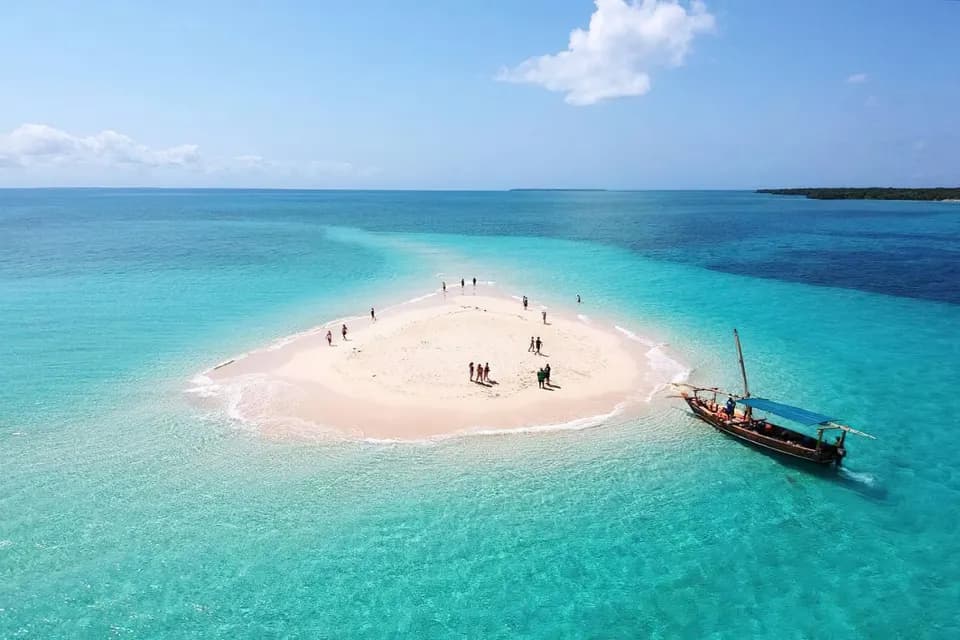
Romance & Honeymoons — A safari followed by a few days on Zanzibar, Mauritius or the Seychelles is a classic honeymoon shape, and early-summer weddings line up neatly with the East African dry season.
Family Adventures — Summer vacation and winter break are the natural windows. Some camps set minimum ages for game drives or walking safaris, so we match lodges to your children's ages from the start.
Culture & Heritage — Egypt and Morocco are the easiest cultural trips from the East Coast, with nonstop flights and a smaller time difference. A good private guide turns temples and medinas into stories rather than stops.
Cities & Food — Cape Town and the Cape Winelands are made for food and wine lovers. Give the city at least three nights and add one or two among the vineyards before or after a safari.
Who we plan for
Couples — Honeymoons, anniversaries and milestone birthdays. We balance the long-haul flights with slow days, so the trip feels romantic rather than rushed.
Families — Families traveling in summer or over winter break. We look closely at connection times, kid-friendly camps and private vehicles that let younger travelers set the pace.
Private Groups & Celebrations — Multigenerational trips and friends celebrating together. Coordinating flights from different U.S. cities into one arrival window is part of the planning.
Solo Travelers — Solo travelers who want independence without the logistics. We can arrange private guiding or small shared safaris and flag where single supplements apply.
Getting there from the United States
Departure gateways
From
Airport
Good to know
New York
John F. Kennedy International Airport (JFK)
Nonstops to Nairobi, Cairo and Casablanca at the time of writing, plus one-stop options via Europe, Istanbul and the Gulf.
Newark
Newark Liberty International Airport (EWR)
United nonstops to Johannesburg and Cape Town, and a seasonal winter nonstop to Marrakech.
Atlanta
Hartsfield-Jackson Atlanta International Airport (ATL)
Delta nonstops to Johannesburg and Cape Town, a seasonal Marrakech service and Ethiopian Airlines to Addis Ababa.
Washington, D.C.
Washington Dulles International Airport (IAD)
United to Cape Town, Ethiopian to Addis Ababa, Royal Air Maroc to Casablanca and EgyptAir to Cairo.
Chicago
O'Hare International Airport (ORD)
Ethiopian Airlines to Addis Ababa and EgyptAir to Cairo, or one stop via Europe and Istanbul.
Miami
Miami International Airport (MIA)
Royal Air Maroc nonstop to Casablanca; East and Southern Africa with one stop via Europe or Istanbul.
Los Angeles
Los Angeles International Airport (LAX)
Newer nonstops to Casablanca and Cairo; for safaris, one stop via Europe, Istanbul or the Gulf.
Houston
George Bush Intercontinental Airport (IAH)
One-stop connections through European, Istanbul and Gulf hubs, handy for travelers across the South.
Nonstop options at the time of writing
Kenya: Kenya Airways flies nonstop from New York JFK to Nairobi, roughly 14 hours eastbound and a little longer coming home. It is currently the only nonstop between the U.S. and Kenya.
South Africa: Delta flies from Atlanta to Johannesburg and Cape Town, and United from Newark to Johannesburg and Cape Town and from Washington Dulles to Cape Town. Expect roughly 14.5–16 hours outbound and a little longer on the way back; frequencies shift between seasons.
Morocco: Royal Air Maroc flies to Casablanca from New York JFK, Washington Dulles, Miami and Los Angeles. In the northern winter, United (from Newark) and Delta (from Atlanta) add seasonal nonstops to Marrakech.
Egypt: EgyptAir flies to Cairo from several U.S. gateways, including New York JFK and Washington Dulles.
Ethiopia: Ethiopian Airlines links Washington Dulles, Chicago and Atlanta with Addis Ababa, its hub for onward flights across Africa.
One-stop routings
There are no nonstops to Tanzania, Zanzibar, Rwanda, Botswana or the Indian Ocean islands. Common connections include Amsterdam (KLM), Istanbul (Turkish Airlines), Addis Ababa (Ethiopian), Nairobi (Kenya Airways), Paris (Air France) and Brussels (Brussels Airlines), plus Gulf hubs such as Doha and Dubai. Service to Kilimanjaro and Zanzibar changes seasonally, so we check the current options for your dates.
Journey times
From the East Coast, allow roughly 17–22 hours of total travel time for a one-stop trip to Nairobi or Kilimanjaro; from the West Coast, 21–26 hours is typical. That's why we usually plan an easy first night near the arrival airport.
Schedules change often. We only book flights if you ask, and we're happy to plan around tickets you've booked yourself, including award seats.
Entry requirements for travelers from the United States
Entry rules change. Here is what official sources said when we last checked — always confirm with the official source and your airline before you travel.
Passport
At our last check, USAGov advised renewing early because some countries and airlines refuse travelers whose passports expire in less than six months. Blank-page rules vary by destination, and a damaged passport can't be renewed: you have to apply for a new one in person.
Read more
Validity. Some countries and airlines refuse entry if your passport expires in less than six months, so USAGov recommends renewing early, as processing times vary. At our last check, the State Department listed six months' validity for Kenya and Tanzania, Egypt's e-Visa portal asked for six months from your arrival date, and South Africa required at least 30 days beyond the date you leave.
Blank pages. The State Department listed two blank pages for Kenya, one for Tanzania and Morocco, and two consecutive, completely blank visa pages for South Africa (endorsement pages don't count, and travelers without them are denied entry). Multi-country safaris fill pages quickly, so leave room to spare.
Damage. A damaged passport can't be renewed. You must apply for a new one in person using Form DS-11, so replace it well before you travel.
Names. If your name changes, you must get an updated passport. Book flights, eTAs and e-visas in your name exactly as it's printed in your passport. CDC's yellow fever certificate guidance also says the certificate should show your name as it appears in your passport.
The U.S. Department of State issues passports. Check its current processing times before you book.
Rules change — always confirm with the official source before you travel, and check the requirements of any country you transit.
Travel insurance
At our last check, CDC advised considering medical evacuation insurance for remote destinations, noting that emergency transport to a high-quality hospital could otherwise cost more than $100,000. Medicare.gov said Medicare usually doesn't cover health care while you're traveling outside the U.S.
Read more
Why it matters on safari. Good medical care can be far away. The State Department notes that in Kenya, appropriate treatment for injuries is typically available only in or near Nairobi, Mombasa and Kisumu. CDC suggests considering medical evacuation insurance for remote destinations, because emergency transport to a high-quality hospital could otherwise cost more than $100,000.
Check what you already have.
Medicare.gov says Medicare usually doesn't cover health care while you're traveling outside the U.S., with limited exceptions. The State Department's pages for our destinations also say Medicare/Medicaid doesn't apply overseas and that the U.S. government doesn't pay travelers' medical bills.
Most hospitals and doctors overseas don't accept U.S. health insurance, so you may need to pay and then claim reimbursement.
What to compare. CDC describes three kinds of cover: trip cancellation or disruption, travel health insurance, and medical evacuation insurance. Check exclusions for pre-existing conditions and adventure activities, look for a policy that pays hospitals directly, and make sure evacuation cover includes a 24-hour physician support center. The State Department strongly recommends supplemental insurance that covers medical evacuation.
Zanzibar also requires its own mandatory insurance, bought separately; see our Zanzibar entry requirements.
Rules change — always confirm with the official source before you travel, and check the requirements of any country you transit.
Health
At our last check, CDC advised booking an appointment with your healthcare provider or a travel health specialist at least 4–6 weeks before you leave. Some countries require a yellow fever certificate depending on your route, and malaria is a risk in many safari areas.
Read more
Book early. CDC suggests seeing your healthcare provider or a travel health specialist at least 4–6 weeks before you leave. Share your full itinerary (including layovers) and planned activities so they can give advice that fits your trip.
Official destination pages. Check CDC Travelers' Health for every country on your route. Each page shows which vaccines or medicines you may need, which health risks are a concern, and any yellow fever entry requirements.
Yellow fever certificates. Some countries ask for proof of yellow fever vaccination on the International Certificate of Vaccination or Prophylaxis (the "yellow card"). Some require it from all arrivals; others only if you arrive from, or have a layover in, a country with yellow fever risk, so the order of your stops can matter. Certificates are issued by authorized yellow fever vaccination clinics and become valid 10 days after vaccination. Without a valid certificate you may be denied entry, quarantined or asked to be vaccinated at the border.
Malaria. Malaria is a risk in many safari areas. For example, CDC lists transmission in all areas of Kenya below 2,500 m (8,200 ft), including game parks, and in all areas of Tanzania below 1,800 m. Ask your provider how to protect yourself.
Rules change — always confirm with the official source before you travel, and check the requirements of any country you transit.
This is general guidance, not legal advice. Requirements depend on your nationality, passport and route. Always verify with official authorities before departure.
Destination by destination
Egypt+
Egypt
Entry rules change. Here is what official sources said when we last checked — always confirm with the official source and your airline before you travel.
Visa & entry
At our last check, U.S. citizens needed a visa to enter Egypt. You could apply in advance on Egypt's official e-Visa portal or, according to the State Department, get a single-entry 30-day tourist visa on arrival at Egyptian airports.
Read more
e-Visa (apply ahead). Use only Egypt's official e-Visa portal. The State Department warns that many other sites claim to offer e-visas, some at double the price. The portal says to create your application at least 7 days before departure; once it's approved, print the e-Visa and show it on arrival. At the time of checking, it listed USD 30 for a single-entry and USD 65 for a multiple-entry tourist visa.
Visa on arrival. The State Department's page (last updated August 2025) describes a renewable single-entry 30-day tourist visa at Egyptian airports for approximately $25, paid in U.S. dollars cash, or about $60 for multiple entry. These official figures differ from the e-Visa portal's, so check the portal for current costs.
Passport and documents. The portal lists a passport valid for at least six months from your arrival date, your e-Visa printout, your itinerary and hotel details. Officials can refuse entry without explanation, even to visa holders.
Medications and yellow fever. Medications are checked on arrival, so keep them in their original packaging with a letter from your doctor. U.S. citizens have been arrested for bringing medical marijuana or CBD products into Egypt, even with a prescription. Travelers arriving from a yellow fever-infected area must show proof of vaccination.
Rules change — always confirm with the official source before you travel, and check the requirements of any country you transit.
This is general guidance, not legal advice. Requirements depend on your nationality, passport and route. Always verify with official authorities before departure.
Morocco+
Morocco
Entry rules change. Here is what official sources said when we last checked — always confirm with the official source and your airline before you travel.
Visa & entry
At our last check, U.S. citizens didn't need a visa for visits to Morocco of less than 90 days, and Morocco's Ministry of Foreign Affairs listed the United States among visa-exempt countries. The State Department asked for a valid passport with at least one blank page.
Bring a valid passport with at least one blank page for the entry stamp.
We suggest keeping at least six months' validity: USAGov notes that some countries and airlines refuse travelers whose passports expire within six months.
The State Department advises carrying a copy of your passport at all times as proof of identity and U.S. citizenship.
Staying longer. If you stay beyond 90 days without having requested an extension, you'll need to appear before a judge before you can leave, and clearance may include a fine. Ask the immigration office at the local police station about extensions.
Lost passports. Get a police report where the loss or theft happened. Police have recently asked for evidence of U.S. citizenship before issuing one, and airport police may ask to see the report when you leave on a replacement passport. Emergency passports are issued by the U.S. Consulate General in Casablanca.
Rules change — always confirm with the official source before you travel, and check the requirements of any country you transit.
This is general guidance, not legal advice. Requirements depend on your nationality, passport and route. Always verify with official authorities before departure.
South Africa+
South Africa
Entry rules change. Here is what official sources said when we last checked — always confirm with the official source and your airline before you travel.
Visa & entry
At our last check, U.S. passport holders didn't need a visa for visits to South Africa of up to 90 days. The State Department listed strict passport rules (valid at least 30 days after you leave, with two consecutive blank visa pages), and since July 2026 South Africa has required an online traveller declaration before you travel.
Read more
Visa. South Africa's Department of Home Affairs lists U.S. passport holders as exempt from visas for stays of up to 90 days.
Passport (strictly enforced). The State Department says your passport must be valid for 30 days after you leave South Africa and must have two consecutive, completely blank visa pages when you arrive (endorsement pages don't count). Travelers without them are denied entry, which is easy to overlook after a multi-country safari.
Online traveller declaration. From 1 July 2026, the South African Revenue Service (SARS) requires travelers entering or leaving South Africa to submit a traveller declaration online before they travel, with limited paper exceptions. Submit it no more than 24 hours before departure on the last leg of your journey to South Africa. Every traveler, including children, needs one.
Electronic Travel Authorisation. South Africa launched an ETA in August 2026. Home Affairs said it would become compulsory, step by step, for nationalities that need visas, and would be voluntary for visa-exempt travelers who want the faster ETA queue. Check for changes before you fly.
Families and health. Minors face special travel-document requirements, so check Home Affairs if you're traveling with children. If you arrive from a yellow fever risk country, you must show a valid yellow fever certificate.
Rules change — always confirm with the official source before you travel, and check the requirements of any country you transit.
This is general guidance, not legal advice. Requirements depend on your nationality, passport and route. Always verify with official authorities before departure.
Tanzania+
Tanzania
Entry rules change. Here is what official sources said when we last checked — always confirm with the official source and your airline before you travel.
Visa & entry
At our last check, U.S. citizens needed a visa for Tanzania. Tanzania's immigration guidelines said U.S. passport holders visiting as tourists must apply for the multiple-entry visa (USD 100 at the time of checking), ideally online in advance; the State Department noted a visa can also be obtained on arrival.
Read more
Visa. Tanzania requires U.S. passport holders traveling for tourism to get the multiple-entry visa, even for a single trip. At the time of checking it cost USD 100 and was valid for up to 12 months, with stays of up to 90 days per visit. Apply through the official Tanzania e-Visa portal; Tanzania warns against applying through any other website. Online applications are processed within ten days. Wait for your Visa Grant Notice by email and show it on arrival. The State Department notes U.S. citizens can also get a tourist visa on arrival, but Tanzania recommends applying online.
Passport and documents.
At least six months' validity and one blank page.
A return ticket, and be ready to show you have enough money for your stay.
One visa covers mainland Tanzania and Zanzibar, but Zanzibar also requires its own mandatory travel insurance (see our Zanzibar entry requirements).
Yellow fever. Proof of vaccination is required if you arrive from a country where yellow fever is endemic, including after an airport transit or layover of 12 hours or more there. Check this carefully if you're combining Tanzania with Kenya, where official sources note yellow fever risk.
Rules change — always confirm with the official source before you travel, and check the requirements of any country you transit.
Travel insurance
At our last check, all foreign visitors to Zanzibar had to buy Zanzibar's Mandatory Inbound Travel Insurance from the Zanzibar Insurance Corporation (ZIC) through the official portal, even if they already had travel insurance. ZIC listed USD 44 per adult and USD 22 per child at the time of checking.
Read more
What it is. Zanzibar requires foreign visitors to hold its Mandatory Inbound Travel Insurance, sold by the national insurer, the Zanzibar Insurance Corporation (ZIC). The official portal, run by ZIC under the Government of Zanzibar's directives, says no alternative packages or providers are accepted and that applications must go through the official system; no third-party services are authorized. ZIC says the cover is mandatory even if you already have other travel or medical insurance.
Cost and cover. At the time of checking, ZIC listed USD 44 per adult and USD 22 per child (USD 22 for travelers from SADC and EAC member states), and noted that fees and coverage can change. Australia's Smartraveller describes the cover as lasting up to 92 days and warns that it has limits.
How to buy it. Apply and pay online at the official Zanzibar insurance portal before you travel, and keep your confirmation handy. The rule applies to foreign visitors entering Zanzibar, so plan for it on Serengeti-plus-Zanzibar trips too. Keep your own comprehensive travel insurance with medical evacuation as well.
A note on sources. At our check, the U.S. State Department's Tanzania page did not mention this requirement. It is published by the Government of Zanzibar and ZIC, and appears in Canadian and Australian government travel advice.
Rules change — always confirm with the official source before you travel, and check the requirements of any country you transit.
This is general guidance, not legal advice. Requirements depend on your nationality, passport and route. Always verify with official authorities before departure.
Kenya+
Kenya
Entry rules change. Here is what official sources said when we last checked — always confirm with the official source and your airline before you travel.
Visa & entry
At our last check, U.S. citizens needed an approved Electronic Travel Authorization (eTA) before traveling to Kenya, applied for online through Kenya's official eTA portal. The State Department also listed six months' passport validity and at least two blank pages.
Read more
eTA. Kenya requires every visitor, including infants and children, to hold an approved eTA before the journey starts, and U.S. citizens aren't on its exemption list. Apply only through the official Kenya eTA portal or Kenya's official mobile app, with a separate application for each traveler. You'll need a photo, contact details, your itinerary and accommodation confirmation. Show the approved eTA at departure and on arrival.
Timing and cost. The portal says applications are usually processed in about three working days, but recommends applying at least two weeks before travel. At the time of checking, a standard single-entry eTA was listed at $30, faster processing cost extra, and a five-year multiple-entry eTA for U.S. nationals was listed at $185. Fees are non-refundable, and an eTA doesn't guarantee entry: admissibility is decided at the border.
Passport. The State Department lists at least six months' validity and two blank pages. Kenya's eTA portal asks for six months and at least one blank page, so plan on two.
Yellow fever. If you're arriving from a country where yellow fever is endemic, carry proof of vaccination or you may be denied entry.
Transit. Kenya's exemption list covers passengers who connect in a Kenyan airport without leaving it. The portal also lists a separate transit eTA, so check which applies if your connection involves leaving the airport.
Rules change — always confirm with the official source before you travel, and check the requirements of any country you transit.
This is general guidance, not legal advice. Requirements depend on your nationality, passport and route. Always verify with official authorities before departure.
Practical planning
Currency & payments
Paying for your trip
Trip prices on our site are in US dollars, so there is no currency math when you compare options. Nothing is due until you've approved your itinerary and quote; Travel Ease then sends payment instructions or a secure payment link.
Money on the ground
US dollars go a long way in East Africa. Guides, camp staff and many lodges in Kenya and Tanzania accept dollars for tips and extras. Bring clean, recent-series bills in small denominations; older, torn or marked notes are often refused.
Cards work in cities and most lodges. Visa and Mastercard are the most widely accepted; American Express less so. Use a card without foreign-transaction fees and let your bank know your travel dates.
Local currency elsewhere. South Africa runs on the rand, and cards are accepted almost everywhere. In Morocco and Egypt, withdraw dirhams or Egyptian pounds from an ATM on arrival and keep small notes for tips and markets.
Tipping is customary on safari. Ask your travel designer for current guidelines for your route so you can bring the right mix of bills.
Plugs & adapters
U.S. outlets are Types A and B at 120 volts. Most of Africa runs at 220–240 volts with a mix of plug shapes, so you'll need adapters:
Type G (three rectangular pins, as in the UK): Kenya, Tanzania and Zanzibar, the Seychelles, and many outlets in Mauritius.
Types M and N: South Africa uses the large round-pin Type M, and newer Type N sockets that also accept slim two-pin Europlugs.
Types D, G and M mix across Botswana, Namibia and Zimbabwe, so a universal adapter is simplest for multi-country trips.
Types C, E and F (two round pins): Morocco, Egypt and Cabo Verde.
Phone, camera and laptop chargers are usually dual-voltage (look for "100–240V" on the label), so a plug adapter is all they need. Single-voltage hair dryers, straighteners and electric shavers need a converter, or better, a dual-voltage travel version. Many safari camps run on solar power with charging in the main area or at set hours and don't allow high-wattage appliances, so pack a power bank too.
Mobile, roaming & eSIM
You have three options, and many travelers combine them:
Your carrier's international plan. The easiest choice, but daily passes add up on a two-week trip, and partner networks vary by country.
A travel eSIM. Buy a data plan for Kenya, Tanzania, South Africa or a multi-country Africa region before you fly. Many recent U.S. iPhones are eSIM-only, so this is often the most practical option.
A local SIM or local eSIM. Best value for data-heavy trips. Kenya, Tanzania and South Africa, among others, require SIM registration with your passport, so buy from an official store (the airport is often easiest).
Phones bought through U.S. carriers are sometimes locked. Ask your carrier to unlock yours before you leave if you plan to use a third-party eSIM or local SIM.
Expect patchy or no signal deep in parks, and Wi-Fi at safari camps that is often limited to the main lounge. Across much of Africa, WhatsApp is how guides, drivers and lodges communicate, so install it before you go, even if you rarely use it at home.
Time zones & jet lag
East Africa (Kenya, Tanzania, Zanzibar) is on UTC+3 year-round, and much of Southern Africa (South Africa, Botswana, Zimbabwe, Namibia) plus Rwanda is on UTC+2. Neither region changes its clocks, but the U.S. does, so the gap shifts in March and November.
Nairobi, Arusha and Zanzibar: 7 hours ahead of New York during U.S. daylight saving time and 8 hours in winter; 10 or 11 hours ahead of Los Angeles.
Johannesburg, Cape Town and Victoria Falls: 6 hours ahead of New York in summer and 7 in winter; 9 or 10 hours ahead of Los Angeles.
Cairo: Egypt also uses summer time, so it's 7 hours ahead of New York for most of the year (6 for several weeks in spring and a few days in the fall, when the two countries change clocks on different dates).
Morocco: at the time of writing Morocco keeps GMT year-round, 4 hours ahead of New York in summer and 5 in winter.
Eastbound flights usually leave in the afternoon or evening and land the next day, so you lose most of a night. We suggest an easy first night near the airport before any early game drives, and a lighter final day before the long flight home.
Seasons & holidays
Summer vacation (June–August). Dry season across East and Southern Africa. The Great Migration usually reaches Kenya's Maasai Mara and Tanzania's northern Serengeti from around July; Kruger and Botswana offer excellent game viewing with cool mornings. It's also peak season, so plan early.
Labor Day to mid-October. A sweet spot for travelers without school-age children: river-crossing season in the Mara, the late dry season in Botswana and Zimbabwe, and fewer families on the road.
Thanksgiving week. East Africa's short rains usually bring brief showers and green landscapes. Egypt and Morocco are comfortable, and Cape Town is warming into summer.
Winter break (Christmas and New Year). High summer in Cape Town and the Winelands and a good safari window in East Africa. These are the most requested weeks of the year, so start planning about a year ahead.
January–February. Calving season on the southern Serengeti plains, and hot, mostly dry beach weather on Zanzibar.
Spring break (March–April). Great for Egypt, Morocco and South Africa. East Africa's long rains usually arrive between late March and May, when some seasonal camps close, although the green season can bring attractive rates.
When to start planning
For peak dates (July to October in Kenya and Tanzania, or Christmas and New Year anywhere) start planning 9–12 months ahead. The smaller, better-located camps have few rooms, and the most convenient flights fill up in peak weeks.
For shoulder seasons, and for Egypt, Morocco or South Africa outside the holidays, 4–6 months is usually comfortable. Gorilla trekking permits in Rwanda are limited each day, so add them to your plan as early as you can.
Check your passport's expiration date and blank pages as soon as you start planning. The Entry requirements section on this page lists verified guidance for U.S. passport holders, with official sources and last-checked dates. Always confirm with the U.S. Department of State and the destination's official channels before you travel.
A soft-sided bag. Light aircraft that serve safari camps typically limit luggage to about 15 kg (33 lb) per person in soft bags, including carry-on. We'll confirm the limit for your flights.
Layers. Early game drives in open vehicles can start in the 40s or 50s °F in June–August, warming to the 70s or 80s by midday. Forecasts are in Celsius: 10°C is 50°F and 25°C is 77°F.
Neutral colors. Khaki, olive and tan work best on game drives. Skip dark blue and black in tsetse-fly areas; bright white gets dusty fast.
Binoculars, a sun hat, sunscreen and sunglasses. A pair of binoculars per person makes a real difference.
Adapters and a power bank (see Plugs & adapters).
Small, recent US dollar bills for tips.
Medications in their original packaging, with a copy of your prescriptions.
No plastic carrier bags. Kenya and Tanzania ban them, so use packing cubes or fabric pouches.
Planning a specific destination from the United States?
Can I use airline miles for my flights and still have you plan the trip?
Yes. You're welcome to book your own international flights, including award tickets, and we'll plan everything on the ground around your arrival and departure times. Share your flight details, or the routings you're considering, when you start planning, and we'll build in the right first and last nights, connections and transfers.
We won't book any flights unless you ask. Award seats on the most convenient routes can be limited in peak season, so it's worth checking availability before you settle on dates.
Are there nonstop flights from the US to Africa for a safari?
Yes, to some destinations. At the time of writing, Kenya Airways flies nonstop from New York JFK to Nairobi (roughly 14 hours), the gateway to the Maasai Mara. Delta and United fly nonstop to Johannesburg and Cape Town from Atlanta, Newark and Washington Dulles, which suits Kruger-area safaris, and there are nonstops to Casablanca and Cairo too.
Tanzania, Zanzibar, Botswana and Rwanda need one connection, usually via Europe, Istanbul, Addis Ababa or Nairobi. Schedules and frequencies change, so we check the current options for your dates. We only book flights if you ask.
How far ahead should Americans book a Great Migration safari?
For July to October, the usual migration season in Kenya's Maasai Mara and Tanzania's northern Serengeti, start 9 to 12 months ahead, especially if you're tied to summer-vacation dates. Smaller camps close to the river crossings have few rooms, and the most convenient flights fill up in peak weeks.
If your dates are flexible, consider January–February for calving season in the southern Serengeti, or late October, when the Mara is quieter. The herds follow the rain, so their exact position is never guaranteed; we plan around where they usually are and choose camps that give you options.
Should I bring US dollars on an African safari?
Yes. For most safaris in East Africa, US dollars are the most useful cash: guides, camp staff and many lodges in Kenya and Tanzania accept them for tips and small extras. Bring clean, undamaged bills from recent series in small denominations, because older, torn or marked notes are often refused.
Cards (mainly Visa and Mastercard) work in cities and at most lodges. In South Africa, Morocco and Egypt you'll mostly use local currency from ATMs. Your trip itself is priced in US dollars, and nothing is paid until you've approved your itinerary and quote.
Do US citizens need a visa for Kenya, Tanzania or South Africa?
Entry rules for U.S. passport holders differ by country and can change at short notice, so we don't summarize them from memory. The Entry requirements section on this page lists verified guidance for each destination, with links to the official sources and the date each item was last checked.
Before you book flights, confirm the current rules with the U.S. Department of State's country information pages and the destination's official immigration or e-visa portal, and check your passport's validity and blank pages. Your travel designer can point you to the right official sources as your itinerary takes shape.
Will my US phone work on safari?
Usually, but check how. Your carrier's international day pass is the easiest option but adds up over two weeks. A travel eSIM for Kenya, Tanzania, South Africa or a multi-country Africa region is often better value, and many recent U.S. iPhones are eSIM-only anyway. Local SIMs are cheapest for heavy data use, but Kenya, Tanzania and South Africa, among others, require registration with your passport, and your phone must be unlocked.
Expect patchy signal in the parks and Wi-Fi that's often limited to the main lounge at safari camps. Install WhatsApp before you go: it's how most guides and lodges communicate.
Planning from the United States? We’ll handle the details.
Tell us your dates and dream destinations. We’ll design your journey around your flights, your holidays and your budget — no payment to start planning.