 9 days
Seychelles Island Hopping
Mahé, Praslin & La Digue
- Three islands linked by easy ferries
- Best Apr–May, Sep–Nov
From$4,200approx. ≈ £3,150approx. ≈ CA$5,750approx. ≈ A$6,400approx. ≈ €3,600per person sharing
Indian Ocean Islands
Granite islands, white beaches and La Digue by bicycle
Overview
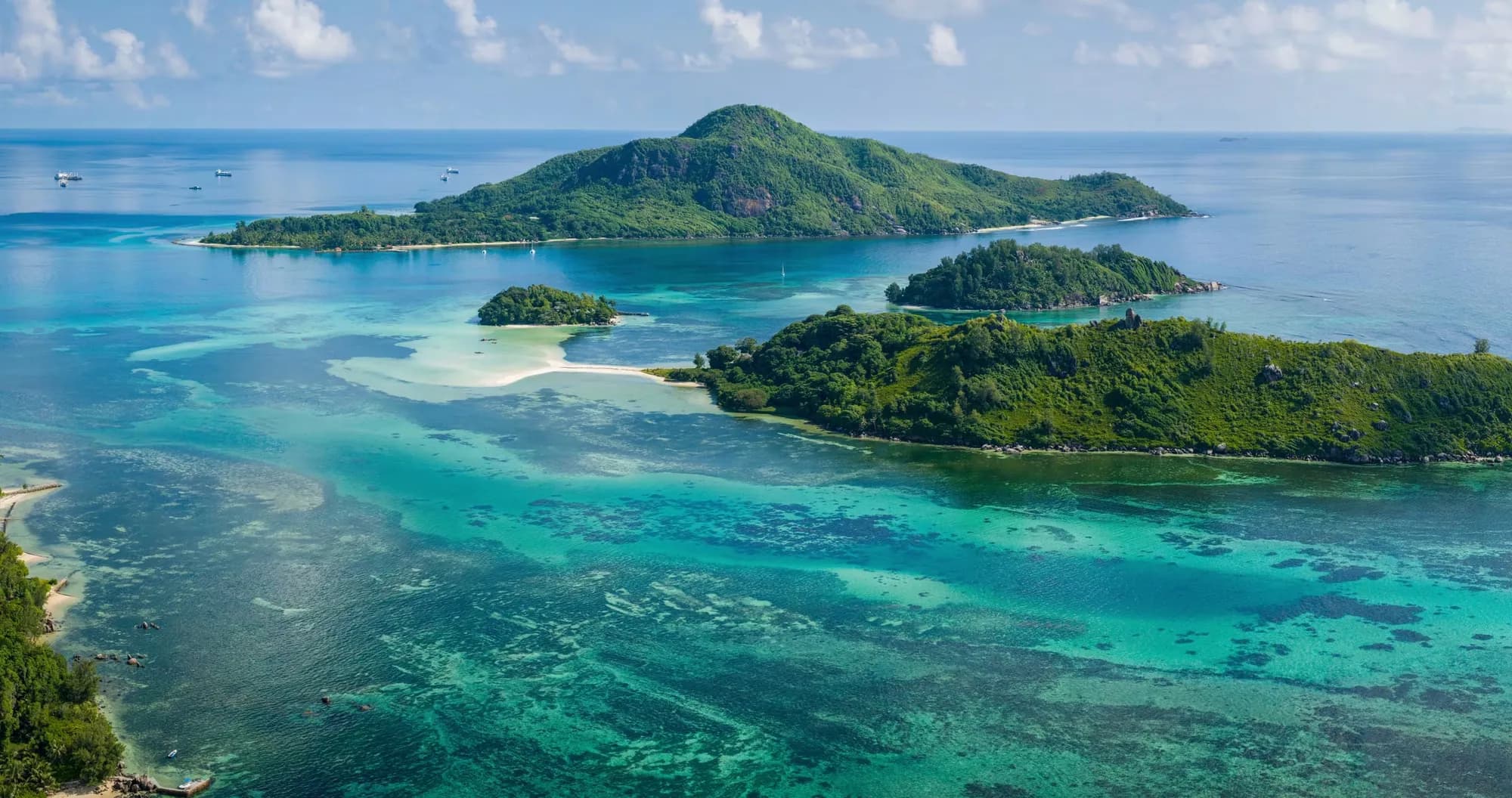
Seychelles scatters granite islands and coral atolls across the western Indian Ocean. Hop between Mahé, Praslin and La Digue for sculpted boulders, palm-fringed coves, giant tortoises and remarkably clear water.
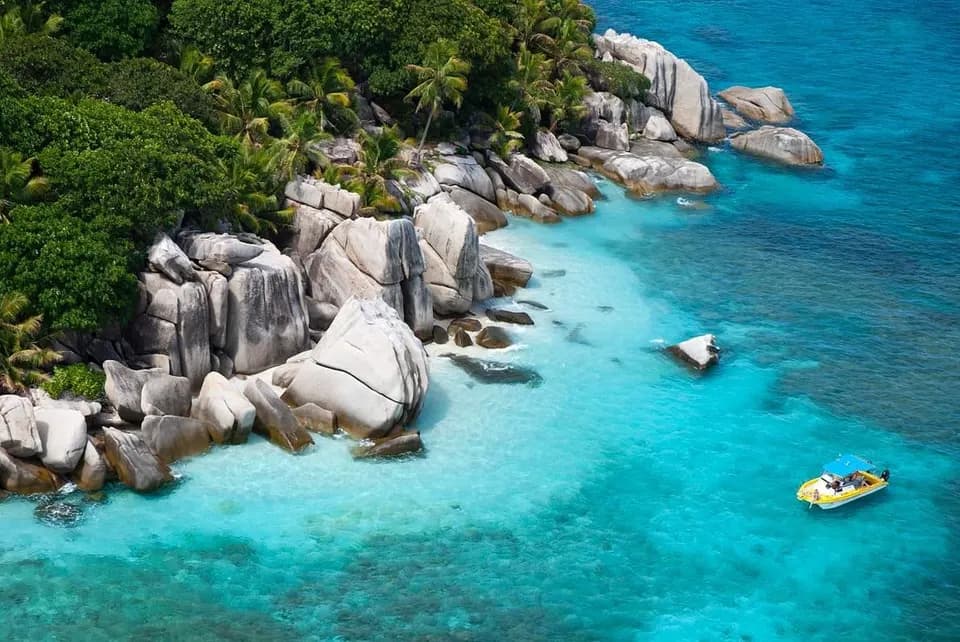
Seychelles can look almost too perfect in photographs, and in person it is even better. The difference is the granite. Unlike most tropical islands, the inner Seychelles are the peaks of an ancient granite landmass, weathered into smooth pink-and-gray boulders that frame beaches of powder-white sand. Add jungle-clad mountains, endemic palms and a relaxed Creole culture, and you have one of the Indian Ocean's most distinctive destinations.
Most visitors combine the three main granitic islands. Mahé, home to the international airport and the small capital, Victoria, has dozens of beaches, mountain trails in Morne Seychellois National Park and a lively market.
Praslin is quieter, with the Vallée de Mai, a UNESCO World Heritage palm forest where the coco de mer grows, and the much-loved bay of Anse Lazio. La Digue is smaller still, an island where bicycles outnumber cars and the granite boulders of Anse Source d'Argent draw photographers at every tide.
Seychelles is a haven for nature. Giant tortoises roam freely on Curieuse Island, seabird colonies fill protected islands such as Cousin and Aride, and rare endemic birds, including the Seychelles black parrot and the paradise flycatcher, survive in small sanctuaries. Beneath the surface, reefs and granite outcrops shelter turtles, rays, reef sharks and shoals of bright fish.
Far to the southwest lie remote coral atolls, including UNESCO-listed Aldabra, home to the world's largest population of giant tortoises and reachable only on occasional expedition cruises.
Life here moves to a Creole rhythm. Victoria's market is at its busiest on Saturday mornings, family-run takeaways serve fish curry with rice and fresh chutneys, and the Creole Festival each October fills the islands with music, dance and food.
Fast ferries link Mahé, Praslin and La Digue, and short domestic flights connect Mahé with Praslin and some outer islands. Many travelers spend a few nights on each of two or three islands, pairing a boutique hotel with a villa or a secluded island retreat.
Seychelles also makes a natural beach finale to a safari in Kenya or Tanzania. Our Seychelles Island Hopping journey is a good template, and we'll tailor the islands, pace and budget to you.
Why visit Seychelles
Wade through clear shallows between sculpted granite boulders on La Digue's most photographed beach.
Walk beneath towering coco de mer palms in Praslin's UNESCO-listed forest and listen for the rare black parrot.
Meet free-roaming giant tortoises on Curieuse Island, then snorkel in the surrounding marine park.
Hike through misty mountain forest on Mahé to viewpoints high above the island's coastline.
Combine Mahé, Praslin and La Digue by fast ferry or short flight, settling into a different rhythm on each island.
Taste coconut fish curries, grilled catch of the day and breadfruit dishes rooted in the islands' Creole heritage.
Where to go
Featured journeys
Use our featured journeys as inspiration. We'll tailor the dates, hotels, activities, pace and budget around you.
9 daysMahé, Praslin & La Digue
Plan your way
Tell us your dates, interests, travel style and budget. We’ll create an itinerary around you.
Free to start planning · No obligation · Tailored around you
When to go
Best months
Seychelles lies just south of the equator, so it's warm year-round, with daytime highs typically between 27 and 31°C (81 and 88°F). The trade winds, rather than temperature, shape the seasons.
From about May to September, the southeast trades bring drier, slightly cooler and breezier weather. Seas can be choppy on exposed southeast-facing beaches and seaweed can collect on some shores, while sheltered coves stay lovely.
From about December to March, the northwest monsoon brings hotter, more humid weather, calmer seas on many beaches and heavier but usually short-lived showers. December and January tend to be the wettest months.
The transition months, April to May and October to November, usually offer the calmest seas, the clearest water for snorkeling and diving, and light winds, which makes them ideal for snorkelers and divers. As a bonus, the inner islands sit outside the main cyclone belt.
Travel information
Tipping isn't expected, and many hotels include a service charge, but something extra for great service is always appreciated.
Dress and etiquette. Beachwear is fine on the beach and at resorts. In Victoria and in villages, cover up with a shirt and shorts or a sundress. Nude sunbathing isn't permitted.
Photography. Ask before photographing people, and follow the rules in nature reserves, where some islands limit where you can walk to protect nesting birds.
Money. Cards are widely accepted in hotels and larger restaurants; keep some rupees for small shops and cafés. Seychelles is a relatively expensive destination, and we'll help you balance special stays with excellent-value guesthouses and self-catering villas.
Connectivity. 4G coverage is good on Mahé, Praslin and La Digue. Many outer islands have limited service.
Getting around. Driving is on the left, roads on Mahé are steep and winding, and on La Digue, bicycles are the way to go.
For visas and health, see our entry requirements guidance and official sources.
Tell us how you want to travel. We’ll build the itinerary around your dates, interests and budget.