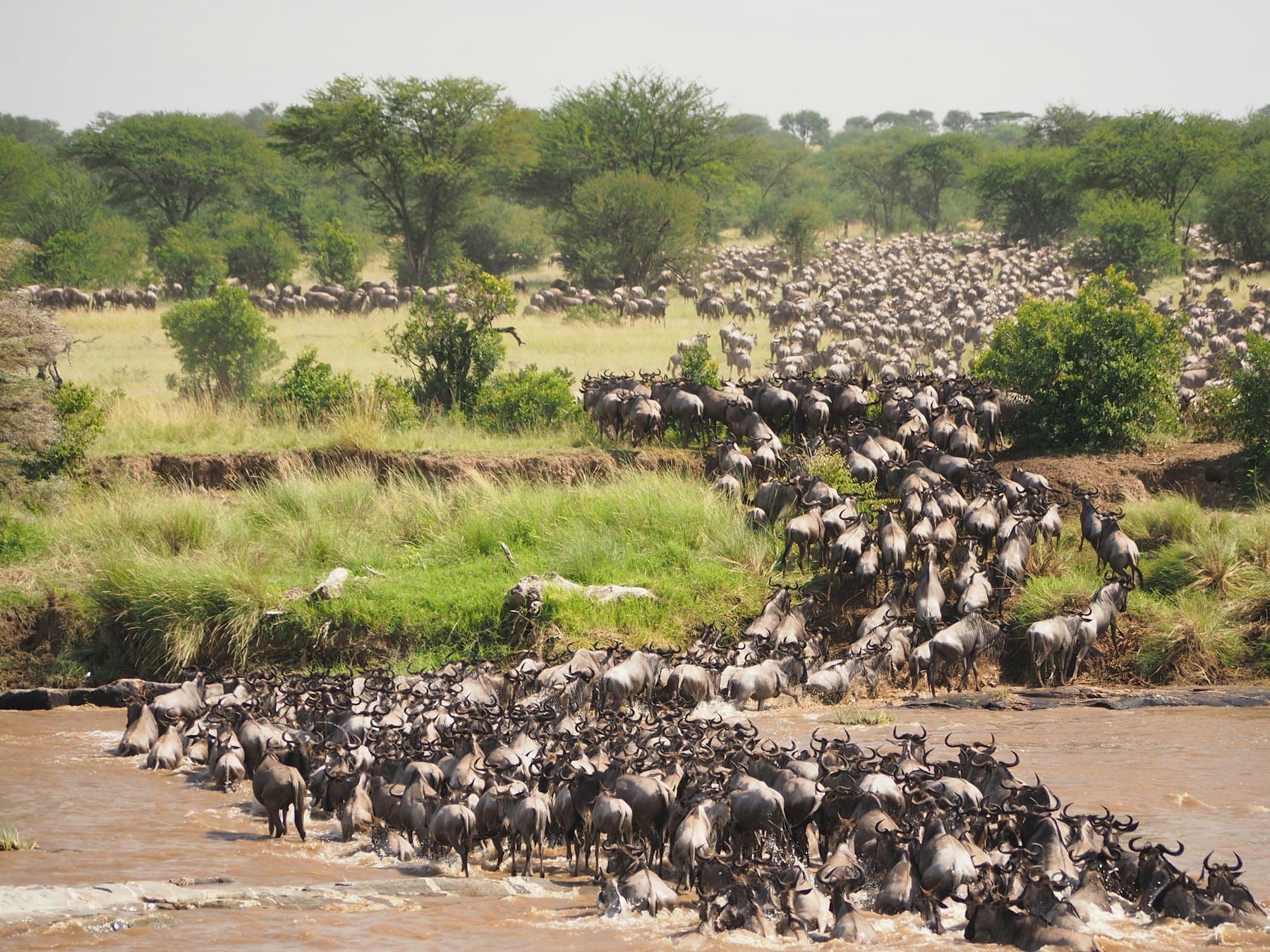
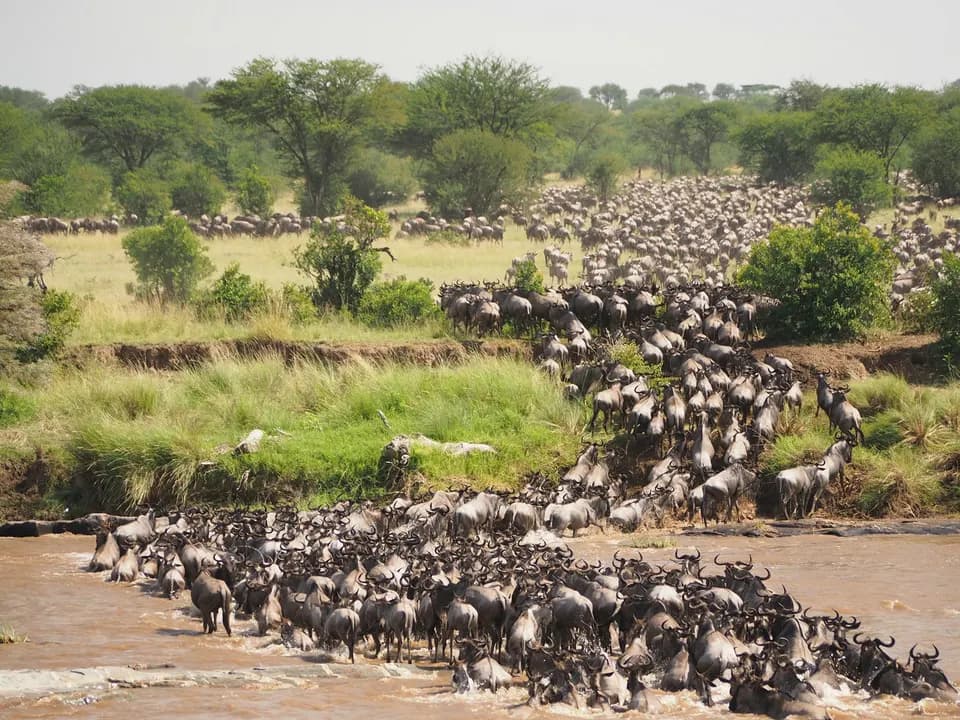
A dense column of wildebeest plunges down a grassy bank into the Mara River during the Great Migration, Serengeti

Travel to Africa

Tailor-Made Africa Trips from Canada

For Canadians, one of Africa's biggest draws is the calendar. When it's deep winter at home, it's summer in Cape Town, calving season on the Serengeti and beach weather on Zanzibar. And when summer comes, East Africa's dry season and the Great Migration fill July and August.

Getting there usually means one connection, but there are useful nonstops at the time of writing. Ethiopian Airlines flies from Toronto to Addis Ababa, a hub with short onward flights to Nairobi, Kilimanjaro, Kigali and Johannesburg. EgyptAir flies from Toronto to Cairo. And Morocco has nonstops from Montreal with Royal Air Maroc, Air Canada and Air Transat, with Royal Air Maroc flying from Toronto too. From Vancouver or Calgary, most travelers connect via Europe or Istanbul. East Africa is seven or eight hours ahead of Toronto, so we plan a gentle first day after you land.

French-speaking travelers have an extra advantage. French is widely spoken in Morocco and Tunisia, is an official language in Rwanda and the Seychelles, and is heard everywhere in Mauritius, so Quebecers often find these destinations especially easy.

A human travel designer plans your time on the ground around your flights, your March Break or holiday dates and your budget. Prices can be shown in Canadian dollars as approximate conversions from US dollars, and you pay nothing until you've approved your itinerary and quote. Every journey is customizable, so start with one of our featured journeys as inspiration, or tell us what you have in mind and plan my trip.

Popular destinations for travelers from Canada

  • A dense column of wildebeest plunges down a grassy bank into the Mara River during the Great Migration, Serengeti

    Serengeti National Park

    Serengeti National Park

    Calving season on the southern Serengeti (usually January–February) is the ultimate winter escape: warm days, green plains and newborn wildebeest. Kilimanjaro airport is one connection from Toronto via Addis Ababa, Amsterdam or Istanbul.

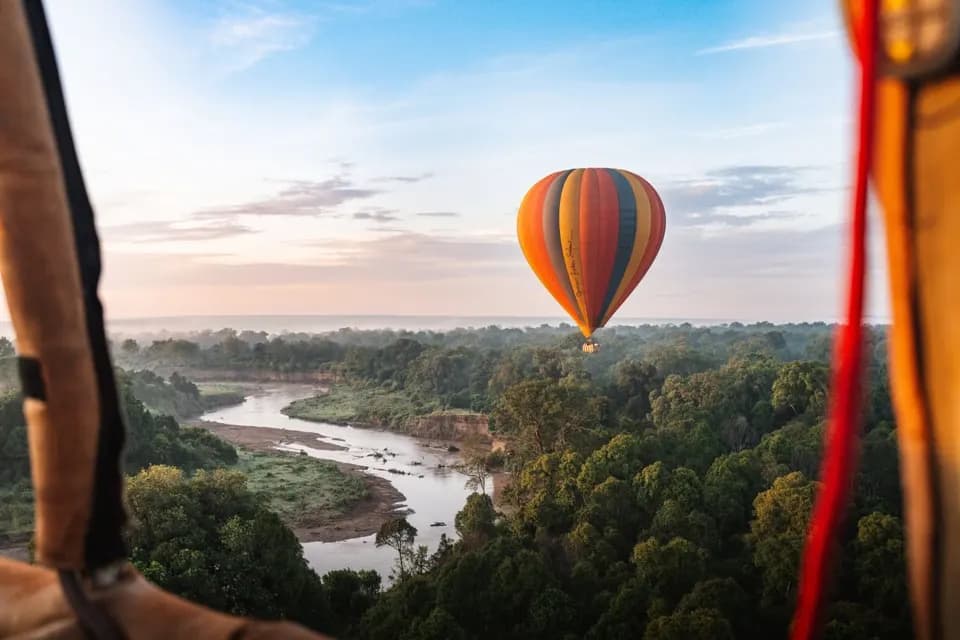
  • A striped hot-air balloon drifts at sunrise above a winding river and forest, seen from another balloon's basket

    Maasai Mara

    Maasai Mara

    Summer holidays line up with the migration in the Mara (usually July–October). Nairobi is one stop from most Canadian gateways, via Addis Ababa, Europe or Istanbul, and Kenya pairs easily with gorilla trekking in Rwanda.

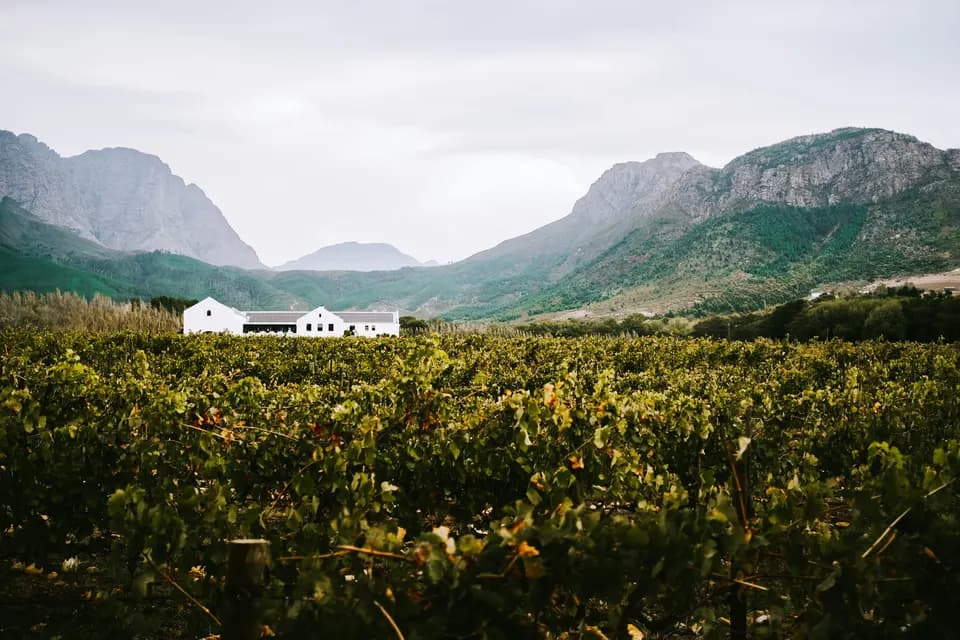
  • A white Cape Dutch farmhouse among green vineyards below rugged mountains in Franschhoek, South Africa

    Cape Winelands

    Cape Winelands

    Cape Town's summer runs from about December to March, exactly when Canadians most want sunshine. Add the Winelands and a private-reserve safari near Kruger for a well-rounded two weeks, all in a single time zone.

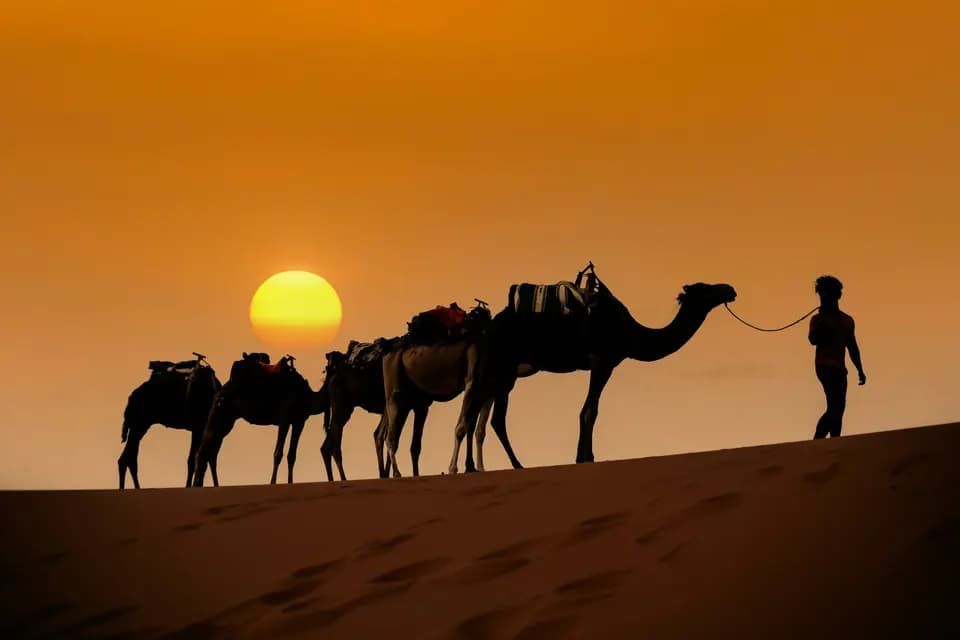
  • A guide leads a camel caravan along a dune crest, silhouetted against the setting sun in the Sahara near Merzouga

    Merzouga & the Sahara

    Merzouga & the Sahara

    With nonstop flights from Montreal to Casablanca and Marrakech at the time of writing, and French widely spoken, Morocco is one of the most accessible African trips for Quebecers. Spring and fall are ideal for desert nights near Merzouga.

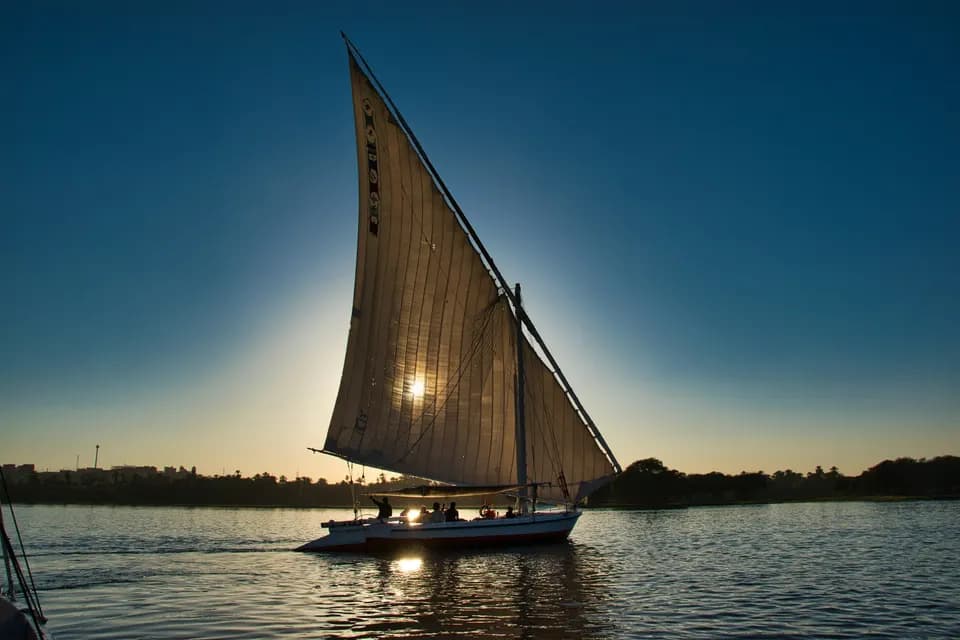
  • A felucca with a tall sail glides along the Nile at Aswan, backlit by the setting sun

    The Nile Valley

    The Nile Valley

    EgyptAir's nonstop from Toronto to Cairo (roughly 10–11 hours at the time of writing) makes Egypt a strong first trip to Africa, especially from October to April, when Nile Valley temperatures are comfortable.

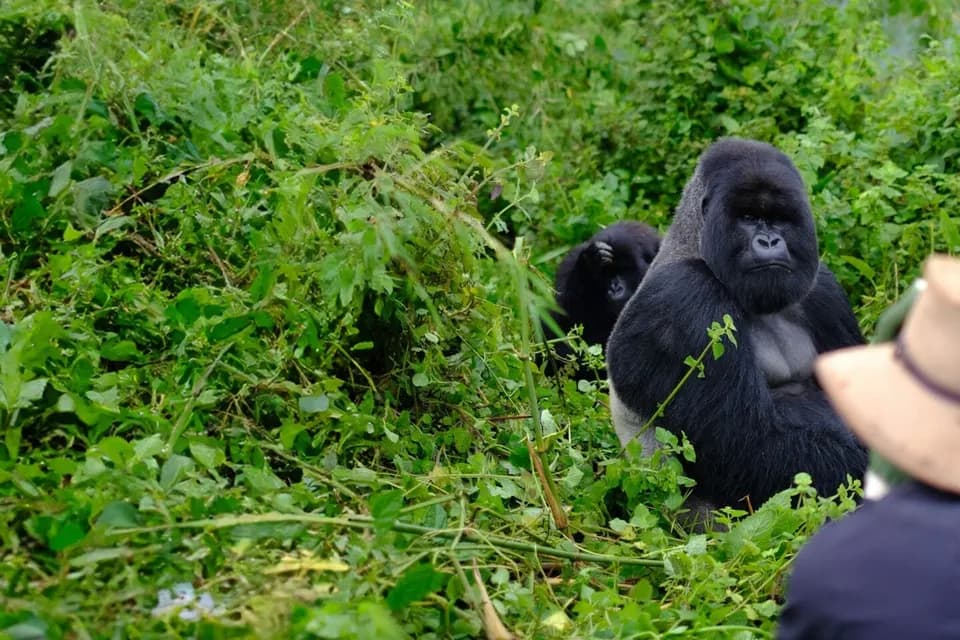
  • A mountain gorilla sits in dense green foliage as a trekker in a sun hat watches nearby

    Volcanoes National Park

    Volcanoes National Park

    French is one of Rwanda's official languages, Kigali is a one-stop connection from Canada, and gorilla trekking in Volcanoes National Park adds an unforgettable few days to a Kenya or Tanzania safari.

What travelers from Canada love

  • Safari & Wildlife — Timed to your holidays and to the wildlife you most want to see, from the calving season in February to the Mara river crossings in late summer.
  • Beaches & Islands — Zanzibar, Mauritius and the Seychelles are warm right through the Canadian winter, so a few beach days after a safari make a perfect cold-weather escape.
  • Culture & Heritage — Egypt's temples and Morocco's medinas are among the most direct trips from Canada, and French makes Morocco particularly easy for Quebecers.
  • Adventure — Gorilla trekking in Rwanda, walking safaris in Tanzania or a self-drive through Namibia's desert, planned so the logistics never get in the way.

Who we plan for

  • Couples — Winter escapes, honeymoons and retirement celebrations, with time to slow down on a beach after the safari.
  • Families — Summer holidays and March Break trips, with camps that welcome children and sensible connection times.
  • Groups — Friends traveling together, from Egypt and Morocco adventures to sharing a private safari vehicle.
  • Solo Travelers — Independent travelers who want expert support, with private guiding or small shared safaris and clear advice on single supplements.

Getting there from Canada

Departure gateways
FromAirportGood to know
TorontoToronto Pearson International Airport (YYZ)Nonstops to Addis Ababa, Cairo and Casablanca at the time of writing, plus Emirates, Qatar Airways, Etihad and Turkish Airlines connections.
MontrealMontréal-Trudeau International Airport (YUL)Nonstops to Casablanca and Marrakech, plus Emirates, Qatar Airways and Turkish Airlines connections.
VancouverVancouver International Airport (YVR)One stop via Europe (Amsterdam, London, Frankfurt or Paris) or Istanbul to reach East and Southern Africa.
CalgaryCalgary International Airport (YYC)Connections via Amsterdam or Frankfurt, or via Toronto and Vancouver.
OttawaOttawa Macdonald-Cartier International Airport (YOW)Usually connects via Toronto, Montreal or a European hub.
EdmontonEdmonton International Airport (YEG)Usually connects via Calgary, Toronto, Vancouver or a European hub.

Nonstop options at the time of writing

  • Ethiopia: Ethiopian Airlines flies nonstop from Toronto to Addis Ababa (the return flight makes a stop en route). Addis Ababa is a convenient hub for short onward flights to Nairobi, Kilimanjaro, Zanzibar, Kigali and Johannesburg.
  • Egypt: EgyptAir flies nonstop from Toronto to Cairo, roughly 10–11 hours.
  • Morocco: Royal Air Maroc and Air Canada fly from Montreal to Casablanca, and Royal Air Maroc also flies from Toronto. Air Transat flies from Montreal to Marrakech. Expect roughly seven hours.

One-stop routings

For Kenya, Tanzania, South Africa and Botswana, most Canadians connect once: via Addis Ababa, via Europe (Amsterdam, London, Frankfurt, Paris or Zurich), via Istanbul (Turkish Airlines serves Toronto, Montreal and Vancouver) or via a Gulf hub such as Dubai, Doha or Abu Dhabi. Because regional events have at times disrupted Gulf hubs, we check what's running before recommending a routing.

Journey times

From Toronto or Montreal, a one-stop trip to Nairobi or Kilimanjaro typically takes around 17–22 hours in total. From Vancouver or Calgary, routings via Europe or Istanbul are usually the most practical; allow roughly 20–26 hours to Nairobi or Johannesburg.

Schedules change often. We only book flights if you ask, and we're happy to plan around your own bookings, including reward flights.

Entry requirements for travelers from Canada

Entry rules change. Here is what official sources said when we last checked — always confirm with the official source and your airline before you travel.

Passport

At our last check, Canada's travel advice listed at least six months' passport validity for Kenya, Tanzania and Morocco, and 30 days beyond departure plus two empty visa pages for South Africa. The Government of Canada said to report a damaged passport right away, and that the name on your ID must match your airline ticket.

Read more

Validity and pages. Each country sets its own rules, listed under "Entry and exit requirements" in Canada's travel advice. At our last check:

  • Kenya: valid at least six months from the date you enter.
  • Tanzania and Morocco: valid at least six months beyond the date you expect to leave.
  • South Africa: valid at least 30 days beyond the date you expect to leave, with at least two empty visa pages, or you'll be denied entry.

Your airline's validity rules may be stricter than the country's, so check with it too. You're responsible for having empty visa pages, and if your passport is full you must renew it; pages can't be added.

Damage. Report a damaged passport right away: call 1-800-567-6868 in Canada, or contact the nearest Government of Canada office abroad. A replacement can be delayed while the Passport Program reviews how the damage happened.

Names. The name on your ID must match the name on your airline ticket and boarding pass, so book eTAs and e-visas the same way. If your name is misspelled in your passport, contact the Passport Program right away.

Apply or renew through Canadian passports on Canada.ca.

Rules change — always confirm with the official source before you travel, and check the requirements of any country you transit.

Travel insurance

At our last check, the Government of Canada advised buying trip interruption and travel health insurance before leaving Canada, warning that provincial and territorial health plans may cover none or only a small part of medical costs abroad, including medical evacuation. It said every travel health policy should cover medical evacuation, pre-existing conditions and repatriation.

Read more

Why it matters on safari. Canada's advice for Kenya says health care outside Nairobi varies and can be very limited, and its Tanzania advice warns that a costly medical evacuation may be needed for serious illness or injury. The Government of Canada also warns that:

  • your provincial or territorial health plan may cover none, or only a small part, of the cost of care abroad, including a medical evacuation, and it never pays your bills up front;
  • hospitals and clinics abroad can be very expensive and may require immediate payment, and some won't treat you without enough insurance or money;
  • the Government of Canada will not pay your medical bills.

What your policy should cover. Canada says every travel health policy should include medical evacuation (to Canada or the nearest place with medical care, plus a medical escort), pre-existing medical conditions (get written confirmation, including a stability clause) and repatriation in case of death. Also check deductibles, activity exclusions, whether the insurer pays bills up front, and whether it runs a 24/7 emergency line.

Two more checks.

  • Many policies won't cover regions where Canada advises avoiding non-essential travel or all travel.
  • Zanzibar requires its own mandatory insurance from the Zanzibar Insurance Corporation, on top of your policy.

Rules change — always confirm with the official source before you travel, and check the requirements of any country you transit.
Health

At our last check, the Government of Canada advised visiting a travel health clinic or health care provider about six weeks before your trip. Yellow fever certificate rules can apply depending on your route, and malaria is a risk in parts of our safari destinations.

Read more

See a professional early. Visit a travel health clinic or talk to a health care provider about six weeks before departure. Even if your trip is sooner, Canada says an appointment is still worthwhile. Discuss your full itinerary, including stopovers, and whether your routine vaccinations are up to date.

Official health information. The Health section of each destination's travel advice lists pre-travel vaccines and medications and any country entry requirements. Also check Canada's travel health notices.

Yellow fever certificates. Some countries require an International Certificate of Vaccination or Prophylaxis, often only if you're coming from, or have transited through an airport of, a country where yellow fever occurs, such as Kenya. The Public Health Agency of Canada says certificates are provided by designated Yellow Fever Vaccination Centres and become valid 10 days after vaccination. Without a valid certificate, you may be refused entry, quarantined for up to six days or vaccinated at the border.

Malaria. Canada's advice notes malaria risk in certain areas of Kenya, Tanzania and South Africa. Ask a travel health professional about prevention for your itinerary.

Rules change — always confirm with the official source before you travel, and check the requirements of any country you transit.

This is general guidance, not legal advice. Requirements depend on your nationality, passport and route. Always verify with official authorities before departure.

Destination by destination

Morocco

Morocco

Entry rules change. Here is what official sources said when we last checked — always confirm with the official source and your airline before you travel.

Visa & entry

At our last check, Canadians didn't need a visa for stays in Morocco of less than 90 days. Passports had to be valid for at least six months beyond the date you expect to leave Morocco.

Read more

Visa. Canada's advice lists no tourist visa requirement for stays of less than 90 days, and Morocco's Ministry of Foreign Affairs includes Canada on its list of visa-exempt countries.

Passport. Valid for at least six months beyond the date you expect to leave Morocco. Check with your airline as well, since its validity rules may be stricter than Morocco's.

Staying longer. To extend beyond 90 days, contact the Service to Foreigners Section (Section du service aux étrangers) at the local police station at least 15 days before your 90-day limit expires. If you overstay, you'll have to remain in Morocco until you've been seen by a prosecutor and fined.

Good to know.

  • If you enter Morocco with a vehicle, you must leave with it or you'll be denied exit.
  • Private boats must arrive at a recognized port of entry.
  • Canada's health section says proof of yellow fever vaccination isn't required to enter Morocco.
  • Traveling with children? See Canada's advice on travelling with children.

Rules change — always confirm with the official source before you travel, and check the requirements of any country you transit.

This is general guidance, not legal advice. Requirements depend on your nationality, passport and route. Always verify with official authorities before departure.

South Africa

South Africa

Entry rules change. Here is what official sources said when we last checked — always confirm with the official source and your airline before you travel.

Visa & entry

At our last check, Canadians didn't need a visa for tourist stays in South Africa of up to 90 days. Passports had to be valid for at least 30 days beyond departure with at least two empty visa pages, and travelers had to submit an online traveller declaration before entering or leaving.

Read more

Visa. No tourist visa is needed for stays of up to 90 days, but the immigration officer stamps a specific number of days; a full 90 days isn't automatic, so check that your stamp matches your plans. Leaving and re-entering, even briefly, doesn't automatically give you another 90 days.

Passport. Valid at least 30 days beyond the date you expect to leave, with at least two empty visa pages for the entry stamp. Without them, you'll be denied entry.

Before you fly.

  • Submit the South African Revenue Service's online traveller declaration. SARS says to file it no more than 24 hours before departure on your last leg to South Africa, with one for each traveler, including children.
  • Carry a return or onward ticket. Without one, you may have to deposit the equivalent of a fare home with customs (refunded after you leave).
  • South Africa launched an Electronic Travel Authorisation in August 2026, and Home Affairs said it would be voluntary for visa-exempt travelers. Check for changes before you go.

Families and health. Unaccompanied minors, and children who are South African citizens, face extra document requirements. Proof of yellow fever vaccination is required if you're coming from, or have transited through an airport of, a country where yellow fever occurs.

Rules change — always confirm with the official source before you travel, and check the requirements of any country you transit.

This is general guidance, not legal advice. Requirements depend on your nationality, passport and route. Always verify with official authorities before departure.

Tanzania

Tanzania

Entry rules change. Here is what official sources said when we last checked — always confirm with the official source and your airline before you travel.

Visa & entry

At our last check, Canadians needed a visa for Tanzania. A three-month single-entry tourist visa was available on arrival at main ports of entry, while stays over 90 days or multiple entries required an eVisa before travel. Passports had to be valid for at least six months beyond your departure date.

Read more

Visa. Canada's advice says you can get a three-month single-entry tourist visa on arrival at main ports of entry, but you must apply for an eVisa before traveling if you'll stay more than 90 days or need multiple entries. Tanzania's immigration guidelines recommend applying online through the official e-Visa portal and warn against other websites. At the time of checking, the ordinary single-entry visa cost USD 50 for up to 90 days, and online applications were processed within ten days. Wait for your Visa Grant Notice by email; it isn't a final guarantee of entry.

Passport and documents.

  • Valid at least six months beyond the date you expect to leave Tanzania, with at least one unused visa page.
  • Proof of a return or onward ticket. You could be refused entry without it.

Zanzibar. All foreigners entering Zanzibar must buy mandatory travel insurance directly from the Zanzibar Insurance Corporation through the official portal.

Health checks at the border. Travelers arriving from or via the Democratic Republic of the Congo or Uganda face Ebola health screening. Proof of yellow fever vaccination is required if you're coming from, or have transited through an airport of, a country where yellow fever occurs, including Kenya.

Rules change — always confirm with the official source before you travel, and check the requirements of any country you transit.

This is general guidance, not legal advice. Requirements depend on your nationality, passport and route. Always verify with official authorities before departure.

Kenya

Kenya

Entry rules change. Here is what official sources said when we last checked — always confirm with the official source and your airline before you travel.

Visa & entry

At our last check, Canadians didn't need a tourist visa for Kenya but had to obtain an Electronic Travel Authorization (eTA) online before departure. Passports had to be valid for at least six months from the date of entry.

Read more

eTA. Apply before you leave, using only the official Kenya eTA portal (or Kenya's official app) to avoid fraud, and make sure the dates match your planned stay. Every traveler needs their own eTA, including infants and children. You don't need one if you only transit through a Kenyan airport without passing border control.

Timing and cost. Kenya's portal says applications are usually processed in about three working days, but recommends applying at least two weeks before travel. At the time of checking, a standard single-entry eTA was listed on the portal at $30, with faster processing available for an extra fee. You'll need a photo, contact details, your itinerary and accommodation confirmation. An eTA doesn't guarantee entry; admissibility is decided at the border.

Passport. Valid for at least six months from the date you enter Kenya. The eTA portal also asks for at least one blank page. Your airline's validity rules may be stricter than Kenya's.

Yellow fever. Proof of vaccination is required if you're coming from a country where yellow fever occurs, and Kenyan authorities carry out spot checks, so keep your proof with you.

Extensions. To stay longer, apply in person at a Kenyan immigration office before your eTA or visa expires.

Rules change — always confirm with the official source before you travel, and check the requirements of any country you transit.

This is general guidance, not legal advice. Requirements depend on your nationality, passport and route. Always verify with official authorities before departure.

Practical planning

Currency & payments

Paying for your trip

Our prices are set in US dollars, with Canadian-dollar figures shown as approximate conversions for guidance. Your written quote confirms the amount and currency, and you pay nothing until you've approved your itinerary. Paying in US dollars from a Canadian account means your bank's exchange rate applies, so check whether a US-dollar account or a card without foreign-transaction fees saves you money.

Money on the ground

  • Bring US dollars for East Africa. Tips and small extras on safari are commonly paid in US dollars, and Canadian cash is hard to exchange in most African countries. Buy crisp, recent US notes in small denominations before you leave.
  • Credit cards: Visa and Mastercard are widely accepted in cities, hotels and lodges. Many Canadian credit cards add a foreign-transaction fee, often around 2.5%.
  • Debit cards: check that yours works at foreign ATMs (look for a global network logo such as Plus or Cirrus) and that your daily limit suits the trip.
  • Local currency: rand in South Africa, dirhams in Morocco and Egyptian pounds in Egypt, all easiest to withdraw from ATMs on arrival.

Plugs & adapters

Canadian outlets are Types A and B at 120 volts, the same as the U.S. Most of Africa runs at 220–240 volts with different plug shapes, so you'll need adapters:

  • Type G (UK-style) for Kenya, Tanzania, Zanzibar and the Seychelles, and many outlets in Mauritius.
  • Type M and the newer Type N for South Africa; Types D, G and M vary across Botswana, Namibia and Zimbabwe.
  • Types C, E and F (European two-pin) for Morocco, Egypt, Tunisia and Cabo Verde. Rwanda uses Types C and J.

Most phone, camera and laptop chargers are dual-voltage (look for "100–240V"), so an adapter is enough. Single-voltage appliances such as hair dryers or curling irons need a converter or a dual-voltage version. Safari camps often run on solar power with limited charging, so bring a power bank and a compact multi-USB charger.

Mobile, roaming & eSIM

Canadian roaming add-ons are built mainly around the U.S. and Europe, and coverage and pricing in Africa vary, so check your plan before you go.

  • eSIM: the easiest option for most trips. Buy a plan for one country or a multi-country Africa region before departure.
  • Local SIM: the best value for data-heavy travelers. Kenya, Tanzania and South Africa, among others, register local SIMs against your passport, so buy yours at an official store.
  • Unlocked phone: phones sold in Canada since December 2017 must be sold unlocked, but older or employer-issued devices may still be locked. Check before you rely on a foreign SIM or eSIM.

Wi-Fi is widespread in city hotels but often limited to the main lounge at safari camps, and signal is patchy in the parks. WhatsApp is the standard way to reach guides, drivers and lodges across much of Africa, so set it up before you fly.

Time zones & jet lag

Canada spans six time zones, so the gap depends on where you start. East Africa is on UTC+3 and much of Southern Africa on UTC+2 year-round, while most of Canada shifts an hour for daylight saving time.

  • Toronto, Ottawa and Montreal: Nairobi and Zanzibar are 7 hours ahead in summer and 8 in winter; Johannesburg and Cape Town are 6 and 7.
  • Halifax: Nairobi is 6 hours ahead in summer and 7 in winter.
  • Calgary and Edmonton: Nairobi is 9 hours ahead in summer and 10 in winter.
  • Vancouver: Nairobi is 10 hours ahead in summer and 11 in winter; Johannesburg is 9 and 10.
  • Regina and Saskatoon: most of Saskatchewan doesn't change its clocks, so Nairobi is 9 hours ahead year-round.
  • Morocco: at the time of writing Morocco keeps GMT year-round, 4 hours ahead of Montreal in summer and 5 in winter.

Plan an easy first night on arrival, especially after a connection from Western Canada, and avoid a dawn game drive the morning after you land.

Seasons & holidays

Winter escape (December–March). Cape Town's summer, the Serengeti calving season (usually January–February), hot and mostly dry Zanzibar, and comfortable temperatures in Egypt and Morocco. The Christmas break is peak season everywhere, so plan early.

March Break. Dates vary by province (Quebec's spring break usually comes earlier than Ontario's, and some provinces take two weeks), but a week in March suits Egypt, Morocco or Cape Town's late summer. Early March is the tail end of calving season on the Serengeti, before East Africa's long rains usually arrive in late March or April.

Summer holidays (late June to Labour Day). Long enough for a two-week trip in the heart of the dry season across East and Southern Africa. The Great Migration usually reaches the Maasai Mara and northern Serengeti from around July.

Thanksgiving in October. Add a few vacation days to the long weekend for an October safari, still excellent in Kenya and Tanzania and quieter once schools are back.

April–May. East Africa's long rains. South Africa, Botswana or Morocco are better choices.

When to start planning

Start 9–12 months ahead for the Christmas break, February calving-season trips and July–August migration safaris. The best-located small camps have limited rooms, and connections through the most convenient hubs fill up at peak times. For Egypt, Morocco or a shoulder-season safari, 4–6 months is usually enough. For a March Break trip, start about six months out so flights and family rooms line up with your exact dates.

If you're using airline points, check reward availability early, since long-haul partner seats can be scarce on the dates you want.

Look at your passport's expiry date and free pages early in the planning. The Entry requirements section on this page lists verified guidance for Canadian passport holders, with official sources (including the Government of Canada's travel advice) and last-checked dates. Always confirm with official sources before departure.

Packing

  • Layers, not parkas. Dawn game drives in June–August can be close to freezing in Botswana and chilly in Kenya's highlands, but a fleece, a light down jacket and a toque are plenty.
  • Leaving in winter? Wear your heavy coat to the airport and leave it with whoever drives you, or in the car. You won't need it again until you're home.
  • A soft duffel for light-aircraft transfers, which often limit you to about 15 kg including carry-on.
  • Neutral colors, a sun hat and high-SPF sunscreen: the equatorial sun is much stronger than a Canadian summer's.
  • Binoculars for each traveler if possible.
  • Plug adapters and a power bank (details under Plugs & adapters).
  • US dollars in small, recent notes for tips.
  • Leave plastic bags at home. Kenya and Tanzania have banned them.

Journeys travelers from Canada love

Use our featured journeys as inspiration. We'll tailor the dates, hotels, activities, pace and budget around you.

View All Sample Journeys
A dense column of wildebeest plunges down a grassy bank into the Mara River during the Great Migration, Serengeti10 days

Serengeti + Zanzibar

Wildlife & Beach Escape

  • Paced for a first safari
  • Best Jan⁠–⁠Feb, Jun⁠–⁠Oct
From$6,900approx. ≈ £5,200approx. ≈ CA$9,450approx. ≈ A$10,500approx. ≈ €5,950per person sharing
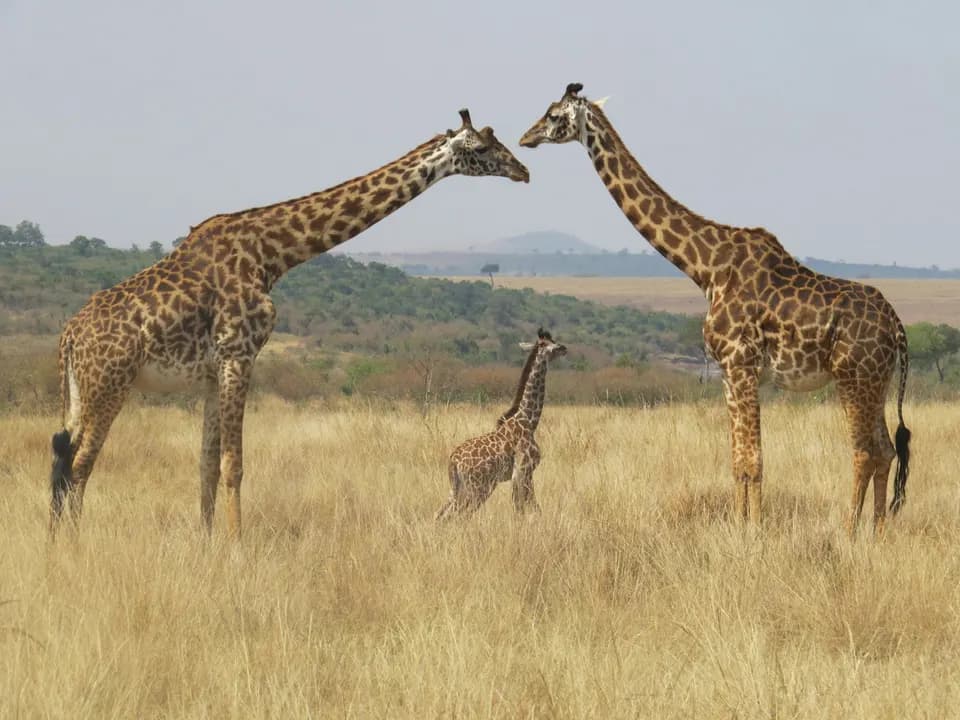
Two Maasai giraffes touch heads above a young calf in golden grassland in the Maasai Mara, Kenya8 days

Kenya Safari Adventure

Amboseli & the Maasai Mara

  • Fly-in stay in a Maasai Mara conservancy
  • Best Jan⁠–⁠Feb, Jun⁠–⁠Oct
From$5,600approx. ≈ £4,200approx. ≈ CA$7,650approx. ≈ A$8,500approx. ≈ €4,800per person sharing
Pink, turquoise and yellow houses of Bo-Kaap on Wale Street, Cape Town, against a green hillside10 days

Cape Town + Kruger

City, Coast, Winelands & Big Five

  • A balanced first trip to South Africa
  • Best Mar⁠–⁠May, Sep⁠–⁠Nov
From$5,900approx. ≈ £4,450approx. ≈ CA$8,100approx. ≈ A$8,950approx. ≈ €5,050per person sharing
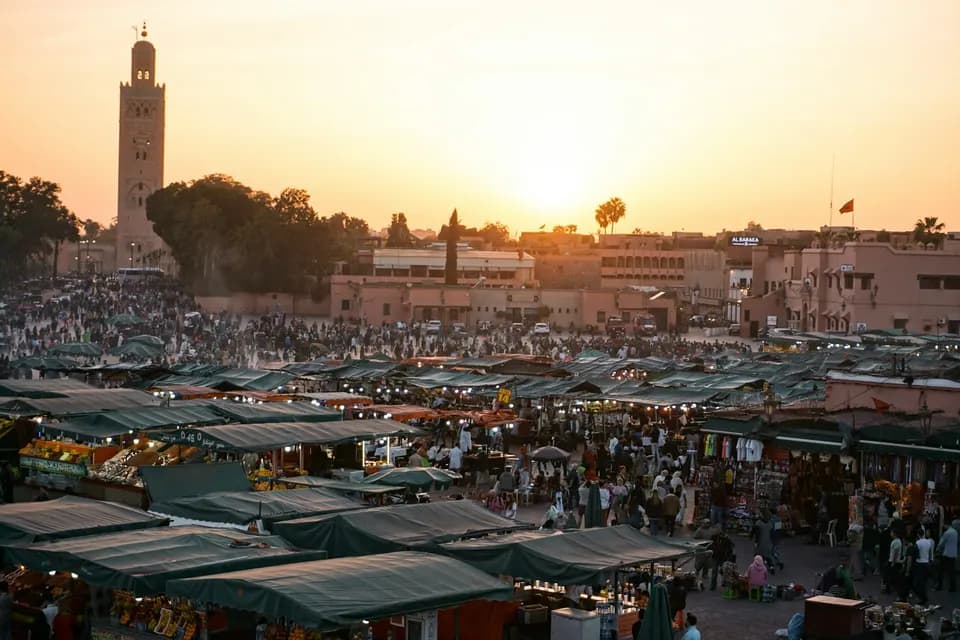
Sunset over Jemaa el-Fna's market stalls and crowds, with the Koutoubia minaret rising on the left9 days

Morocco Medina + Desert

Marrakech, the High Atlas, the Sahara & Fes

  • Two nights among the Merzouga dunes
  • Best Mar⁠–⁠May, Sep⁠–⁠Nov
From$3,300approx. ≈ £2,500approx. ≈ CA$4,500approx. ≈ A$5,000approx. ≈ €2,850per person sharing

Questions from travelers in Canada

Are there direct flights from Canada to Africa?

A few. At the time of writing, Ethiopian Airlines flies nonstop from Toronto to Addis Ababa (the return makes a stop en route), with onward connections to Nairobi, Kilimanjaro, Zanzibar, Kigali and Johannesburg. EgyptAir flies nonstop from Toronto to Cairo. Montreal has nonstops to Casablanca (Royal Air Maroc and Air Canada) and Marrakech (Air Transat), and Royal Air Maroc also flies from Toronto to Casablanca.

For safaris in Kenya, Tanzania or South Africa, most Canadians connect once, via Addis Ababa, Europe, Istanbul or the Gulf. Schedules change, so we check current options for your dates.

Can we do an African safari over March Break?

Yes, with the right destination. A week in March suits South Africa (Cape Town's late summer plus a safari near Kruger), Egypt or Morocco. The Serengeti is still worth considering in early to mid-March, at the tail end of calving season, but East Africa's long rains usually arrive around late March or April, and some camps close.

March Break dates vary by province, and some take two weeks, so tell us your exact dates and we'll suggest what fits. With one connection each way, nine nights or more on the ground is ideal.

Should Canadians bring US or Canadian dollars to Africa?

Bring US dollars for tips and small extras in East Africa, because Canadian cash is hard to exchange in most African countries. Buy clean, recent US notes in small denominations before you leave. Cards work in hotels and lodges, but many Canadian credit cards add a foreign-transaction fee, so a no-FX-fee card is worth considering.

Our prices are set in US dollars, with Canadian-dollar figures shown as approximate conversions. Your quote confirms the amount and currency, and you pay nothing until you've approved your itinerary.

Do Canadians need visas or vaccinations for Africa?

Requirements for Canadian passport holders vary by destination and change from time to time, so we don't state them from memory. The Entry requirements section on this page lists verified guidance for each destination, with official sources (including the Government of Canada's travel advice) and the date each item was last checked.

Always confirm with the Government of Canada and the destination's official immigration website before you book, and see a travel health clinic well ahead of departure. Your travel designer can point you to the right official sources as your itinerary comes together.

What is the time difference between Canada and East Africa?

It depends on your province. Nairobi, Arusha and Zanzibar are 7 hours ahead of Toronto and Montreal during daylight saving time, and 8 hours ahead in winter. From Vancouver it's 10 hours in summer and 11 in winter; from Calgary and Edmonton, 9 and 10. Most of Saskatchewan doesn't change its clocks, so it's 9 hours year-round.

Johannesburg and Cape Town are one hour less than East Africa. We plan a gentle first day after you land to help with jet lag.

Planning from Canada? We’ll handle the details.

Tell us your dates and dream destinations. We’ll design your journey around your flights, your holidays and your budget — no payment to start planning.