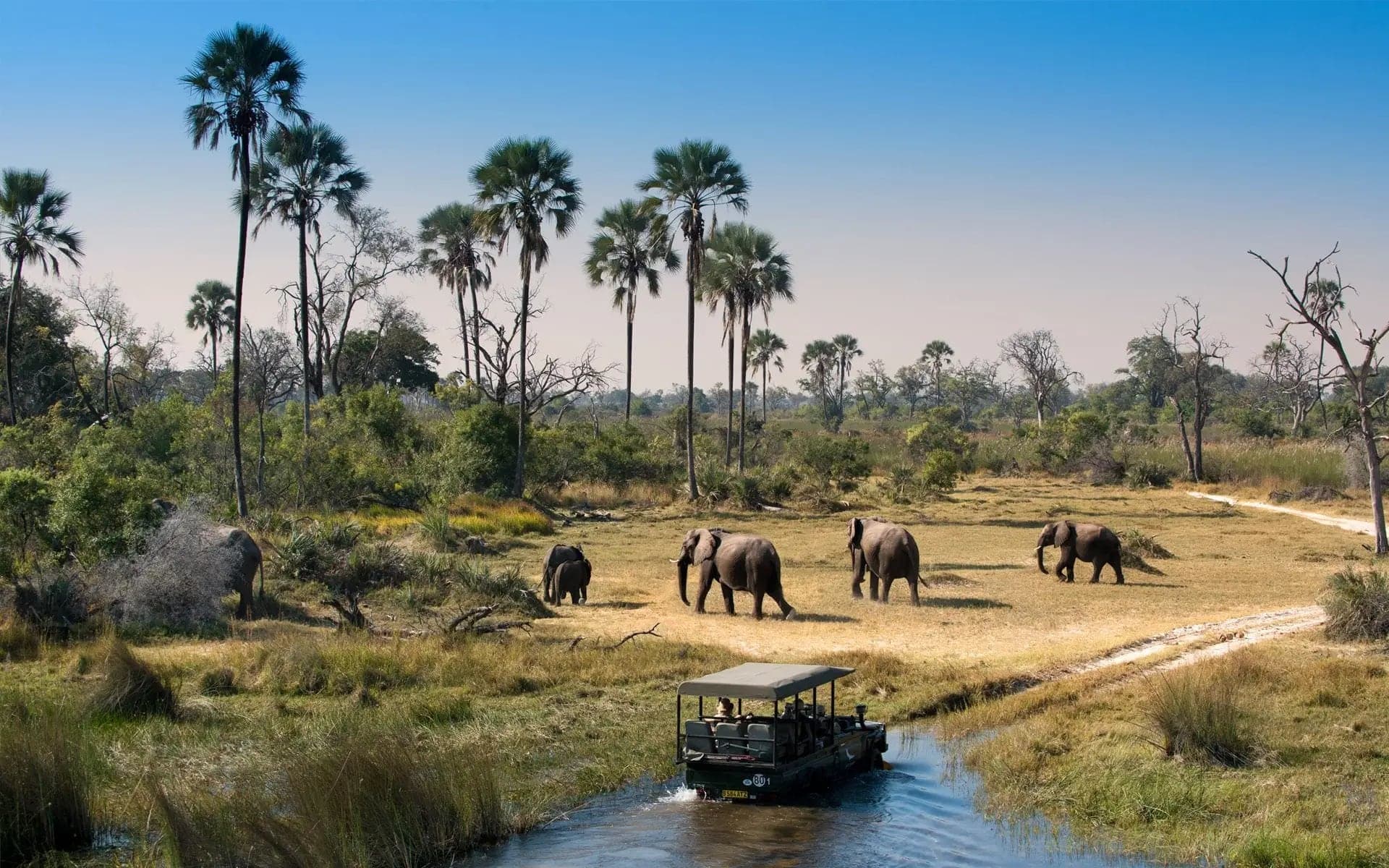
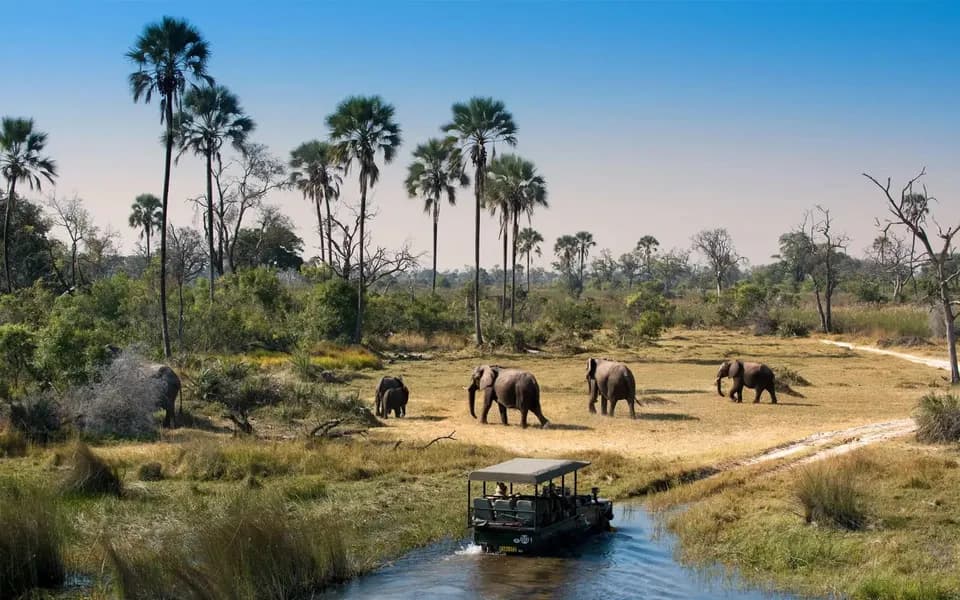
Elephants walk between palm trees across a floodplain as a safari vehicle watches

Travel to Africa

Tailor-Made Africa Trips from Australia

Look at a map and Africa is Australia's neighbor across the Indian Ocean. Southern Africa is the closest part of the continent by air: at the time of writing, Qantas flies nonstop from Sydney to Johannesburg, Qantas and South African Airways fly nonstop from Perth to Johannesburg, and Air Mauritius connects Perth with Mauritius. East Africa usually means one connection, via Johannesburg or a Gulf hub.

Australians also share Southern Africa's seasons. Our winter is the dry season across most of the continent's safari country, so the June–July school holidays line up with some of the best game viewing of the year: cool, clear mornings that feel a lot like an inland Australian winter. The September–October holidays bring the late dry season and the Great Migration in Kenya's Maasai Mara.

Namibia and South Africa both drive on the left, so a self-drive through the desert around Sossusvlei or the Cape Winelands feels surprisingly familiar. And the Okavango Delta, Victoria Falls and Kruger are all short regional flights from Johannesburg.

With a long flight each way, it's worth giving the trip room: two to three weeks lets you combine a safari with Cape Town, Victoria Falls or a few days in Mauritius without rushing.

A human travel designer plans your time on the ground around your flights (including points bookings), school holidays and budget. Prices can be shown in Australian dollars as approximate conversions from US dollars, and you pay nothing until you've approved your itinerary and quote. Start planning whenever you're ready.

Popular destinations for travelers from Australia

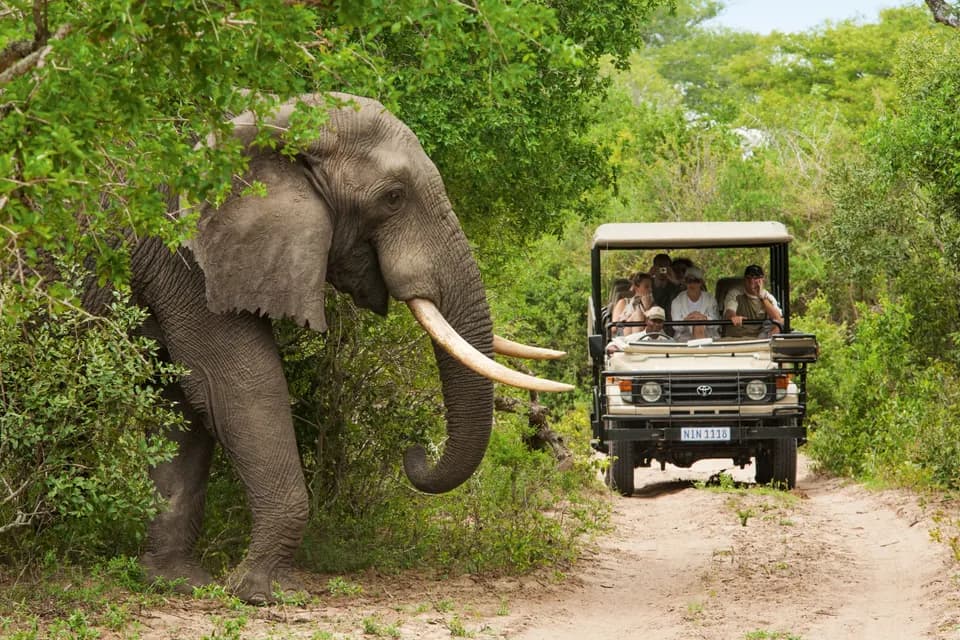
  • A large bull elephant stands beside a safari vehicle full of guests on a bush road

    Kruger National Park

    Kruger National Park

    At the time of writing, Qantas flies nonstop from Sydney, and Qantas and South African Airways from Perth, to Johannesburg, a short regional flight from the Kruger area. Johannesburg is only 6 hours behind Perth, and 8 hours behind Sydney in the Australian winter.

  • Elephants walk between palm trees across a floodplain as a safari vehicle watches

    Okavango Delta

    Okavango Delta

    The Okavango's floodwaters usually peak around June to August, right when the winter school holidays fall. Maun is a short flight from Johannesburg, and fly-in camps make a seamless second stop after Kruger.

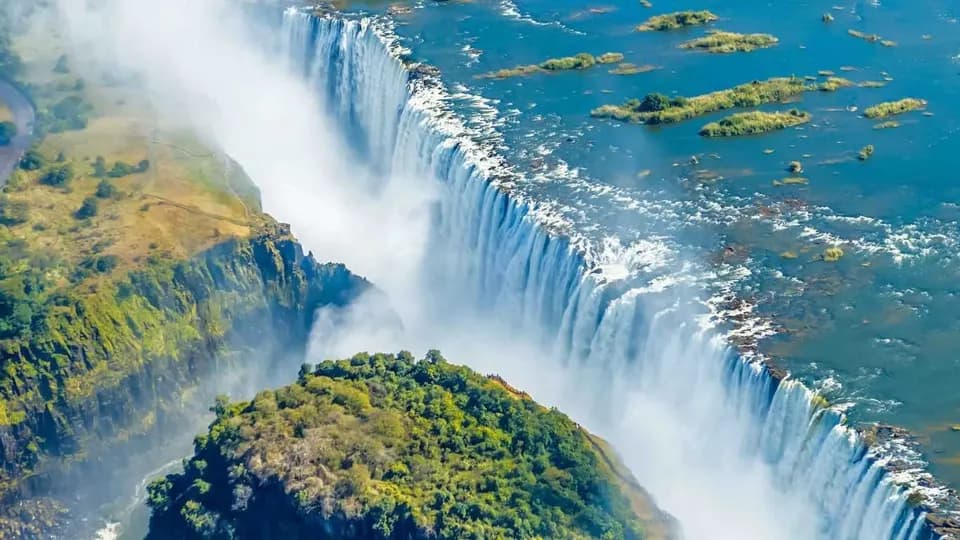
  • Aerial view of Victoria Falls plunging into its gorge beside green islands in the Zambezi

    Victoria Falls

    Victoria Falls

    An easy add-on from Johannesburg by regional flight. The falls usually run highest around April and May, when spray can hide the view; from about June the flow is still big and the views clearer.

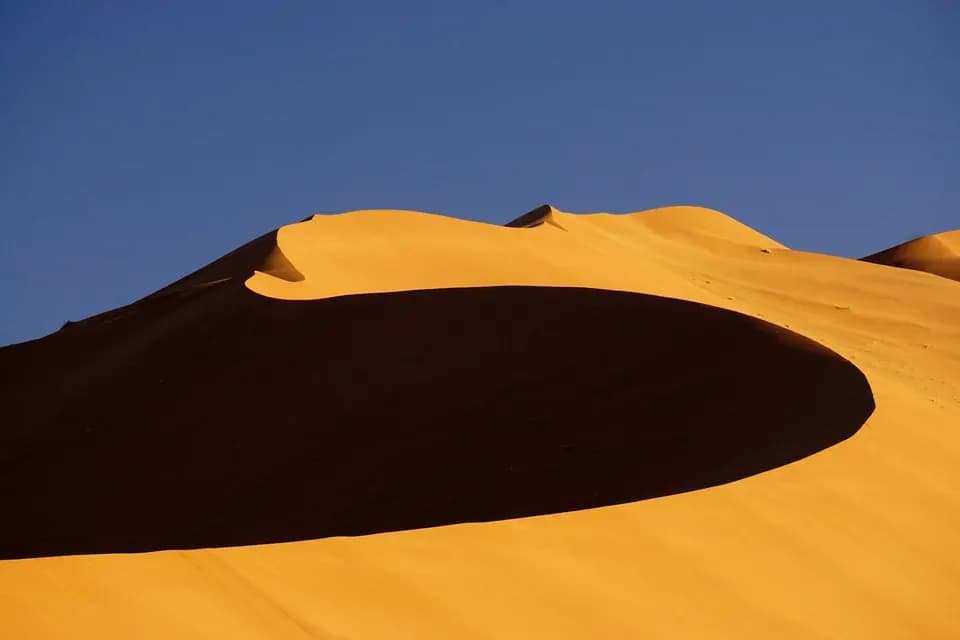
  • Early-morning light sculpts a towering apricot dune at Sossusvlei, half in deep shadow under a clear blue sky

    Sossusvlei

    Sossusvlei

    Left-hand driving, long gravel roads and huge desert skies: Namibia is Africa's most Australian-feeling self-drive, and it's cool and dry in the June–July holidays.

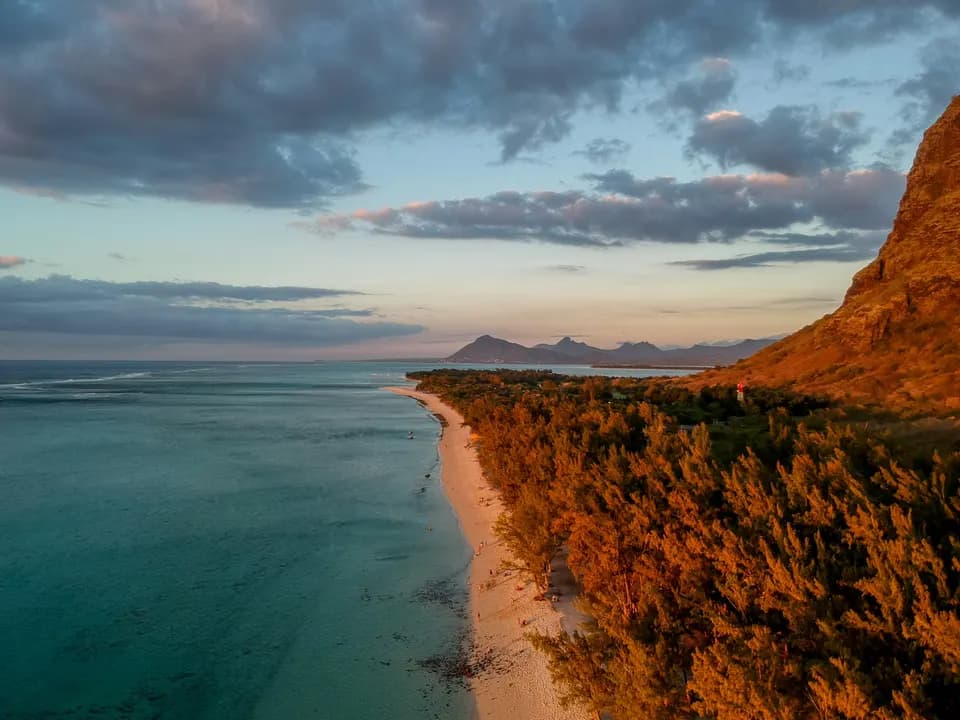
  • Golden-hour view from Le Morne Brabant over a sandy, tree-lined shore and calm lagoon, Mauritius

    Le Morne & the Southwest Coast

    Le Morne & the Southwest Coast

    Air Mauritius flies nonstop from Perth at the time of writing, in about nine hours, and Mauritius is only four hours behind Perth. It's a natural place to unwind for a few days between a safari and the flight home.

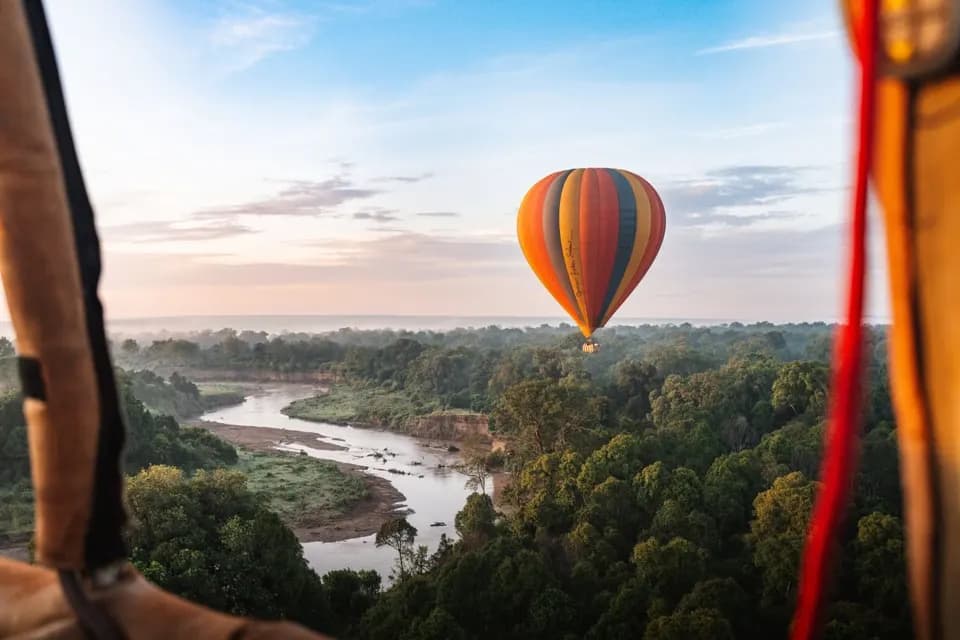
  • A striped hot-air balloon drifts at sunrise above a winding river and forest, seen from another balloon's basket

    Maasai Mara

    Maasai Mara

    The September–October school holidays coincide with the Mara's river-crossing season. Nairobi is one connection away via Johannesburg or a Gulf hub, and Kenya is 7 hours behind Sydney during the Australian winter.

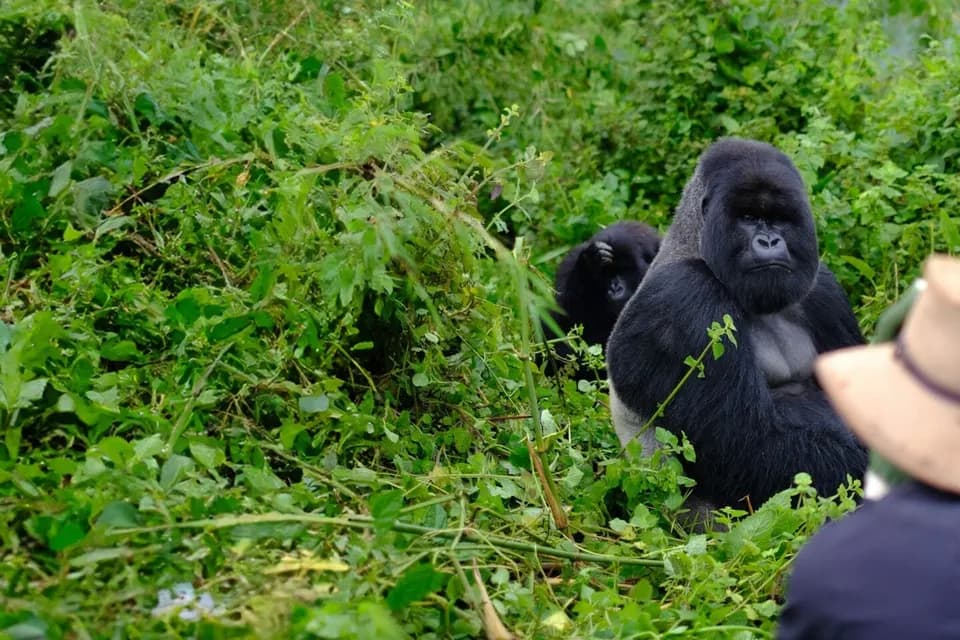
  • A mountain gorilla sits in dense green foliage as a trekker in a sun hat watches nearby

    Volcanoes National Park

    Volcanoes National Park

    Gorilla trekking is a once-in-a-lifetime add-on to an East African safari. Kigali connects via Nairobi, Johannesburg or a Gulf hub, and permits are limited each day, so plan early.

What travelers from Australia love

  • Safari & Wildlife — Southern Africa's dry-season safaris coincide with the June–July school holidays, and the late dry season with the September–October break.
  • Adventure — Self-drives in Namibia and South Africa, gorilla trekking in Rwanda and walking safaris, planned with realistic driving days.
  • Luxury — Fly-in camps in the Okavango Delta and private reserves bordering Kruger, where small numbers of vehicles make every sighting feel personal.
  • Beaches & Islands — A few days in Mauritius or the Seychelles at the end of a safari, so you fly home rested rather than straight from the bush.
  • Family Adventures — Family safaris in South Africa's private reserves or Kenya, timed to school holidays, with camps chosen for your children's ages.

Who we plan for

  • Couples — Longer trips for couples, such as a safari, Victoria Falls and a Mauritius finish in two to three unhurried weeks.
  • Families — June–July or September–October school holidays, with family-friendly camps, private vehicles and short transfers.
  • Groups — Friends sharing a safari vehicle or a self-drive route through Namibia and South Africa.
  • Solo Travelers — Solo travelers who want guided support, with small shared safaris or private guiding and honest advice on single supplements.

Getting there from Australia

Departure gateways
FromAirportGood to know
SydneySydney Kingsford Smith Airport (SYD)Qantas nonstop to Johannesburg at the time of writing, plus Emirates, Qatar Airways, Etihad and Singapore Airlines connections.
PerthPerth Airport (PER)Nonstops to Johannesburg and Mauritius at the time of writing: Australia's shortest flights to Africa.
MelbourneMelbourne Airport (MEL)No nonstop to Africa; connect via Sydney, Perth, Singapore or a Gulf hub.
BrisbaneBrisbane Airport (BNE)Connect via Sydney, Perth, Singapore, Dubai or Doha.
AdelaideAdelaide Airport (ADL)Connect via Perth, Sydney, Singapore, Dubai or Doha.

Nonstop options at the time of writing

  • Sydney–Johannesburg with Qantas: roughly 14–15 hours westbound and about 12 hours coming home. It doesn't operate daily, and frequencies vary through the year.
  • Perth–Johannesburg with Qantas and South African Airways: roughly 11 hours westbound.
  • Perth–Mauritius with Air Mauritius: about 9 hours, a few times a week.

From Melbourne, Brisbane or Adelaide, connect to these flights via Sydney or Perth.

One-stop routings

  • Via Johannesburg: the most direct way to Kruger, Cape Town, Botswana, Victoria Falls and Namibia, and a useful route to Nairobi too.
  • Via Singapore: Singapore Airlines connects all the major Australian cities with Johannesburg.
  • Via the Gulf: Emirates and Qatar Airways (and Etihad from Sydney and Melbourne) connect Australia with East and Southern Africa and the Indian Ocean islands, including Nairobi, Johannesburg, Cape Town, Mauritius and the Seychelles. Gulf connections are sometimes affected by regional disruption, so we always check current schedules.

Journey times

From Sydney, allow roughly 19–21 hours to Cape Town via Johannesburg, and around 21–26 hours to Nairobi. From Perth, the journey is several hours shorter.

Reward seats on the nonstops are popular, so if you're using points, secure your flights early and we'll plan the ground arrangements around them. We only book flights if you ask.

Entry requirements for travelers from Australia

Entry rules change. Here is what official sources said when we last checked — always confirm with the official source and your airline before you travel.

Passport

At our last check, Smartraveller advised checking that your passport is valid for at least six months from the date you leave your destination, because some countries and airlines enforce this, even for transits. The Australian Passport Office also recommends booking travel in the name shown in your passport.

Read more

Validity. Some countries won't let you in unless your passport is valid for six months after you plan to leave, and some airlines apply the rule themselves, even for transits and stopovers, and not always consistently. The Australian Passport Office advises against traveling overseas if your passport expires within six months. Smartraveller suggests allowing at least six weeks to get a passport.

Blank pages. Rules vary by country. For South Africa, Smartraveller advises at least two blank pages if you're arriving from another southern African country, and enough pages for every country on a multi-country trip.

Damage. Normal wear is fine, but tears or cuts (especially on the photo page), illegible details, marks across your photo or the machine-readable zone, removed pages or tampering can stop you traveling. Minor damage may be fixed with a replacement or renewal; major damage means applying for a new passport. If you're unsure, call the Australian Passport Office on 131 232.

Names and visas. The Passport Office recommends booking travel in the name that's in your passport. If you renew after getting a visa or electronic authorization, check whether you need to apply again: many countries don't accept visas in expired passports, and an electronic visa may leave no record in your new one.

Rules change — always confirm with the official source before you travel, and check the requirements of any country you transit.

Travel insurance

At our last check, Smartraveller's advice for Kenya and Tanzania said to get comprehensive travel insurance that covers all medical costs overseas, including evacuation, adding: "If you can't afford travel insurance, you shouldn't travel." Medicare and the PBS don't cover you overseas.

Read more

Why it matters. Smartraveller calls the right insurance as essential as a passport. You can't use Medicare or the PBS overseas, most countries won't give you free or subsidized care, and the Australian Government won't pay your medical bills. Its Kenya and Tanzania advice says your policy must cover all medical costs overseas, including evacuation, and that "if you can't afford travel insurance, you shouldn't travel", even if you're healthy and fit. Medical facilities outside Kenya's urban areas can be extremely limited, so evacuation cover matters on safari.

Choosing a policy.

  • Read the Product Disclosure Statement (PDS) for what is and isn't covered.
  • Make sure it covers every country, stopover and transit point, plus your planned activities.
  • Declare all pre-existing medical conditions when you buy.
  • If you rely on credit card insurance, check what it covers and how to activate it.
  • Check whether you're covered for cancellations if an advice level rises after you book.

Zanzibar. Zanzibar requires its own inbound travel insurance from the Zanzibar Insurance Corporation. It has limits, so keep your comprehensive policy too.

Rules change — always confirm with the official source before you travel, and check the requirements of any country you transit.

Health

At our last check, Smartraveller advised seeing your doctor 6 to 8 weeks before you go to discuss travel vaccinations and protection from diseases such as malaria. Yellow fever certificate rules can apply depending on your route, including when you return to Australia.

Read more

See your doctor early. Smartraveller recommends seeing your doctor 6 to 8 weeks before departure so you have time to act on their advice. Tell them every country on your itinerary, ask which travel vaccinations they suggest, check that your routine vaccinations are up to date, and ask how to protect yourself from insect-borne illnesses such as malaria.

Check each destination. Read the Health section of the Smartraveller advice for every country you'll visit. At our last check it said malaria is widespread in Kenya except Nairobi and areas above 2,500 m, occurs year-round in Tanzania below 1,800 m, and is present in parts of South Africa, including Kruger National Park.

Yellow fever certificates. Kenya, Tanzania, South Africa and Mauritius can ask for a yellow fever certificate if you arrive from (or, for some, transit through) a yellow fever risk country, so the order of your stops matters. According to healthdirect, Australia also asks travelers older than 12 months who stayed overnight or longer in a yellow fever risk country in the 6 days before arriving to show an international vaccination certificate, although you can still enter without one. Certificates are issued at approved clinics.

Rules change — always confirm with the official source before you travel, and check the requirements of any country you transit.

This is general guidance, not legal advice. Requirements depend on your nationality, passport and route. Always verify with official authorities before departure.

Destination by destination

Mauritius

Mauritius

Entry rules change. Here is what official sources said when we last checked — always confirm with the official source and your airline before you travel.

Visa & entry

At our last check, Australians didn't need to arrange a visa in advance for a holiday in Mauritius: Smartraveller says a free visa is provided on arrival for stays of less than 60 days. You should complete the Mauritius All-in-One Travel Digital Form before you travel or on arrival.

Read more

Visa. Smartraveller says stays of less than 60 days get a visa free of charge on arrival; other visits need a visa arranged in advance through a Mauritius embassy, high commission or consulate. Mauritius's Passport and Immigration Office lists Australia as "No visa required". Either way, the immigration officer decides on arrival how long you can stay.

Entry conditions. The Passport and Immigration Office says every visitor must have:

  • a passport valid beyond the intended stay;
  • a return ticket and the right to re-enter their home country;
  • enough money for the stay and a confirmed hotel booking (or sponsorship).

Before you arrive. Complete the Mauritius All-in-One Travel Digital Form online before you travel, or at the airport.

Health measures. If you arrive from a country with malaria, which includes many safari destinations, the Health Department may follow up with a call or visit and possibly a blood test. You may need a yellow fever certificate if you arrive from, or transit through, a yellow fever risk country (this doesn't apply to children under 12 months). At our check, Ebola-related entry restrictions applied to travelers recently in the DRC, Uganda or South Sudan.

Rules change — always confirm with the official source before you travel, and check the requirements of any country you transit.

This is general guidance, not legal advice. Requirements depend on your nationality, passport and route. Always verify with official authorities before departure.

South Africa

South Africa

Entry rules change. Here is what official sources said when we last checked — always confirm with the official source and your airline before you travel.

Visa & entry

At our last check, Australians didn't need a visa to visit South Africa for tourism for up to 90 days. All travelers had to complete an online traveller declaration within 24 hours before the last leg of their journey to South Africa, and again before leaving.

Read more

Visa. No visa is needed for tourism stays of up to 90 days, and Australia is on Home Affairs' visa exemption list. Leaving and re-entering South Africa won't automatically give you another 90 days.

Online traveller declaration. Complete the South African Revenue Service's online traveller declaration within 24 hours before departure on the last leg of your journey to South Africa, and again within 24 hours of leaving. Each traveler needs one, including children. If you can't complete it in advance, you'll be directed to do it at the airport.

Passport. Smartraveller advises at least two blank pages if you're arriving from another southern African country, and enough blank pages for every country on a multi-country trip. South Africa accepts Australian emergency passports but not provisional travel documents.

ETA. South Africa launched an Electronic Travel Authorisation in August 2026, and Home Affairs said it would be voluntary for visa-exempt travelers. Check for changes before you go.

Families and health. Children traveling on a valid passport with one or both parents no longer need to show a birth certificate or consent letter, but unaccompanied minors and some other situations still require documents. You need a valid yellow fever certificate if you arrive from a country where yellow fever occurs.

Rules change — always confirm with the official source before you travel, and check the requirements of any country you transit.

This is general guidance, not legal advice. Requirements depend on your nationality, passport and route. Always verify with official authorities before departure.

Tanzania

Tanzania

Entry rules change. Here is what official sources said when we last checked — always confirm with the official source and your airline before you travel.

Visa & entry

At our last check, Australians needed a visa for Tanzania, and Smartraveller advised applying for an eVisa online before travelling; some single-entry visas were available on arrival. Visiting Zanzibar also required mandatory inbound travel insurance from the Zanzibar Insurance Corporation.

Read more

Visa. Apply through Tanzania's official e-Visa portal before you travel. Tanzania's guidelines list Australia among the Commonwealth countries whose citizens need a visa. At the time of checking, the ordinary single-entry visa cost USD 50 for up to 90 days, and online applications were processed within ten days; wait for your Visa Grant Notice by email. Some single-entry visas can be issued on arrival at main entry points if you meet all the requirements, and you may need to show proof of your return journey.

Passport and documents. Tanzania's guidelines ask for at least six months' passport validity, at least one unused visa page, and a return ticket shown on arrival.

Zanzibar. Buy Zanzibar's mandatory inbound travel insurance from the Zanzibar Insurance Corporation through the official portal. Smartraveller says it covers up to 92 days and has limits, so keep separate comprehensive travel insurance too.

Health checks at the border. You'll need a valid yellow fever certificate if you arrive from a yellow fever risk country (such as Kenya), and some airlines may ask for it when you leave. Arrivals go through Ebola and Mpox screening, including temperature checks. If you've been in the DRC or Uganda, you also need to complete the Ministry of Health's traveler surveillance form.

Rules change — always confirm with the official source before you travel, and check the requirements of any country you transit.

This is general guidance, not legal advice. Requirements depend on your nationality, passport and route. Always verify with official authorities before departure.

Kenya

Kenya

Entry rules change. Here is what official sources said when we last checked — always confirm with the official source and your airline before you travel.

Visa & entry

At our last check, Australians had to apply and pay online for Kenya's Electronic Travel Authorisation (ETA) before arriving. If you're coming from a yellow fever-endemic country, you'll also need a yellow fever vaccination certificate.

Read more

ETA. Apply and pay on the official Kenya eTA portal before you travel. Each traveler, including infants and children, needs their own. The portal says applications usually take about three working days, but recommends applying at least two weeks ahead. At the time of checking, a standard single-entry eTA was listed on the portal at $30, with faster processing for an extra fee, and fees are non-refundable, even if an application is refused. You'll need a photo, contact details, your itinerary and accommodation confirmation. An approved eTA doesn't guarantee entry.

Passport. Kenya's eTA portal asks for at least six months' validity and one blank page. Smartraveller notes many countries apply the six-month rule, including for transits.

Yellow fever. Smartraveller says you'll need a yellow fever certificate to enter Kenya if you're coming from a yellow fever-endemic country, or to transit through Kenya for 12 hours or longer, and some airlines may ask to see it when you leave. Yellow fever is widespread in Kenya itself, which can matter for your next stop and for your return to Australia.

Also note. Arrivals from Uganda, Ethiopia or the DRC may face enhanced Ebola health screening, and entry conditions can change at short notice.

Rules change — always confirm with the official source before you travel, and check the requirements of any country you transit.

This is general guidance, not legal advice. Requirements depend on your nationality, passport and route. Always verify with official authorities before departure.

Practical planning

Currency & payments

Paying for your trip

Our prices are set in US dollars, with Australian-dollar figures shown as approximate conversions. Your quote confirms the amount and currency, and nothing is paid until you've approved your itinerary. Many Australian cards add an international transaction fee to foreign-currency payments, so compare cards before you pay.

Money on the ground

  • US dollars are the practical cash currency for tips in East Africa and in Zimbabwe, where the dollar is widely used. Bring clean, recent notes in small denominations; Australian dollars are hard to exchange in most of Africa.
  • South Africa and Namibia: rand and Namibian dollars. The Namibian dollar is pegged to the rand, and rand are accepted in Namibia, but Namibian dollars aren't accepted in South Africa, so spend them before you cross back.
  • Botswana: the pula, although lodges often quote in US dollars and take cards.
  • Mauritius: the Mauritian rupee. Resorts take cards.
  • Cards: Visa and Mastercard are the most widely accepted; American Express less so. Let your bank know your travel dates.

Plugs & adapters

Australia's Type I plug isn't used in the African countries most Australians visit, so you'll need adapters everywhere. The voltage is similar (220–240V), so your chargers and appliances work once they fit.

  • South Africa: Type M (large round pins) and the newer Type N; many Type N sockets also accept European two-pin plugs.
  • Botswana, Namibia and Zimbabwe: a mix of Types D, G and M.
  • Kenya, Tanzania, Zanzibar and the Seychelles: Type G (UK-style). Mauritius uses G and C.
  • Morocco and Egypt: European two-pin Types C, E and F.

A universal adapter with USB ports covers most combinations. Safari camps often run on solar power and restrict high-wattage appliances, so leave the hair straightener at home and bring a power bank.

Mobile, roaming & eSIM

Australian carriers' international day passes cover many countries, but check that yours includes South Africa, Botswana or Kenya, and what it adds up to over a two- or three-week trip.

  • eSIM: a regional Africa plan can cover several countries on one trip. Your phone must be unlocked and eSIM-capable.
  • Local SIM: Kenya, Tanzania and South Africa, among others, require SIM registration with your passport. Buy from an official store, ideally at the airport.
  • Coverage: good in South African cities and along main roads, patchy in the parks, and very limited in the Okavango Delta and remote Namibia, where some camps have Wi-Fi only in the main area and some have none. Download offline maps for a self-drive.

WhatsApp is the easiest way to keep in touch with guides and lodges, and to message home when Wi-Fi allows.

Time zones & jet lag

Africa is behind Australia, and the gap depends on your state and the season (NSW, Victoria, the ACT, Tasmania and South Australia use daylight saving from October to April; Queensland, WA and the NT don't).

  • Johannesburg, Cape Town, Victoria Falls, Botswana and Namibia (UTC+2): 8 hours behind Sydney and Melbourne in winter and 9 in summer; 8 behind Brisbane year-round; 6 behind Perth.
  • Nairobi, Arusha and Zanzibar (UTC+3): 7 hours behind Sydney in winter and 8 in summer; 5 behind Perth.
  • Mauritius and the Seychelles (UTC+4): 6 hours behind Sydney in winter and 7 in summer; 4 behind Perth.

Flying west, you gain hours, and many travelers find that direction easier on the body clock. The return east is harder, so leave a buffer day before going back to work. We keep your first day in Africa gentle and avoid a dawn game drive the morning after you land.

Seasons & holidays

Australian school holidays fall in four blocks, with dates varying by state. Here's how they map to Africa:

June–July holidays. The dry season is under way across East and Southern Africa, with cool mornings and excellent game viewing in Kruger, Botswana and Zimbabwe. The Okavango's floods are usually near their peak, and the migration typically starts arriving in the Maasai Mara in July. Peak demand, so book early.

September–October holidays. One of the strongest safari windows of the year: late dry season, animals concentrated around water, and river crossings in the Mara. Cape Town is in spring, and Namibia is warm but not yet hot.

Summer holidays (December–January). Cape Town and the Winelands are at their best, and calving season usually starts on the southern Serengeti in late January. Kruger and Botswana are in the green season: hot, with afternoon storms and newborn animals.

April holidays. East Africa's long rains are usually under way, so choose South Africa, Botswana (the start of its dry season), Morocco or Egypt instead.

Outside school holidays, May and November are good-value shoulder months in Southern Africa.

When to start planning

Allow 9–12 months for June–October trips, and longer if you're using frequent-flyer points, because reward seats on the most direct flights are hard to find in school holidays. Fly-in camps in the Okavango Delta and small camps in the Mara have limited rooms for the same dates.

For Mauritius, Egypt or a shoulder-season trip, 4–6 months is usually comfortable.

With a long flight each way, it's worth planning one well-paced trip of two to three weeks rather than squeezing in too much. Tell us everything you're curious about and we'll help you decide what fits, and what to save for next time.

Check your passport's validity early. The Entry requirements section on this page lists verified guidance for Australian passport holders, with official sources (including Smartraveller) and last-checked dates. Always confirm with official sources before you go.

Packing

  • A soft bag. Light aircraft in Botswana and East Africa typically limit luggage to around 15–20 kg per person in soft bags.
  • Winter layers for a June–July safari. Dawn drives in open vehicles can be near freezing in Botswana and Namibia (think of a Canberra winter morning), so a beanie, gloves and a warm jacket are worth it.
  • Neutral clothing, a hat and sunscreen. You know the drill.
  • Adapters for every country (see Plugs & adapters) and a power bank.
  • US dollars in small, recent notes for tips.
  • Binoculars, one pair each if possible.
  • Souvenirs and biosecurity. Wooden carvings, woven baskets, seeds, feathers and animal products may need to be declared or treated when you get home. Check the Department of Agriculture, Fisheries and Forestry's guidance before you buy.
  • Plastic bags stay at home. Kenya and Tanzania have banned them.

Journeys travelers from Australia love

Use our featured journeys as inspiration. We'll tailor the dates, hotels, activities, pace and budget around you.

View All Sample Journeys
Pink, turquoise and yellow houses of Bo-Kaap on Wale Street, Cape Town, against a green hillside10 days

Cape Town + Kruger

City, Coast, Winelands & Big Five

  • A balanced first trip to South Africa
  • Best Mar⁠–⁠May, Sep⁠–⁠Nov
From$5,900approx. ≈ £4,450approx. ≈ CA$8,100approx. ≈ A$8,950approx. ≈ €5,050per person sharing
Elephants walk between palm trees across a floodplain as a safari vehicle watches9 days

Okavango & Victoria Falls

Falls, River & Delta

  • Two fly-in camps in the Okavango Delta
  • Best May⁠–⁠Oct
From$7,500approx. ≈ £5,650approx. ≈ CA$10,300approx. ≈ A$11,400approx. ≈ €6,450per person sharing
Early-morning light sculpts a towering apricot dune at Sossusvlei, half in deep shadow under a clear blue sky10 days

Namibia Desert Landscapes

Dunes, Coast, Rock Art & Etosha

  • Ideal for photographers and walkers
  • Best May⁠–⁠Oct
From$6,200approx. ≈ £4,650approx. ≈ CA$8,500approx. ≈ A$9,400approx. ≈ €5,350per person sharing
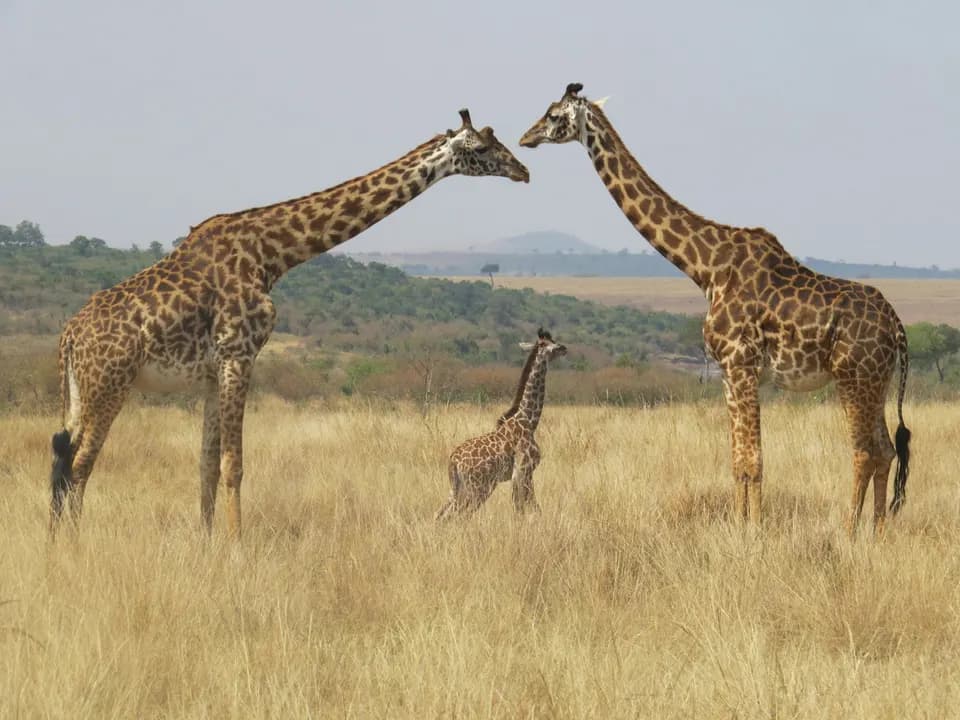
Two Maasai giraffes touch heads above a young calf in golden grassland in the Maasai Mara, Kenya8 days

Kenya Safari Adventure

Amboseli & the Maasai Mara

  • Fly-in stay in a Maasai Mara conservancy
  • Best Jan⁠–⁠Feb, Jun⁠–⁠Oct
From$5,600approx. ≈ £4,200approx. ≈ CA$7,650approx. ≈ A$8,500approx. ≈ €4,800per person sharing

Questions from travelers in Australia

How far ahead should Australians plan a safari?

For the June–July or September–October school holidays, start 9 to 12 months ahead. That's when Southern and East Africa are in their dry season, the most popular time, and small fly-in camps in places like the Okavango Delta have limited rooms.

If you're using frequent-flyer points, start even earlier, because reward seats on the most direct flights are hard to find in peak weeks. Shoulder months such as May or November, or a Mauritius add-on, can often be arranged in 4 to 6 months.

Are there direct flights from Australia to Africa?

Yes, from Sydney and Perth. At the time of writing, Qantas flies nonstop from Sydney to Johannesburg (roughly 14–15 hours westbound), and Qantas and South African Airways fly from Perth to Johannesburg (about 11 hours). Air Mauritius flies from Perth to Mauritius in about nine hours.

There are no nonstops from Melbourne, Brisbane or Adelaide, or to East Africa, so connect via Sydney, Perth, Johannesburg, Singapore or a Gulf hub. The Sydney flight doesn't run daily, so we plan your dates around it, or around the reward seats you've found.

Is June–July a good time for Australians to go on safari?

It's one of the best. Australia's winter is the dry season across most of Africa's safari country: the bush thins out, animals gather around water and rain is unlikely. Kruger, Botswana and Victoria Falls are excellent, the Okavango's floodwaters are usually high, and the Great Migration typically starts arriving in Kenya's Maasai Mara in July.

Mornings are cold on open game drives, so pack warm layers. It's also peak season, so plan early.

Can I add Mauritius to the end of a safari?

Yes, and it's a lovely way to finish. Mauritius is around four hours by air from Johannesburg, and at the time of writing Air Mauritius also flies between Mauritius and Perth, so you can end your trip on a beach and fly home from there.

The Mauritian winter (roughly June–September) is warm and sunny, with cooler evenings and breezier east and south coasts, and it lines up with the dry-season safari months. Three to five nights is enough to unwind, and we'll plan the connections around your international flights.

Do Australians need visas for African countries?

Requirements for Australian passport holders vary by country and change from time to time, so we don't state them from memory. The Entry requirements section on this page lists verified guidance for each destination, with official sources (including Smartraveller) and the date each item was last checked.

Always confirm with Smartraveller and the destination's official immigration website before you book, and allow extra time if your route needs any applications. Your travel designer can point you to the right official sources as your itinerary comes together.

Will my Australian plugs work in Africa?

No. Australia's Type I plug isn't used in the African countries most Australians visit, so bring adapters. South Africa uses Type M (and newer Type N sockets that take European two-pin plugs); Botswana, Namibia and Zimbabwe mix Types D, G and M; Kenya, Tanzania and the Seychelles use Type G; Mauritius uses G and C; and Morocco and Egypt use European two-pin plugs.

The voltage (220–240V) matches Australia's, so your chargers and appliances will work once they fit. A universal adapter with USB ports is the simplest option.

Planning from Australia? We’ll handle the details.

Tell us your dates and dream destinations. We’ll design your journey around your flights, your holidays and your budget — no payment to start planning.