 9 days
Morocco Medina + Desert
Marrakech, the High Atlas, the Sahara & Fes
- Two nights among the Merzouga dunes
- Best Mar–May, Sep–Nov
From$3,300approx. ≈ £2,500approx. ≈ CA$4,500approx. ≈ A$5,000approx. ≈ €2,850per person sharing
North Africa
Imperial medinas, the High Atlas and Sahara dunes
Overview
Morocco packs medinas, snow-capped peaks and Saharan dunes into one easily traveled country. Wander the souks of Marrakech and Fes, walk between Amazigh villages in the High Atlas and sleep under desert stars near Merzouga.
Few countries change character as quickly as Morocco. In a single week you can move from the lantern-lit lanes of a medina founded more than a thousand years ago to a mule track in the High Atlas, then on to the rust-colored dunes of the Sahara, where the loudest sound at night is wind moving sand. Distances are manageable, the main roads are generally good, and the country rewards anyone willing to slow down for a third glass of mint tea.
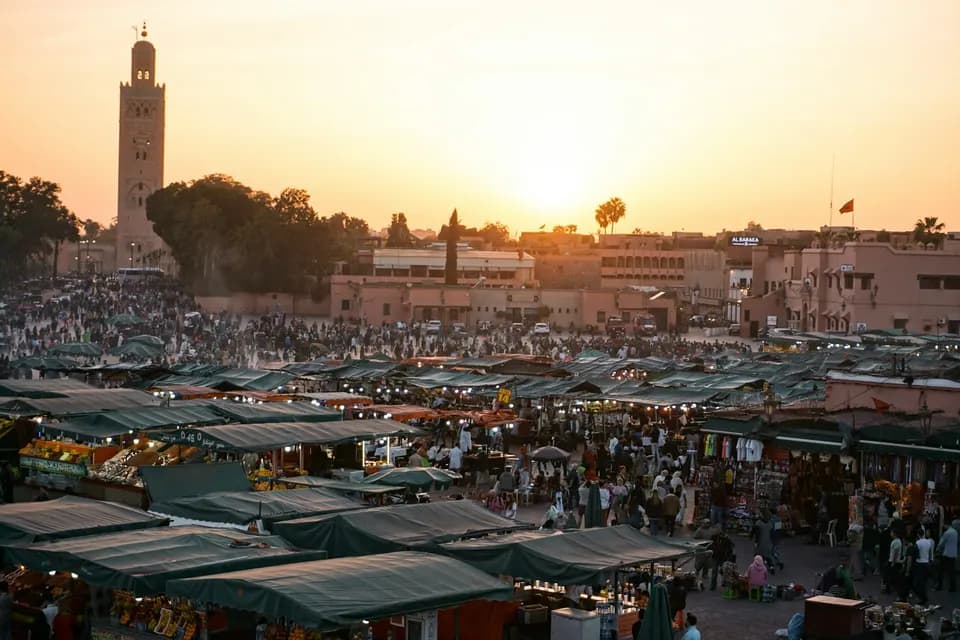
Morocco's great medinas are not museum pieces. They are working neighborhoods where coppersmiths, weavers and bakers trade in lanes their families have worked for generations. Marrakech is the energetic introduction: Jemaa el-Fnaa fills with musicians, storytellers and grill smoke at dusk, while restored riads offer quiet courtyards a few steps away.
Fes feels older and deeper. Its car-free medina, Fes el-Bali, is a maze of madrasas, tanneries and artisan workshops that is best explored with a licensed local guide. Rabat, Meknes, blue-washed Chefchaouen in the Rif Mountains and breezy, Atlantic-facing Essaouira each add a different note.
South of Marrakech, the High Atlas rises to Jebel Toubkal, at 4,167 meters (13,671 feet) the highest summit in North Africa. Amazigh villages cling to terraced valleys here, and walks between them can be as gentle or as demanding as you like.
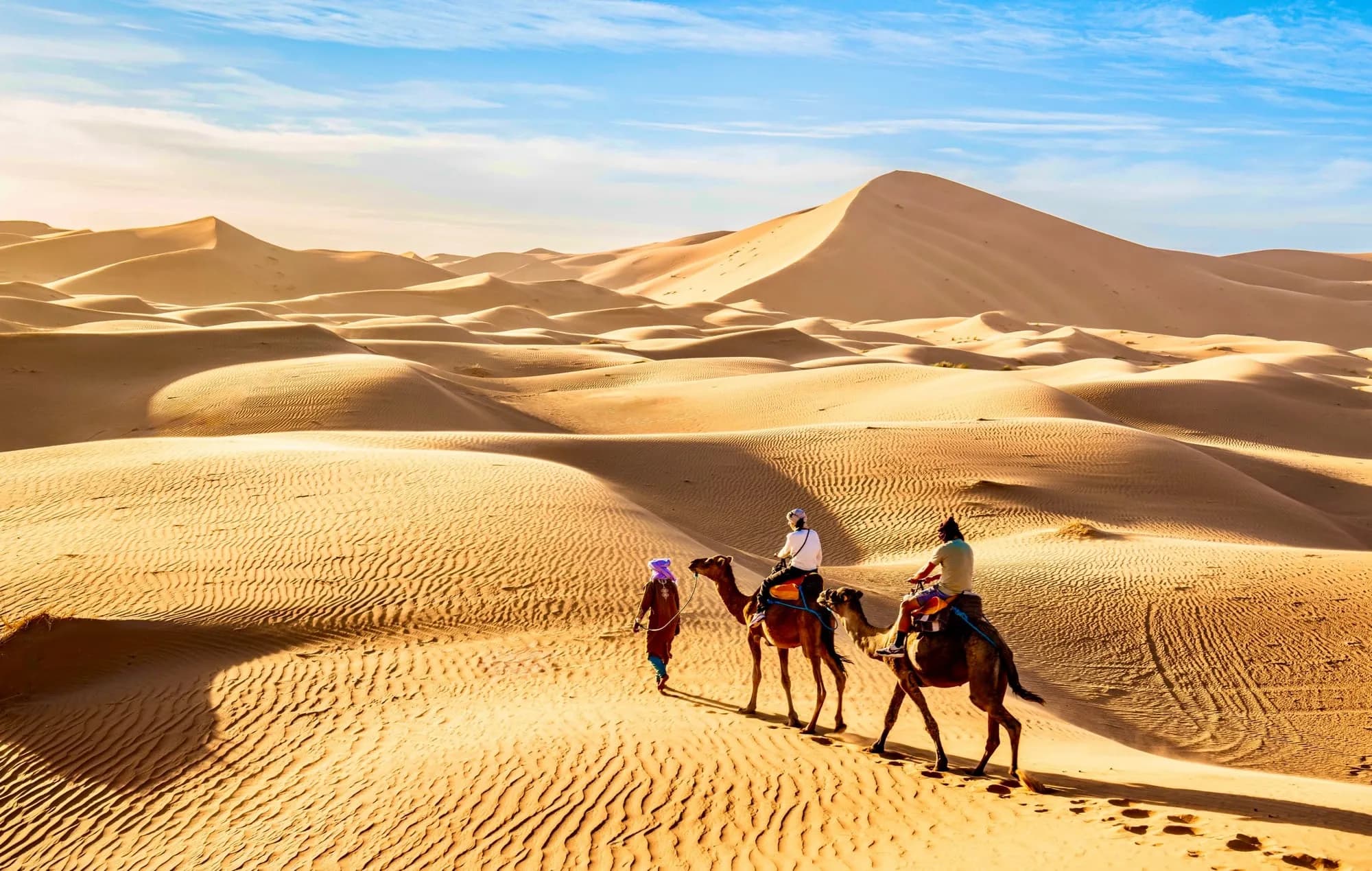
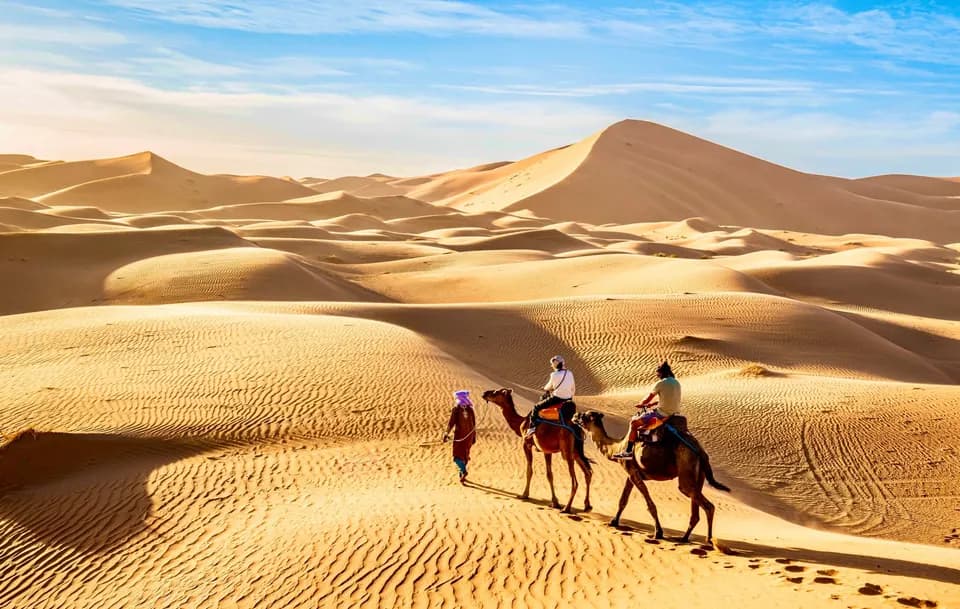
Beyond the Tizi n'Tichka pass the landscape turns to earthen kasbahs, palm oases and the deep gorges of Dades and Todra. This is the classic route toward Merzouga and the dunes of Erg Chebbi, where a camel ride at sunset leads to a night in a desert camp.
Morocco works beautifully as a loop: Marrakech, the mountains and the desert, then north to Fes, or the same route in reverse. We break up the long driving days with overnight stops in the valleys, pair you with drivers and guides who know their regions personally, and choose riads and camps to match your style, from simple and characterful to deeply indulgent.
Our Morocco Medina + Desert journey is a good starting point. Every journey is customizable, so add a cooking class, a hammam, a surf lesson on the Atlantic coast or extra nights wherever you want them.
Why visit Morocco
Watch Jemaa el-Fnaa transform at dusk with food stalls, musicians and storytellers, then retreat to the calm of a riad courtyard.
Explore Fes el-Bali, a UNESCO World Heritage medina of madrasas, tanneries and craft workshops, with a licensed local guide.
Ride out at sunset into the Erg Chebbi dunes near Merzouga and sleep in a desert camp beneath an enormous sky.
Walk between Amazigh villages, terraced fields and walnut groves just an hour or two from Marrakech.
Follow old caravan routes past the fortified village of Aït Ben Haddou, the Dades Valley and the sheer walls of the Todra Gorge.
Slow down in a whitewashed port town with ramparts on the ocean, grilled fish at the harbor and steady Atlantic breezes.
Where to go
Golden dunes and desert camp nights
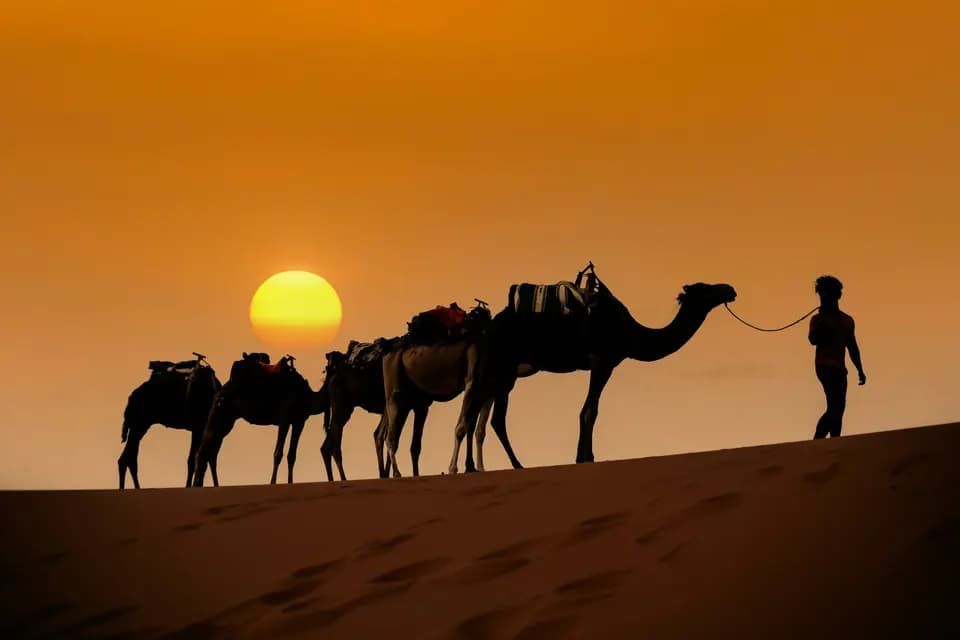
At the edge of the Sahara, the dunes of Erg Chebbi rise in golden waves above the village of Merzouga. Ride out at sunset, spend the night in a desert camp and wake to a silent sunrise over the sand.
Explore Merzouga & the Sahara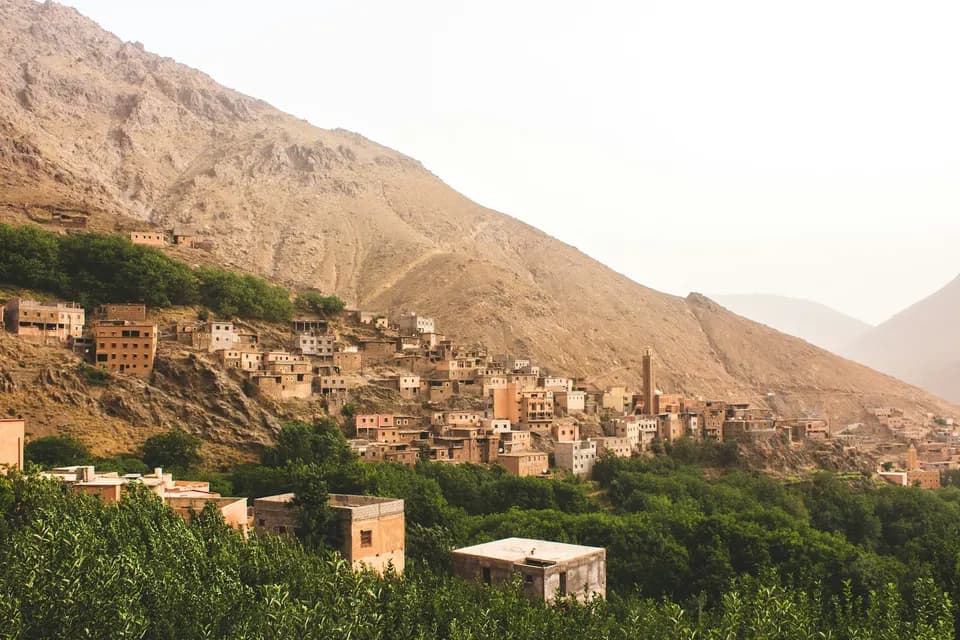
Amazigh villages and North Africa's highest peak
Just an hour or two from Marrakech, the High Atlas offers terraced valleys, Amazigh villages, mule-trail treks and Jebel Toubkal, North Africa's highest peak. Stay in a mountain lodge or village guesthouse and walk at your own pace.
Explore High Atlas MountainsSouks, riads and red-walled energy
Marrakech is Morocco at full volume: a UNESCO-listed medina of souks, palaces and riads, the storytellers and food stalls of Jemaa el-Fnaa, and serene gardens. It is also the gateway to the High Atlas and the Sahara.
Explore Marrakech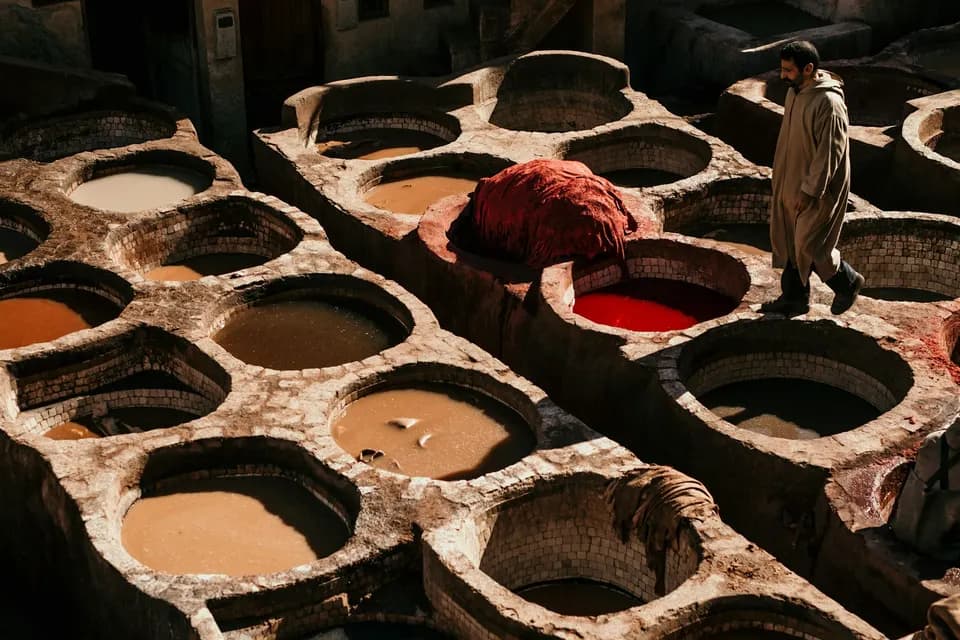
Medieval medina and master artisans
Fes is Morocco's spiritual and cultural heart, home to Fes el-Bali, a vast car-free medina of madrasas, tanneries and artisan workshops. It rewards curious travelers who explore slowly with a good local guide.
Explore FesFeatured journeys
Use our featured journeys as inspiration. We'll tailor the dates, hotels, activities, pace and budget around you.
9 daysMarrakech, the High Atlas, the Sahara & Fes
Plan your way
Tell us your dates, interests, travel style and budget. We’ll create an itinerary around you.
Free to start planning · No obligation · Tailored around you
When to go
Best months
Spring (March to May) and autumn (September to November) are the sweet spots for most of Morocco: warm days in the cities, green valleys or harvest colors in the mountains, and comfortable temperatures in the desert.
Summer is very hot inland. Marrakech and Fes regularly climb well above 35°C (95°F), and the Sahara is hotter still, although the Atlantic coast stays pleasantly mild. If summer is your only window, we'll plan early starts, long lunches and time by the sea.
Winter (December to February) brings crisp, sunny days, snow on the High Atlas and cold nights, especially in the desert and in traditional riads, so pack warm layers. Most rain falls between November and March, and the north is wetter than the south.
Ramadan follows the lunar calendar and moves about 11 days earlier each year. Travel continues normally and the evenings are festive, though some restaurants and shops keep shorter daytime hours.
Travel information
Tipping is part of daily life. Small tips are expected for guides, drivers, porters and riad staff, and around 10 percent is customary in restaurants. Keep a supply of small notes and coins.
Dress and etiquette. Loose clothing that covers shoulders and knees is respectful in the medinas and rural areas, and it keeps you comfortable in the sun. Most mosques are closed to non-Muslims; the Hassan II Mosque in Casablanca, which offers guided tours, is a notable exception. Haggling in the souks is expected, so keep it friendly and unhurried.
Photography. Always ask before photographing people, and expect performers in Jemaa el-Fnaa to ask for a tip. Drones are tightly restricted, so leave yours at home.
Connectivity. 4G coverage is good in towns and along main roads, and local SIM cards and eSIMs are easy to buy. Signal is patchy in the mountains and the desert.
Safety. Use common sense with valuables in busy souks, politely decline unofficial guides and use your driver or a licensed taxi at night.
For visas and health, see our entry requirements guidance and check official sources before you travel.
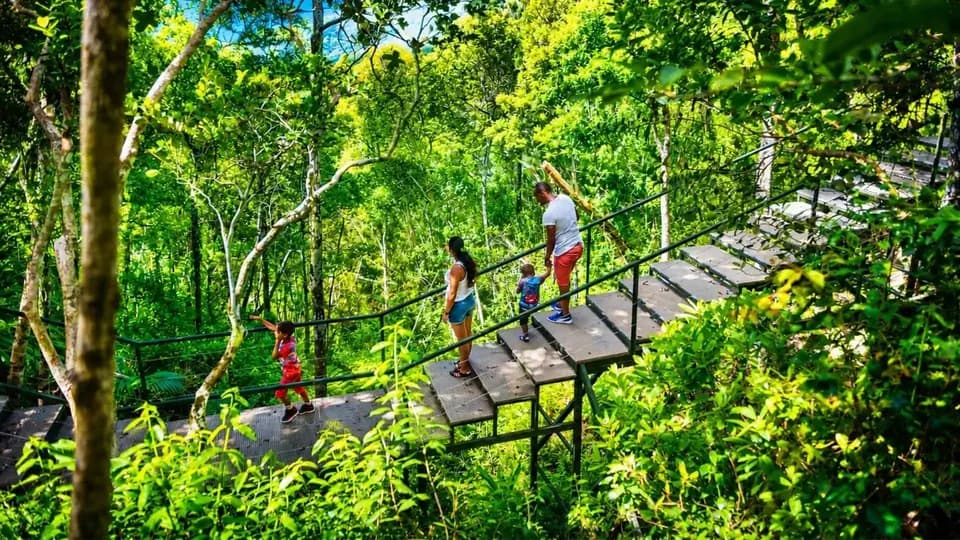
A family trip to Africa can be the adventure your kids talk about for years. Here's how to choose the right age, destinations and lodges, why a private vehicle changes everything, and how to balance safari days with beach time.
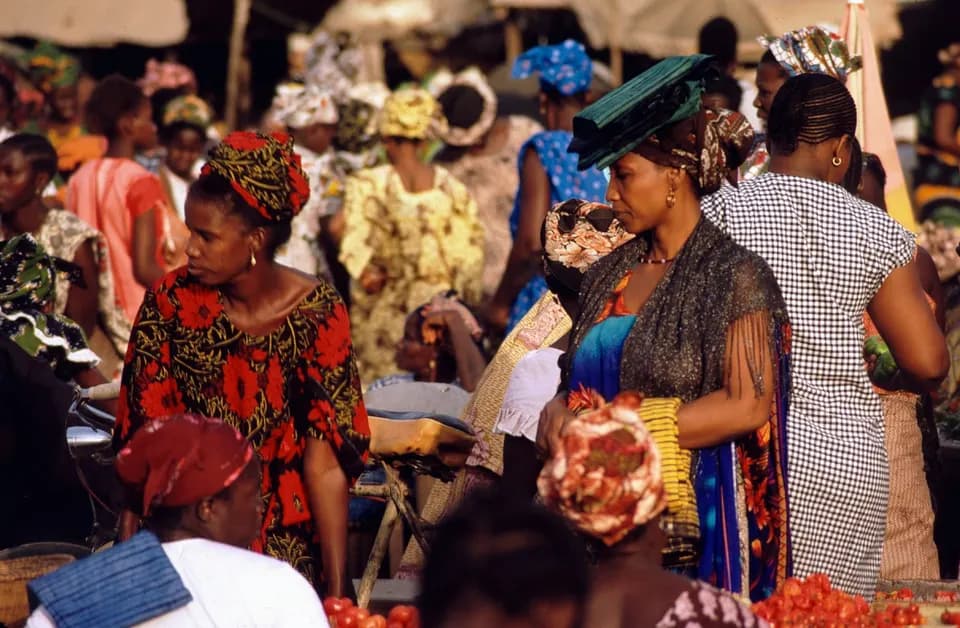
Travel done well supports wildlife, conservation and local livelihoods. This practical guide covers choosing lodges and guides, ethical wildlife encounters, respectful community visits, shopping, plastic, flights and tipping.
Morocco is one of the most rewarding first trips to Africa: vivid medinas, Atlas villages and Saharan dunes, all within a week or two. Here is where to go, how to get around, what riads are like, and how to navigate the souks with confidence.
Tell us how you want to travel. We’ll build the itinerary around your dates, interests and budget.