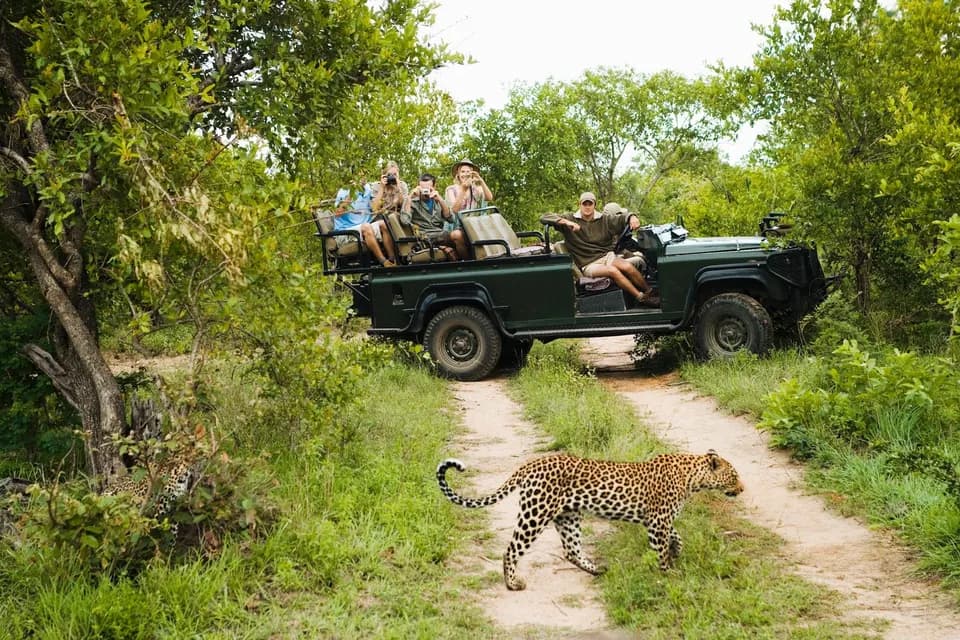
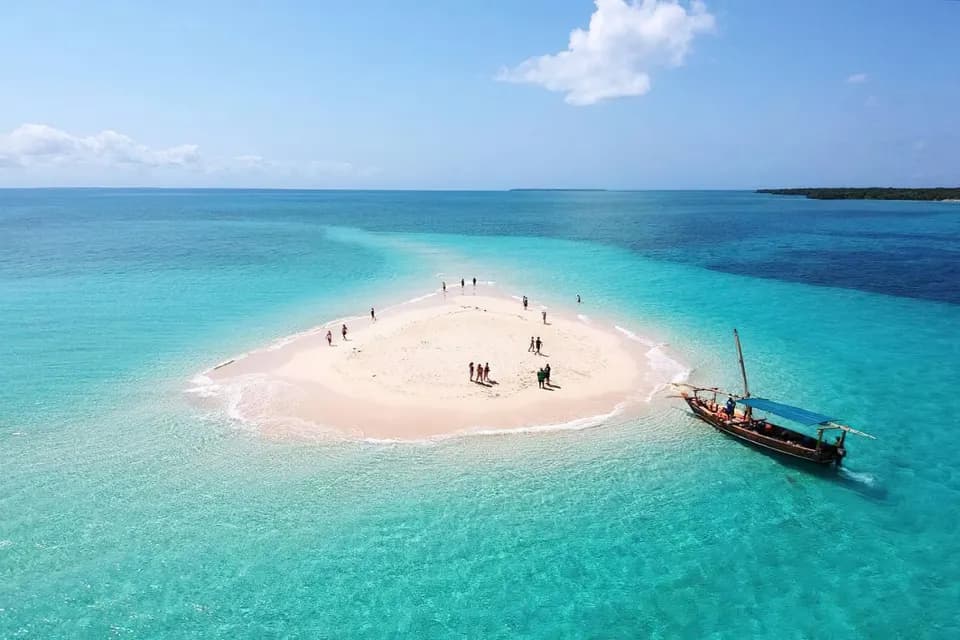
Tanzania is where many Americans take the safari they've pictured since childhood: the endless plains of the Serengeti, the wildlife-filled bowl of Ngorongoro Crater, and the chance to finish on the white sand of Zanzibar.
There's no nonstop from the U.S. at the time of writing, but one-stop routings to Kilimanjaro International Airport (JRO) are well established. Most northern-circuit safaris begin in Arusha, a relaxed town in the foothills of Mount Meru, about an hour's drive from the airport.
Tanzania rewards a slower pace. Distances are big, so many itineraries drive between Arusha, Tarangire and the Crater and then fly into the Serengeti, where following the migration means choosing the right area for the month. A good itinerary moves you with the herds rather than chasing them.
A travel designer plans your route around your vacation dates, the season and your budget, from mid-range tented camps to exclusive fly-in camps. Every journey is customizable, and you only pay once you've approved your itinerary and quote. Our Serengeti + Zanzibar journey is a good starting point.
Why travelers from the United States love Tanzania
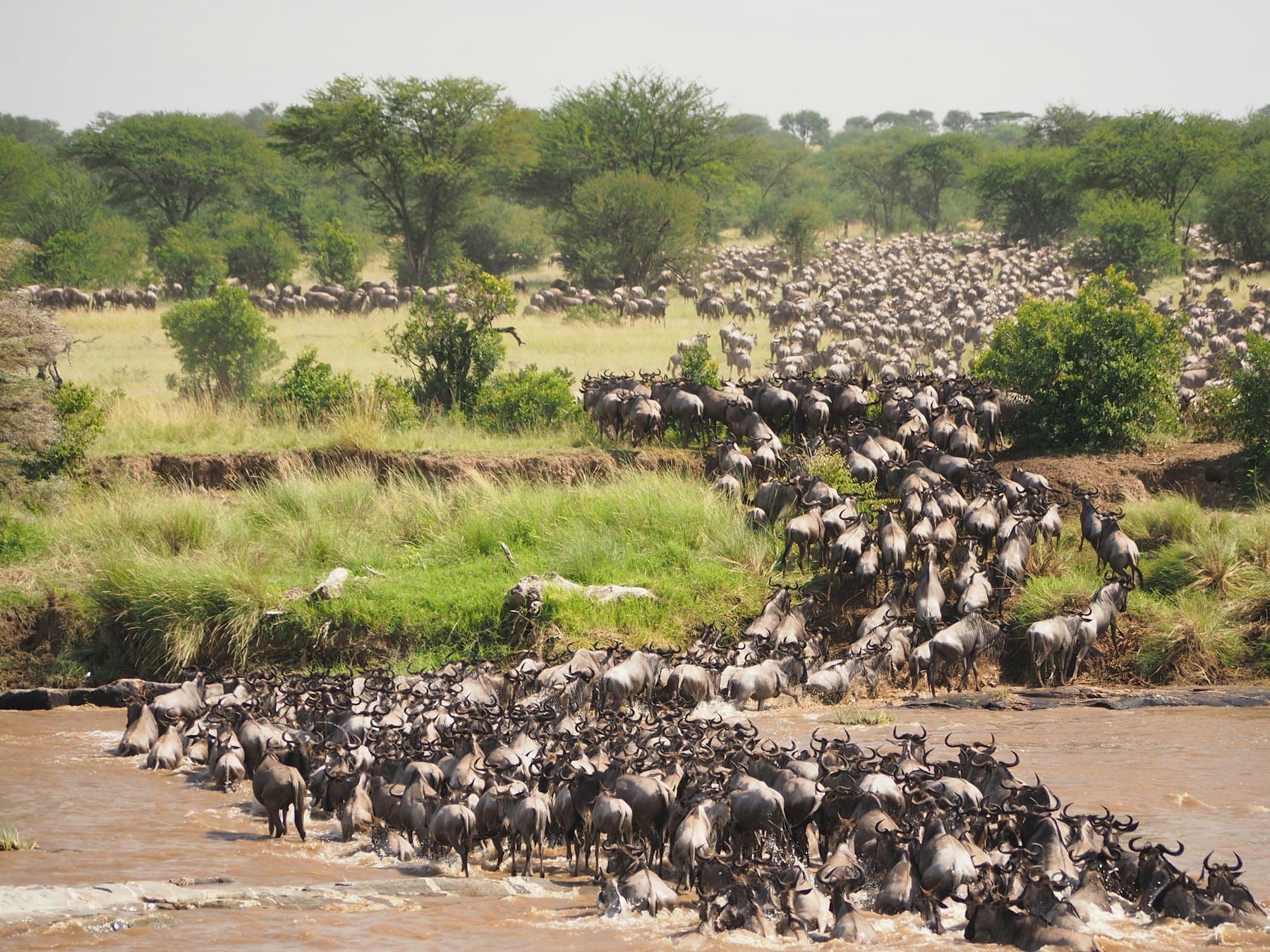
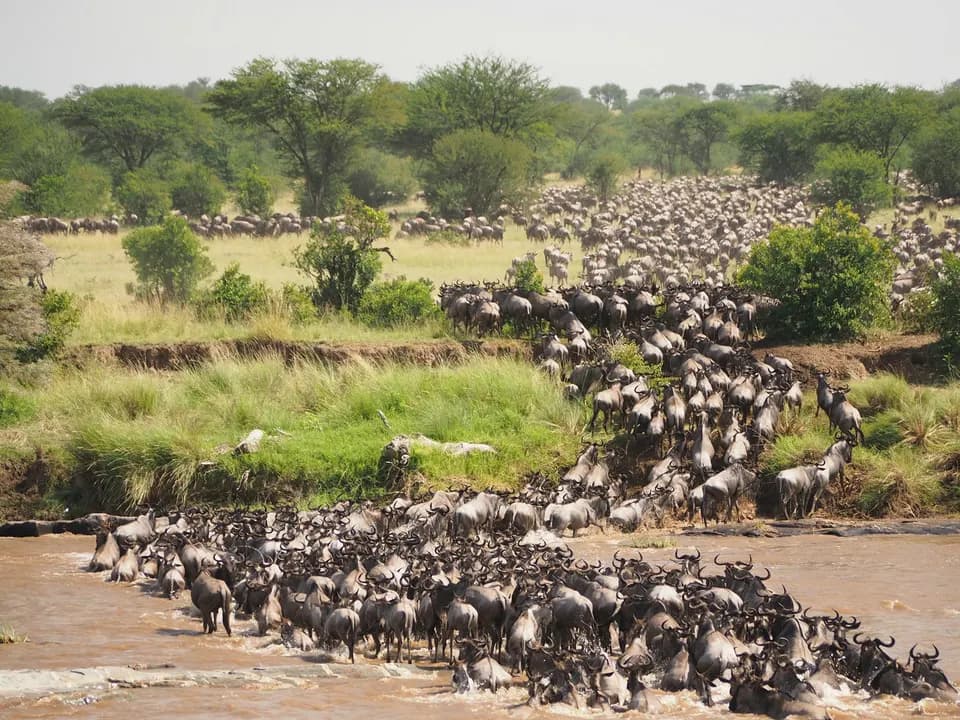
The migration, all year. The wildebeest herds are somewhere in the greater Serengeti ecosystem in every month: calving on the southern plains around January–February, moving through the west around May–June, and in the far north from about July to October.
Ngorongoro Crater. A collapsed volcano with a remarkable concentration of wildlife, including a chance of seeing black rhino, all within one spectacular day of game driving.
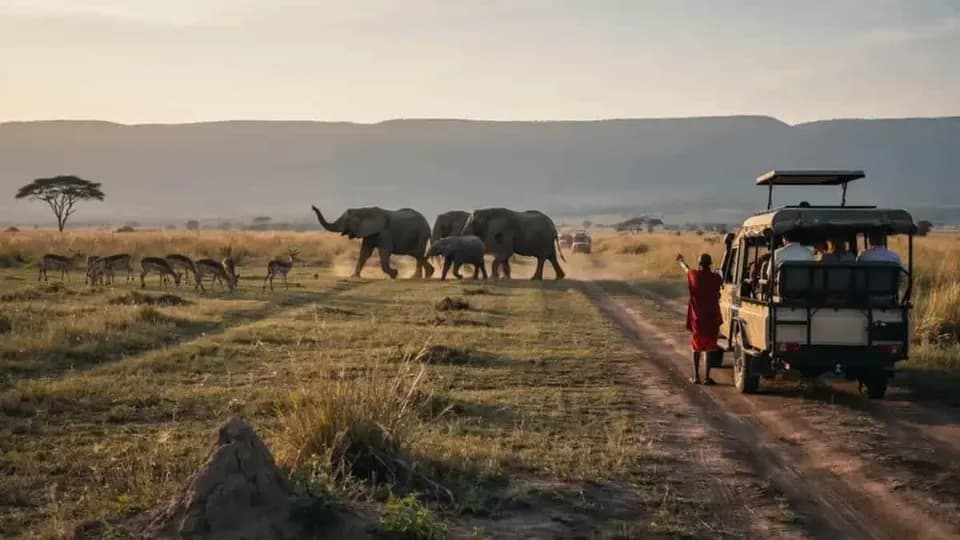
Tarangire's elephants. In the dry season, big herds gather along the Tarangire River among giant baobab trees.
Walking and fly-camping in some areas, for travelers who want to feel the bush on foot.
An easy beach finish. Zanzibar is a short flight from the Serengeti or Arusha, so safari and beach combine without backtracking.
Kilimanjaro. Africa's highest mountain overlooks the arrival airport. Some travelers add a climb; others are happy with the view on a clear morning.
Gentle first days. Coffee farms on the slopes around Arusha and the forested shores of Lake Manyara make an easy start after the long flight, before the big parks.
Getting there
One stop to Kilimanjaro
At the time of writing there's no nonstop between the U.S. and Tanzania. The most common routings to Kilimanjaro International Airport (JRO) connect in Amsterdam (KLM), Istanbul (Turkish Airlines), Addis Ababa (Ethiopian Airlines), Nairobi (Kenya Airways), Paris (Air France) or Brussels (Brussels Airlines). Some Gulf carriers serve Kilimanjaro seasonally, so we check the options for your dates.
From the East Coast, allow roughly 17–22 hours of total travel time; from the West Coast, 22–26 hours. Several of these flights land in the evening, so the first night is usually in or near Arusha.
Two alternatives
Fly into Nairobi on the nonstop from New York, then take a short regional flight to Kilimanjaro, or combine a Kenya safari with Tanzania.
Fly into Dar es Salaam or Zanzibar if your trip starts on the coast, then fly north to the parks.
Inside Tanzania
Light aircraft link Arusha with Serengeti airstrips in roughly one to two hours, depending on the airstrip and any stops, and fly on to Zanzibar at the end. Expect luggage limits of around 15 kg (33 lb) per person in soft bags.
When to go
Late January–February. Calving season on the southern Serengeti plains around Ndutu: thousands of newborn wildebeest, with predators close behind. It's warm, green and quieter than summer, and a strong choice if you can travel outside school vacations.
June–October (summer vacation and fall). The dry season and the classic safari window. The herds usually move through the western and northern Serengeti, with Mara River crossings in the far north from around July to October, and Tarangire is at its best. It's peak season, so plan 9–12 months ahead.
Christmas and New Year (winter break). Good game viewing after the short rains, and a favorite for families. Book early.
November, including Thanksgiving. The short rains usually bring brief afternoon showers, green landscapes and quieter parks.
Spring break. Early March can still be good in the south. The long rains typically arrive in late March or April and continue through May, when some camps close and roads get muddy, though green-season rates can appeal if you're flexible.
Budget & value
What shapes the cost of a Tanzania safari from the U.S.:
Park and concession fees. Tanzania's national-park, concession and crater fees are a significant part of every nightly cost and are revised from time to time. Your quote shows what's included.
Flying or driving. Flying into the Serengeti saves long road days but adds cost. Many itineraries drive the Arusha–Tarangire–Crater section and fly the rest.
Camp location and season. Camps in the migration areas charge more in peak season; seasonal mobile camps move to follow the herds.
Trip length. The northern circuit deserves at least seven or eight nights on safari, plus any Zanzibar days.
As a rough guide only, mid-range safaris often work out at around US$500–900 per person per night in peak season, including fees, meals and game drives, while top-end camps can run well above US$1,200. International flights are extra. Final pricing depends on dates, hotels, group size and itinerary.
Practical tips
Time difference: Tanzania is 7 hours ahead of New York during U.S. daylight saving time and 8 in winter (10–11 hours from the West Coast). An evening arrival helps: dinner, sleep and a fresh start.
Plugs: Type G (UK-style), with some Type D sockets, at 230 volts. Bring adapters and dual-voltage chargers.
Money: US dollars are widely used for tips, so bring clean, recent-series bills in small denominations. Cards work at most lodges, sometimes with a surcharge.
Dress: neutral colors for game drives. Avoid dark blue and black, which attract tsetse flies in parts of the Serengeti and Tarangire.
Luggage: soft bags for light aircraft, typically around 15 kg (33 lb) per person.
Plastic bags: banned in Tanzania, including Zanzibar.
Entry requirements: the Entry requirements section lists verified guidance for U.S. passport holders, with official sources and last-checked dates. Always confirm with official authorities before departure.
Entry requirements: the United States → Tanzania
Entry rules change. Here is what official sources said when we last checked — always confirm with the official source and your airline before you travel.
Visa & entry
At our last check, U.S. citizens needed a visa for Tanzania. Tanzania's immigration guidelines said U.S. passport holders visiting as tourists must apply for the multiple-entry visa (USD 100 at the time of checking), ideally online in advance; the State Department noted a visa can also be obtained on arrival.
Read more
Visa. Tanzania requires U.S. passport holders traveling for tourism to get the multiple-entry visa, even for a single trip. At the time of checking it cost USD 100 and was valid for up to 12 months, with stays of up to 90 days per visit. Apply through the official Tanzania e-Visa portal; Tanzania warns against applying through any other website. Online applications are processed within ten days. Wait for your Visa Grant Notice by email and show it on arrival. The State Department notes U.S. citizens can also get a tourist visa on arrival, but Tanzania recommends applying online.
Passport and documents.
At least six months' validity and one blank page.
A return ticket, and be ready to show you have enough money for your stay.
One visa covers mainland Tanzania and Zanzibar, but Zanzibar also requires its own mandatory travel insurance (see our Zanzibar entry requirements).
Yellow fever. Proof of vaccination is required if you arrive from a country where yellow fever is endemic, including after an airport transit or layover of 12 hours or more there. Check this carefully if you're combining Tanzania with Kenya, where official sources note yellow fever risk.
Rules change — always confirm with the official source before you travel, and check the requirements of any country you transit.
This is general guidance, not legal advice. Requirements depend on your nationality, passport and route. Always verify with official authorities before departure.
Journeys to inspire you
Use our featured journeys as inspiration. We'll tailor the dates, hotels, activities, pace and budget around you.
How far ahead should Americans book a Great Migration safari?
For July to October, the usual migration season in Kenya's Maasai Mara and Tanzania's northern Serengeti, start 9 to 12 months ahead, especially if you're tied to summer-vacation dates. Smaller camps close to the river crossings have few rooms, and the most convenient flights fill up in peak weeks.
If your dates are flexible, consider January–February for calving season in the southern Serengeti, or late October, when the Mara is quieter. The herds follow the rain, so their exact position is never guaranteed; we plan around where they usually are and choose camps that give you options.
Do US citizens need a visa for Kenya, Tanzania or South Africa?
Entry rules for U.S. passport holders differ by country and can change at short notice, so we don't summarize them from memory. The Entry requirements section on this page lists verified guidance for each destination, with links to the official sources and the date each item was last checked.
Before you book flights, confirm the current rules with the U.S. Department of State's country information pages and the destination's official immigration or e-visa portal, and check your passport's validity and blank pages. Your travel designer can point you to the right official sources as your itinerary takes shape.