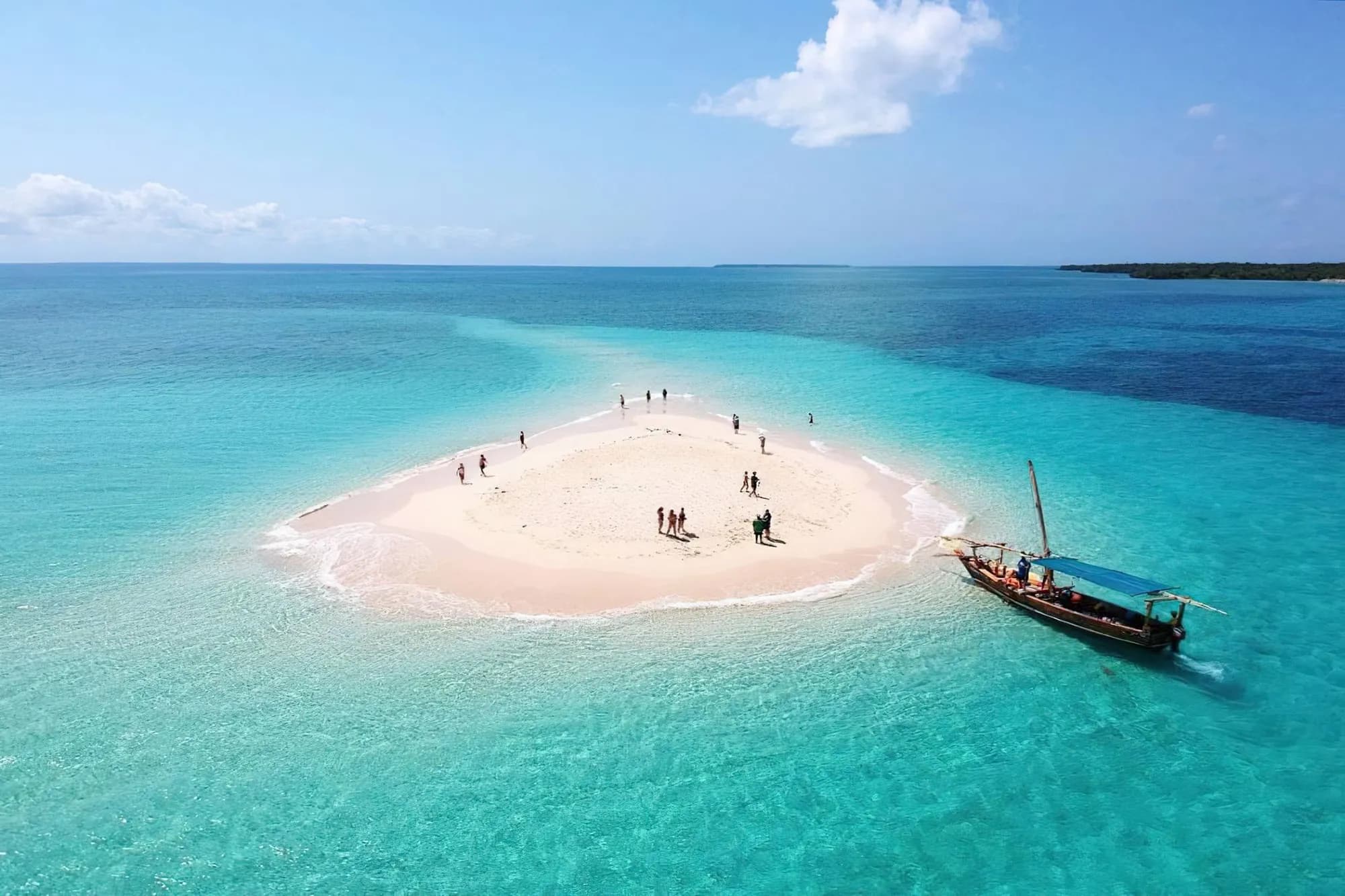
A white sandbank with visitors and a traditional dhow in bright turquoise water off Zanzibar

Travel to Africa · United Kingdom

Zanzibar Holidays from the UK

Zanzibar gives British travelers something rare: a tropical island with a genuinely fascinating history, only two or three hours ahead of UK time. Days start with spice-scented breakfasts, drift between reef, beach and dhow, and end with Swahili seafood in Stone Town, a UNESCO World Heritage Site.

At the time of writing there's no nonstop from the UK, but one-stop routings are well trodden, and many travelers arrive at the end of a safari in Tanzania or Kenya instead. From 2027 it could get simpler: British Airways has announced seasonal flights from Gatwick to Kilimanjaro and Zanzibar from late May.

Zanzibar suits several kinds of trip: a safari-and-beach honeymoon, a family holiday over the summer or Christmas break, or winter sun with a cultural twist. The island's coasts differ a lot, from the swimmable north to the tidal, kitesurf-friendly east, so choosing the right beach matters as much as choosing the hotel.

A travel designer plans the flights, the right coast and your Stone Town time around your school-holiday dates and budget. Every journey is customizable, and there's nothing to pay until your itinerary and quote are exactly right. See Serengeti + Zanzibar for inspiration.

Why travelers from the United Kingdom love Zanzibar

  • Little jet lag, lots of sun. Two or three hours of time difference means a week feels like a week, not five days plus recovery.
  • Two holidays in one. Pair Zanzibar with a Serengeti safari (a short flight away) or with the Maasai Mara via Nairobi.
  • Culture as well as beach. Stone Town's carved doors, markets and rooftop cafés, the memorial on the site of the former slave market and spice-farm tours give a depth that a pure beach resort can't.
  • Water for every age. Calm lagoons for children, snorkeling and diving around Mnemba Atoll, and kitesurfing on the east coast in the windy months (roughly June to September and December to February).
  • Christmas sun. The dry season from about December to February makes Zanzibar a warm alternative to the Canaries or the Caribbean over the festive break.
  • Family-friendly beaches. The north coast around Nungwi and Kendwa has swimmable water at most tides, which makes life easier with younger children.

Getting there

One stop from the UK

At the time of writing there's no nonstop between the UK and Zanzibar. Well-used routings connect via Amsterdam (KLM), Addis Ababa (Ethiopian Airlines, which flies from Heathrow and Gatwick), Nairobi (Kenya Airways), Istanbul (Turkish Airlines), Doha (Qatar Airways) or Dubai (flydubai). The fastest flying times are around 10 hours plus the connection, so allow roughly 12–17 hours in total.

Announced for 2027: British Airways from Gatwick

British Airways has announced a seasonal Gatwick service from 29 May to 31 October 2027, flying out via Kilimanjaro and returning nonstop from Zanzibar. We'll factor it into 2027 plans as schedules firm up.

After a safari

From Arusha, Kilimanjaro or Serengeti airstrips, flights to Zanzibar take roughly one to three hours depending on stops; from Nairobi, about an hour and a half.

From regional airports

Manchester, Birmingham, Edinburgh and Glasgow all have one-stop options via Dubai, Doha, Istanbul or Amsterdam, which avoids a trip to London.

When to go

Summer holidays (late July–early September). Zanzibar's main dry season: sunny, breezy and comfortable, and the ideal finish to a migration safari. Book early for family rooms.

October half-term. Usually dry and warm, with fewer crowds than the summer and good value before the Christmas peak.

Christmas and New Year. Hot, mostly dry and very popular. The festive weeks are the island's busiest, so plan 9–12 months ahead.

February half-term. Hot, humid and mostly dry, with calm, clear water for snorkeling and diving. It pairs beautifully with calving season in the Serengeti.

Easter holidays. The long rains usually arrive in late March or April and last into May. Some hotels close and seas can be rough, so choose another destination unless Easter is early.

Ramadan. It falls about 11 days earlier each year. Many Stone Town restaurants close during daylight hours and the island feels quieter, while resorts generally run as normal.

Budget & value

What shapes the cost of Zanzibar from the UK:

  • Flights. With no nonstop at the time of writing, your choice of routing matters: shorter connections usually cost more, and school-holiday fares rise. If Zanzibar follows a safari, you only add a short regional flight.
  • Where you stay. From simple guesthouses to boutique hotels and private-pool villas, accommodation drives the budget.
  • Board basis. Half-board and all-inclusive plans suit families and quieter coasts; in Stone Town, eating out is part of the experience and usually good value.
  • Season. The Christmas weeks and summer holidays carry the highest hotel rates, while June and early December are often better value.

As a rough guide only, good boutique hotels often start around US$200–400 per room per night (shown on our site as approximate pound conversions), and top-end resorts can exceed US$1,000. Final pricing depends on dates, hotels, group size and itinerary.

Practical tips

  • Time difference: 2 hours ahead of the UK in summer and 3 hours in winter.
  • Plugs: mostly the UK-style Type G at 230 volts, so your chargers should fit; a universal adapter covers the occasional older round-pin socket.
  • Money: US dollars are widely accepted for tips, taxis and excursions, alongside Tanzanian shillings, so bring clean, recent notes. Most hotels accept cards, and some add a surcharge.
  • Dress: Zanzibar is predominantly Muslim, so cover shoulders and knees in Stone Town and villages.
  • Tides: on the east coast the sea goes out a long way at low tide; the north is better if you want to swim at any hour.
  • Sun and reef: the equatorial sun is fierce, and reef shoes help at low tide.
  • Plastic bags: banned in Tanzania, duty-free bags included.
  • Entry requirements: Zanzibar can have arrival formalities of its own in addition to Tanzania's. See the Entry requirements section for verified guidance for British passport holders, with official sources and last-checked dates.

Entry requirements: the United Kingdom → Zanzibar

Entry rules change. Here is what official sources said when we last checked — always confirm with the official source and your airline before you travel.

Visa & entry

At our last check, British citizens needed a visa for Tanzania, best applied for online through the official e-visa portal, though a single-entry visa on arrival was also available at the main entry points. FCDO asked for a passport valid for at least six months from arrival, with at least one blank page.

Read more

Visa. Apply on the Tanzania Immigration Services e-visa portal and nowhere else; Tanzania's guidelines warn against applying through other links. FCDO says you can no longer get a visa from the Tanzania High Commission in London. A single-entry tourist visa is also available on arrival at the main ports of entry, but multiple-entry visas aren't.

  • Cost and validity: at the time of checking, the ordinary (tourist) visa was US$50 and valid for up to 90 days.
  • Timing: online applications are processed within ten days. Wait for your Visa Grant Notice before traveling.
  • Everyone applies separately, including children.
  • One visa covers the mainland and Zanzibar; select your first destination on the form.
  • If you visit another East African country and come back, your ordinary visa can be used again while it's still valid.

At the border. Be ready to show a return or onward ticket. You need a yellow fever certificate if you arrive from a country with yellow fever transmission risk, such as Kenya. At our last check, every point of entry had mpox temperature checks, and arrivals from Uganda and the DRC faced heightened health screening linked to the Ebola outbreak.

Zanzibar has its own mandatory inbound insurance; see UK → Zanzibar · Insurance.

Rules change — always confirm with the official source before you travel, and check the requirements of any country you transit.

Travel insurance

At our last check, every visitor to Zanzibar (residents excepted) had to hold mandatory Inbound Travel Insurance from the Zanzibar Insurance Corporation (ZIC), and no other policy was accepted. It cost US$44 per visitor at the time of checking and covers stays of up to 92 days.

Read more

Zanzibar's mandatory inbound travel insurance took effect on 1 October 2024, and FCDO still listed it as an entry requirement at our last check. You may be refused entry without it.

  • Where to buy: only through the official Visit Zanzibar site and ZIC's Inbound Travel Insurance portal. ZIC says this is the only official website and warns against third-party sites.
  • Cost: US$44 per visitor at the time of checking, inclusive of all charges. The portal listed infants aged 0–2 as free and children aged 3–17 at a 50% discount, with family and group options.
  • Cover: up to 92 consecutive days inside Tanzania, effective on arrival in Zanzibar. ZIC lists emergency medical expenses, repatriation, personal accident, baggage delay, and theft or loss among the benefits; its basic plan doesn't cover terrorism.
  • Proof: your policy documents are emailed to you. Keep a copy with you while traveling.
  • Accuracy: ZIC says false or incomplete information voids the policy, and you'd have to buy a new one.

Treat it as a Zanzibar entry requirement, not a replacement for your own comprehensive travel insurance with medical evacuation. For questions, FCDO points travelers to ZIC at [email protected].

Rules change — always confirm with the official source before you travel, and check the requirements of any country you transit.
This is general guidance, not legal advice. Requirements depend on your nationality, passport and route. Always verify with official authorities before departure.

Journeys to inspire you

Use our featured journeys as inspiration. We'll tailor the dates, hotels, activities, pace and budget around you.

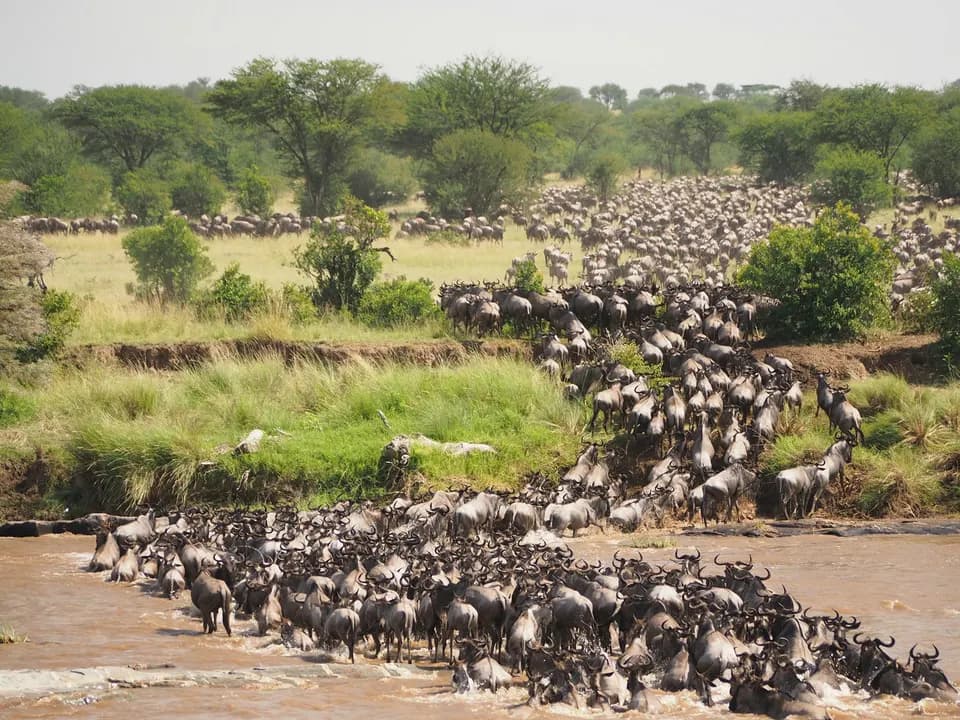
A dense column of wildebeest plunges down a grassy bank into the Mara River during the Great Migration, Serengeti10 days

Serengeti + Zanzibar

Wildlife & Beach Escape

  • Paced for a first safari
  • Best Jan⁠–⁠Feb, Jun⁠–⁠Oct
From$6,900approx. ≈ £5,200approx. ≈ CA$9,450approx. ≈ A$10,500approx. ≈ €5,950per person sharing
Two Maasai giraffes touch heads above a young calf in golden grassland in the Maasai Mara, Kenya8 days

Kenya Safari Adventure

Amboseli & the Maasai Mara

  • Fly-in stay in a Maasai Mara conservancy
  • Best Jan⁠–⁠Feb, Jun⁠–⁠Oct
From$5,600approx. ≈ £4,200approx. ≈ CA$7,650approx. ≈ A$8,500approx. ≈ €4,800per person sharing

Frequently asked questions

Is a safari family-friendly for UK school holidays?

Yes, and the timing works well. The summer holidays fall in East Africa's dry season, when the Great Migration usually reaches Kenya's Maasai Mara, and October half-term is still excellent for safari. At Christmas and February half-term, South Africa combines game drives with Cape Town's summer.

For younger children, we look at family-friendly camps, private vehicles (so you set the pace), shorter transfers and each lodge's minimum-age rules for game drives, which vary. School-holiday weeks are the busiest of the year, so start planning 9 to 12 months ahead.

Love this journey? Let’s make it yours.

Tell us your dates, who is traveling and how you like to travel. We’ll adapt this itinerary — or design something completely new.