"When is the best time to go?" is the question we hear most often, and the honest answer is: it depends on what you want to see, how you feel about rain, and how much you want to spend. East Africa is a year-round destination, but each month has a different character.
This guide covers Kenya, Tanzania (including Zanzibar) and Rwanda. Weather patterns here are shifting, and no two years are identical, so treat everything below as what typically happens rather than a promise.
The short version
- Dry seasons: roughly late June to October, and a shorter, warmer dry spell from about late December to February. Wildlife viewing is usually easiest in these months because vegetation thins out and animals gather near water.
- Long rains: roughly March or April to May. Some camps close, prices drop and the landscape turns vividly green.
- Short rains: roughly November to early December. Usually shorter showers than the long rains, with good value and fewer visitors.
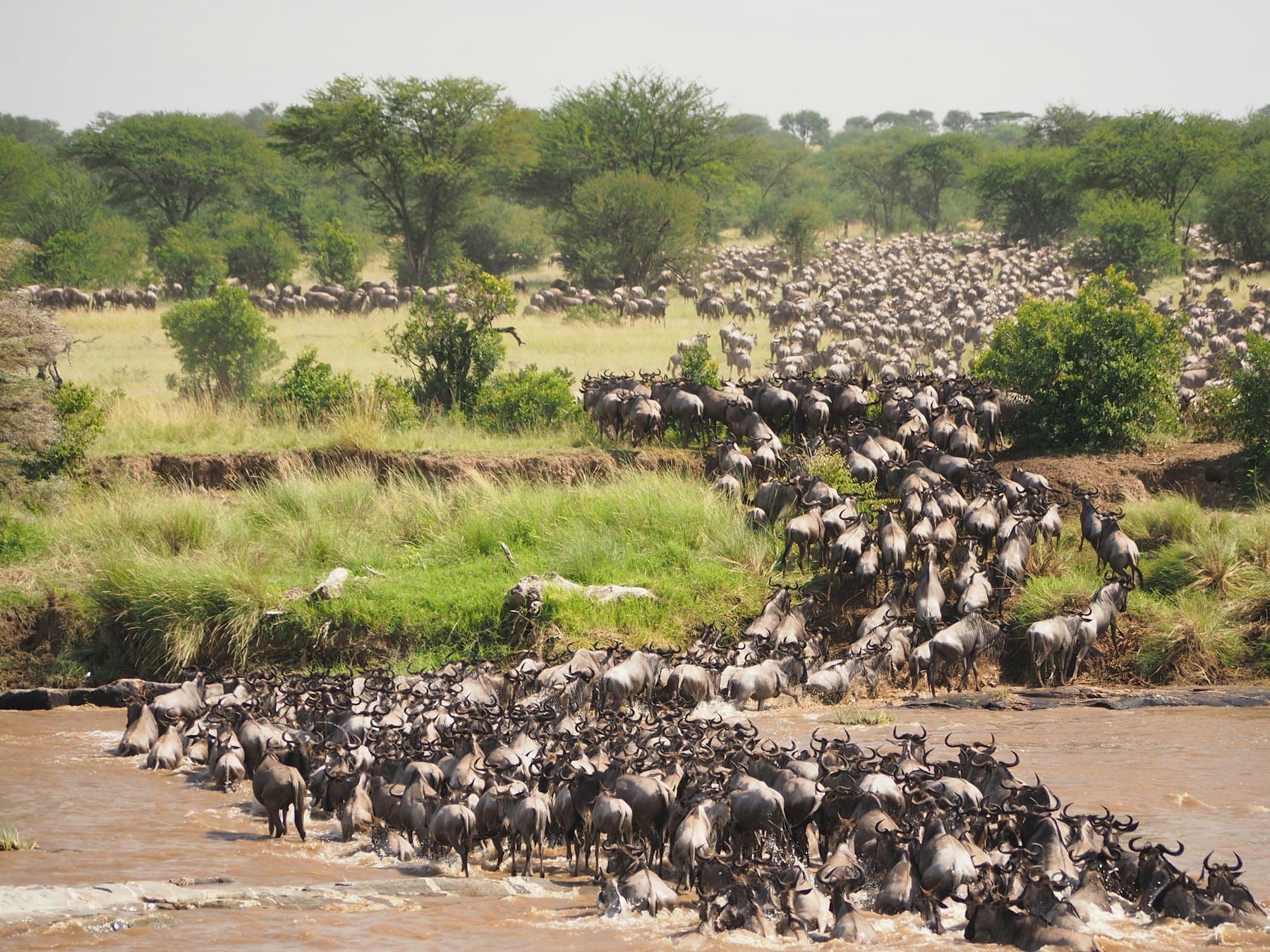
- Great Migration: typically on the southern Serengeti plains for calving from about late January to March, and in the northern Serengeti and Kenya's Maasai Mara from about July to October.
Understanding the rainy seasons
The long rains
The long rains usually arrive somewhere between mid-March and April and can last into late May. In a typical year, rain falls in heavy afternoon or overnight bursts rather than all day, but some weeks are properly wet. Unpaved roads get muddy, a few seasonal camps close entirely, and parts of southern Tanzania can be hard to reach.
The upside is real. Lodges that stay open often offer their lowest rates of the year, you'll share sightings with far fewer vehicles, and the plains are lush with young animals and migratory birds. If you're flexible and don't mind a few showers, this "green season" can be excellent value.
The short rains
The short rains typically fall from about November into early December. Showers are usually brief, often in the afternoon, and many travelers barely notice them. Landscapes freshen up quickly, and it's a good time to find availability at popular camps.
One nuance: southern and western Tanzania, including parks like Ruaha and Nyerere, generally have a single long wet season from around November to April rather than two separate rainy periods. If those parks are on your list, timing matters more.
Month by month
January and February
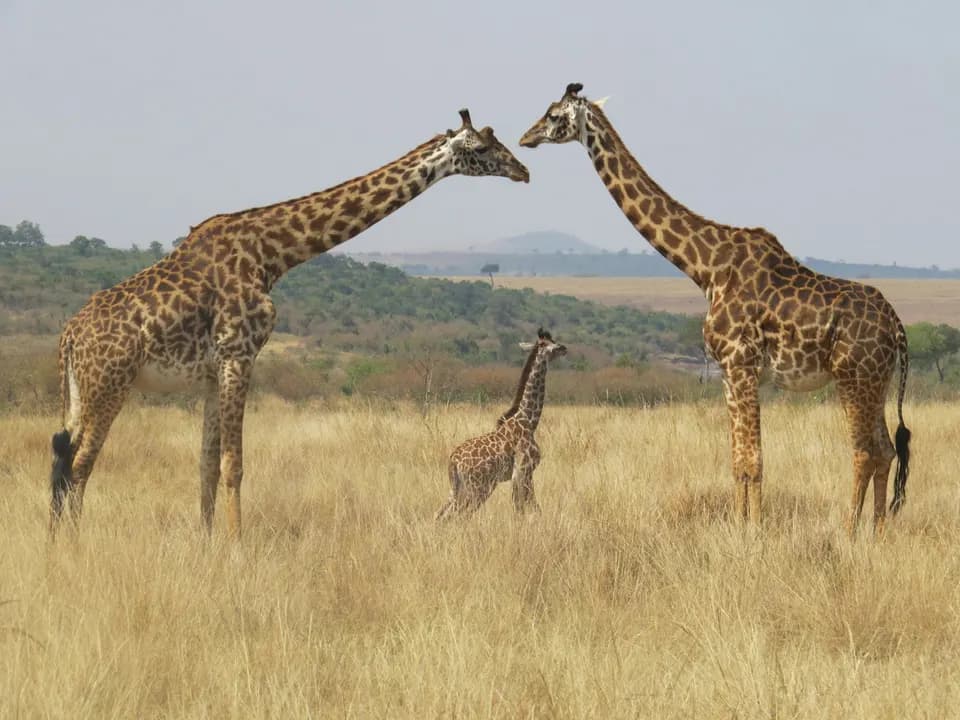
This is one of the most rewarding windows of the year. In the southern Serengeti and the neighboring Ndutu area, the herds typically gather on short-grass plains to give birth, often from late January through February. Where there are newborns, there are predators, so lion, cheetah and hyena sightings can be superb.
It's warm and mostly dry across the region, Zanzibar is hot and sunny, and gorilla trekking in Rwanda is usually comfortable. Prices are in the higher bracket, especially around the end-of-year holidays.
March
A month of transition. Calving can continue into early March, and the herds usually remain in the south. Rain becomes more likely as the month goes on, and some lodges begin offering lower rates. It can be a smart choice if your dates are fixed early in the year.
April and May
The heart of the long rains. Expect lower prices, fewer people and green scenery, alongside real rain and some closed camps. Zanzibar is typically at its wettest in this period, and some beach hotels close for maintenance. Gorilla treks go ahead year-round, but trails are muddier. If you travel now, we'll steer you toward lodges with good year-round access and plan buffer time into your days.
June
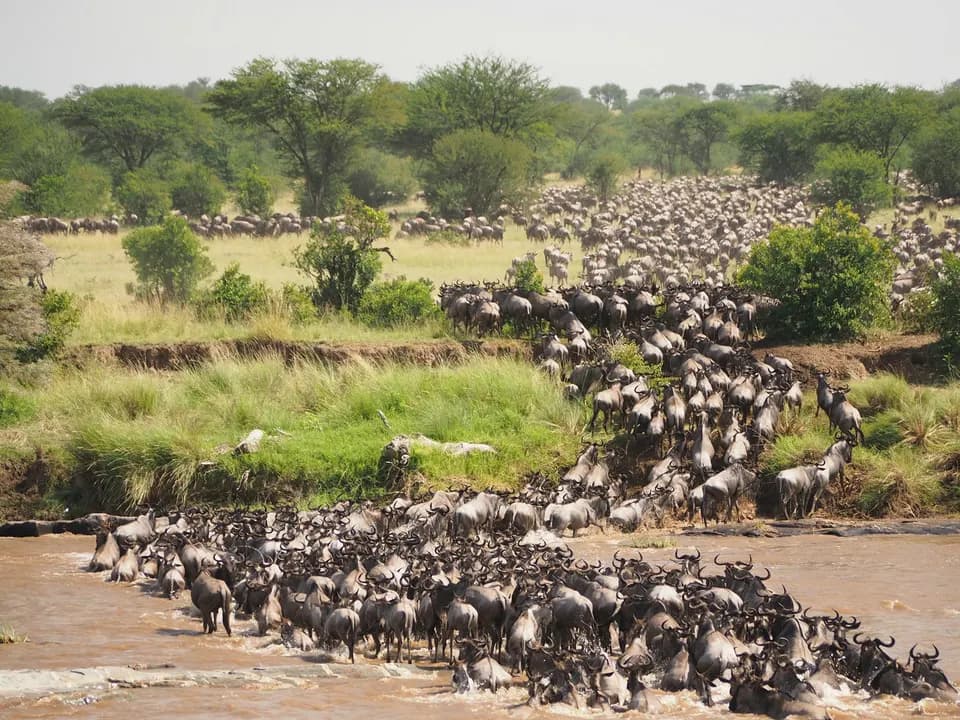
The dry season returns and the herds typically move through the central Serengeti toward the Western Corridor, where the Grumeti River can see crossings around June and July. Early June often combines dry-season conditions with shoulder-season rates, which makes it one of our favorite months for value.
July to October
Peak safari season. Across Kenya and northern Tanzania, grass is short, animals concentrate near water and game viewing is usually excellent. From about July to October, the herds are typically in the northern Serengeti and the Maasai Mara, where dramatic Mara River crossings can happen, although nobody can predict exactly when.
This is also the best-known period for gorilla trekking (drier trails) and a lovely time on Zanzibar, which is warm, dry and breezy. The trade-off is cost and popularity: rates are at their highest and the best-located camps are often reserved many months ahead, so starting your planning early gives you the widest choice.
November and early December
The short rains bring shorter showers and good value. The herds typically begin moving south again through the eastern Serengeti, and by December many have returned to the southern plains. It's a quieter time to visit, with fresh green landscapes and plenty of birdlife.
Late December
The festive period is popular with families and couples, so prices and demand rise sharply around Christmas and New Year. The weather is usually warm and fairly dry, and the herds are typically back in the south.
Where the Great Migration typically is
The migration is a continuous, year-round movement of wildebeest and zebra, driven by rain and fresh grass. A rough calendar looks like this:
- December to March: southern Serengeti and Ndutu, with calving typically in late January and February.
- April to May: moving north and west through the central Serengeti.
- June to July: the Western Corridor and the Grumeti River area.
- July to October: northern Serengeti and the Maasai Mara, with Mara River crossings.
- November: moving south again through the eastern Serengeti.
Because rainfall shifts from year to year, we choose camps that give you flexibility, and in some seasons we suggest splitting your stay between two areas. Our Serengeti + Zanzibar journey shows how that can work, and the Maasai Mara is often the better base from about August to October.
Gorilla trekking in Rwanda
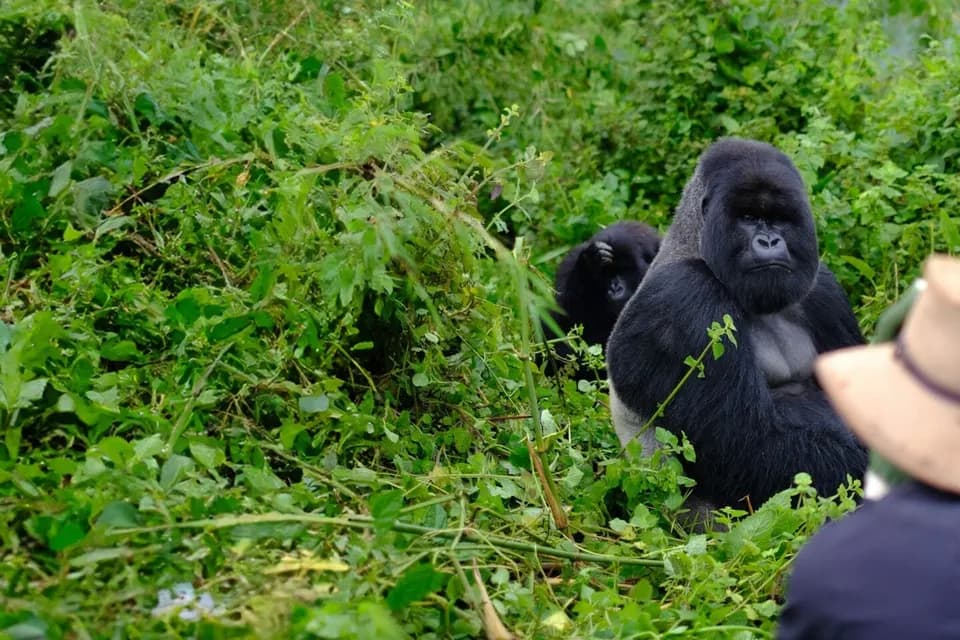
Treks in Volcanoes National Park run year-round. The drier months, roughly June to September and December to February, tend to be more comfortable, while the wetter months bring muddier, more slippery trails. Permits are limited, so the month you travel often depends on availability as much as weather. If you'd like to combine gorillas with the migration, see our Gorillas & the Great Migration journey.
Zanzibar beach weather
For the Indian Ocean, the most reliable conditions are typically from June to October and from about December to February. April and May are usually the wettest months, and November can bring short showers. Since the best beach months overlap nicely with the best safari months, bush-and-beach trips work well for most of the year.
Choosing your month: the trade-offs
- Wildlife first? Go in the dry season and accept higher prices.
- Budget matters most? Consider the shoulder months (June, November, early December) or the green season, and ask us which camps stay open.
- Traveling with kids? School breaks often decide the month; we'll make it work with the right lodges and pacing.
- Want fewer vehicles? Private conservancies in Kenya limit vehicle numbers year-round, which helps in the busiest months.
Every trip we plan starts with your priorities, not a fixed calendar. Tell us your ideal month and what matters most, and we'll explain the honest trade-offs before you commit. When you're ready, start planning your trip or browse the Kenya Safari Adventure for inspiration.