 8 days
Tunisia Coast & Sahara
Carthage, Roman Wonders, Oases & Djerba
- Roman ruins, oases and a Sahara night
- Best Mar–May, Sep–Nov
From$2,500approx. ≈ £1,900approx. ≈ CA$3,450approx. ≈ A$3,800approx. ≈ €2,150per person sharing
Tunis blends a UNESCO-listed medina, the superb Roman mosaics of the Bardo Museum and French-era boulevards with the seaside ruins of Carthage and the blue-and-white village of Sidi Bou Said, all linked by a short light-rail ride.
Tunisia's capital sits beside a lagoon on the Gulf of Tunis, and it's a city of contrasts. In a single day you can bargain in medieval souks, admire Roman mosaics, sip coffee on a French-era boulevard and watch the sunset over the Mediterranean from the cliffs of Sidi Bou Said.
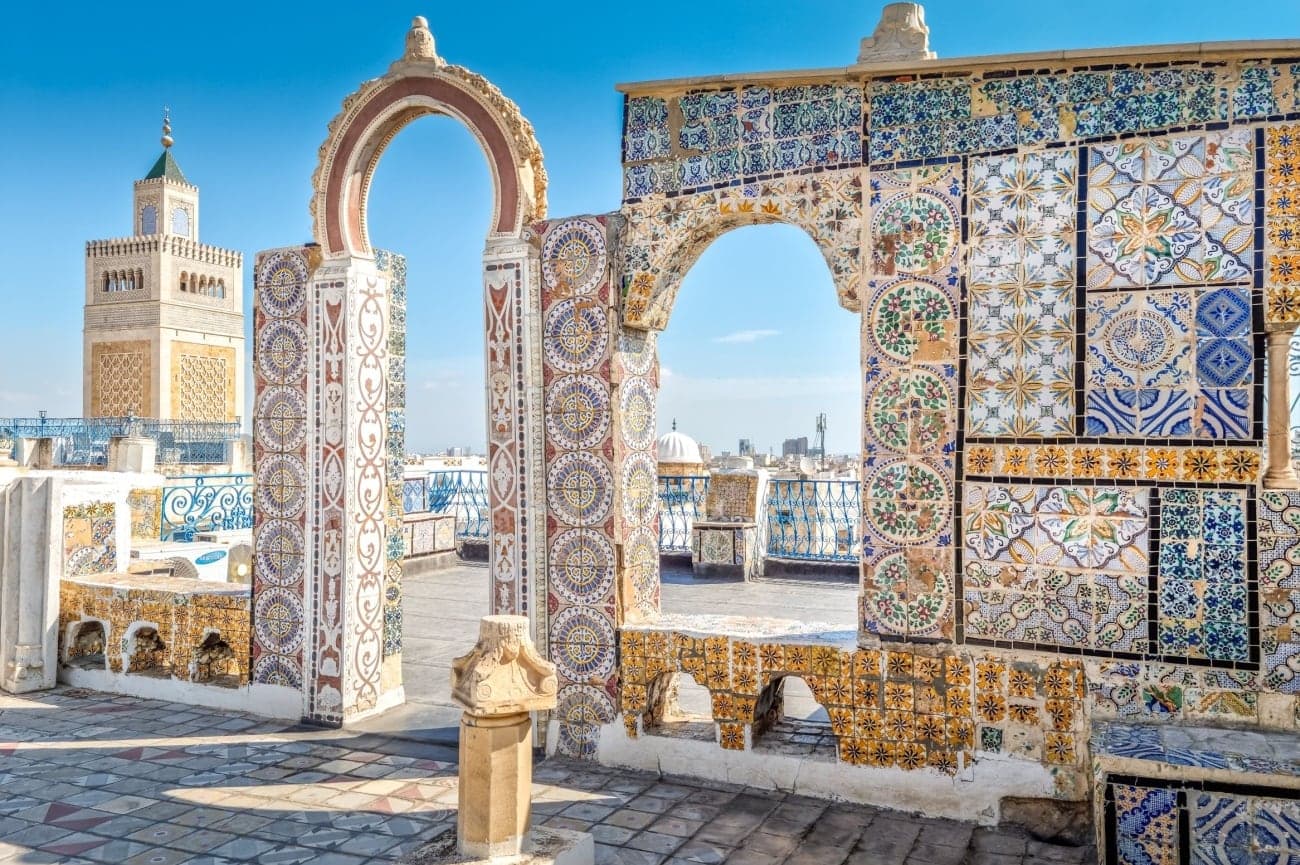
The Medina of Tunis, a UNESCO World Heritage Site, is one of the best-preserved in North Africa, with hundreds of monuments, from palaces and mausoleums to madrasas and fountains. At its heart stands the Zitouna Mosque, whose courtyard non-Muslims can usually view from a designated area at set hours.
The souks radiate outward by trade, from perfumes and chechia caps to textiles and gold, and restored mansions such as Dar Ben Abdallah reveal the elegance of old merchant homes. Rooftop cafés look out over minarets and domes.
The Bardo National Museum, housed in a former palace of the beys, holds an exceptional collection of Roman mosaics, including a famous portrait of the poet Virgil; some galleries may be closed during ongoing renovations. Just outside the medina, Avenue Habib Bourguiba, lined with trees, cafés and the Cathedral of St. Vincent de Paul, anchors the French-built Ville Nouvelle.
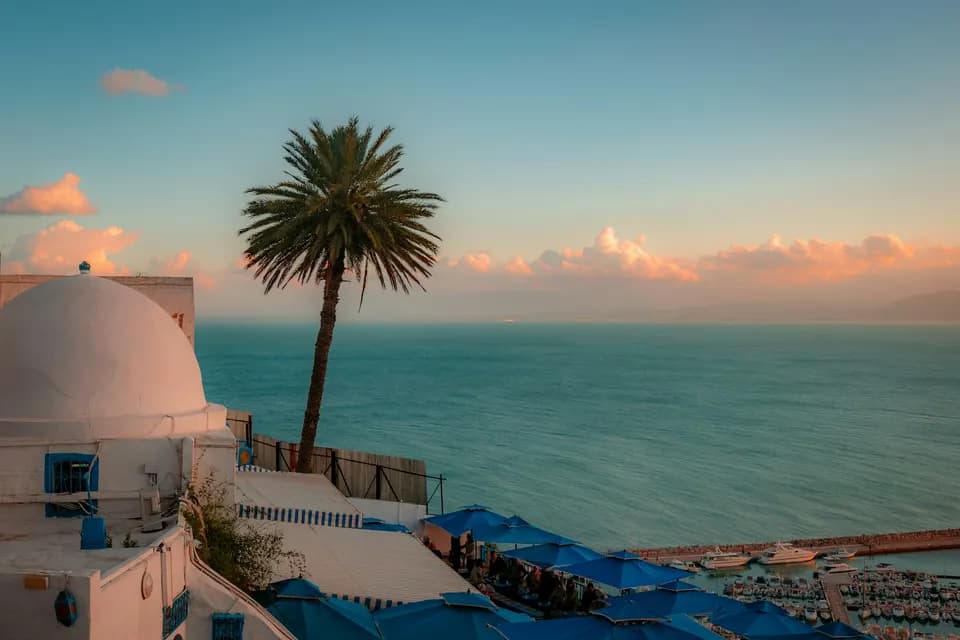
A short ride on the TGM light railway takes you to the northern suburbs. Carthage, founded by the Phoenicians and later rebuilt by Rome, is a UNESCO site whose ruins include the Antonine Baths, the Punic ports and Byrsa Hill. Sidi Bou Said, a village of whitewashed houses with blue doors and shutters, perches on a cliff above the sea, and La Marsa, near the end of the line, has a lively beach and seafront cafés. La Goulette, closer to the city, is known for its fish restaurants.
We recommend two or three nights, staying in a restored medina house or a seaside hotel in Sidi Bou Said, La Marsa or Gammarth. Our Tunisia Coast & Sahara journey begins here before heading south toward Djerba and the desert.
The Medina of Tunis
Wander souks, palaces and mosques in one of the best-preserved medinas in North Africa.
Bardo mosaics
See an outstanding collection of Roman mosaics, including the celebrated portrait of Virgil.
Carthage
Explore the ruins of Rome's great rival, from the seaside Antonine Baths to the ancient Punic ports.
Sidi Bou Said
Sip mint tea with pine nuts in a blue-and-white clifftop village overlooking the Gulf of Tunis.
Avenue Habib Bourguiba
Stroll the tree-lined boulevard of the Ville Nouvelle, past cafés and Art Nouveau facades.
Seafood in La Goulette
Enjoy grilled fish and seafood in the old port district, a local favorite for long dinners.
Tunisian cooking is bold, fragrant and generous with olive oil and harissa, the chili paste that UNESCO recognizes as intangible cultural heritage. Start with brik, a crisp pastry with egg, tuna and capers, and lablabi, a hearty chickpea soup that's a favorite local breakfast. Couscous, with fish, lamb or vegetables, is the national dish, and ojja, eggs poached in a spicy tomato and pepper sauce, is an everyday staple.
For something sweet, try bambalouni doughnuts in Sidi Bou Said or makroudh, date-filled semolina pastries, with mint tea and pine nuts. Tunisia also makes its own wine, served in licensed restaurants.
Best months
Spring (April to early June) and autumn (September and October) are ideal, with warm, sunny days, pleasant evenings and good weather for combining sightseeing with time by the sea.
July and August are hot and humid, and the seaside suburbs fill with vacationers as city residents head for the beaches. Winter, from November to March, is mild but can be rainy and cool, with quieter sites. Ramadan moves earlier each year; during the holy month, days are calmer and evenings in the medina come alive.
Tunis–Carthage International Airport (TUN) is only about 15 to 20 minutes from the city center. The TGM light railway runs from Tunis Marine station to La Goulette, Carthage, Sidi Bou Said and La Marsa, an inexpensive and scenic way to reach the northern suburbs.
Yellow taxis are plentiful and should use the meter, and ride-hailing apps operate in the city. The medina is best explored on foot, ideally with a local guide on your first visit. For day trips to Dougga, Kairouan or El Djem, a private driver is the most comfortable choice.
Use our featured journeys as inspiration. We'll tailor the dates, hotels, activities, pace and budget around you.
8 daysCarthage, Roman Wonders, Oases & Djerba
Tell us how you like to travel and we’ll shape an itinerary — the pace, the places, the stays — around you. No payment to start planning.