 8 days
Tunisia Coast & Sahara
Carthage, Roman Wonders, Oases & Djerba
- Roman ruins, oases and a Sahara night
- Best Mar–May, Sep–Nov
From$2,500approx. ≈ £1,900approx. ≈ CA$3,450approx. ≈ A$3,800approx. ≈ €2,150per person sharing
Tunisia
Island beaches, whitewashed villages and history
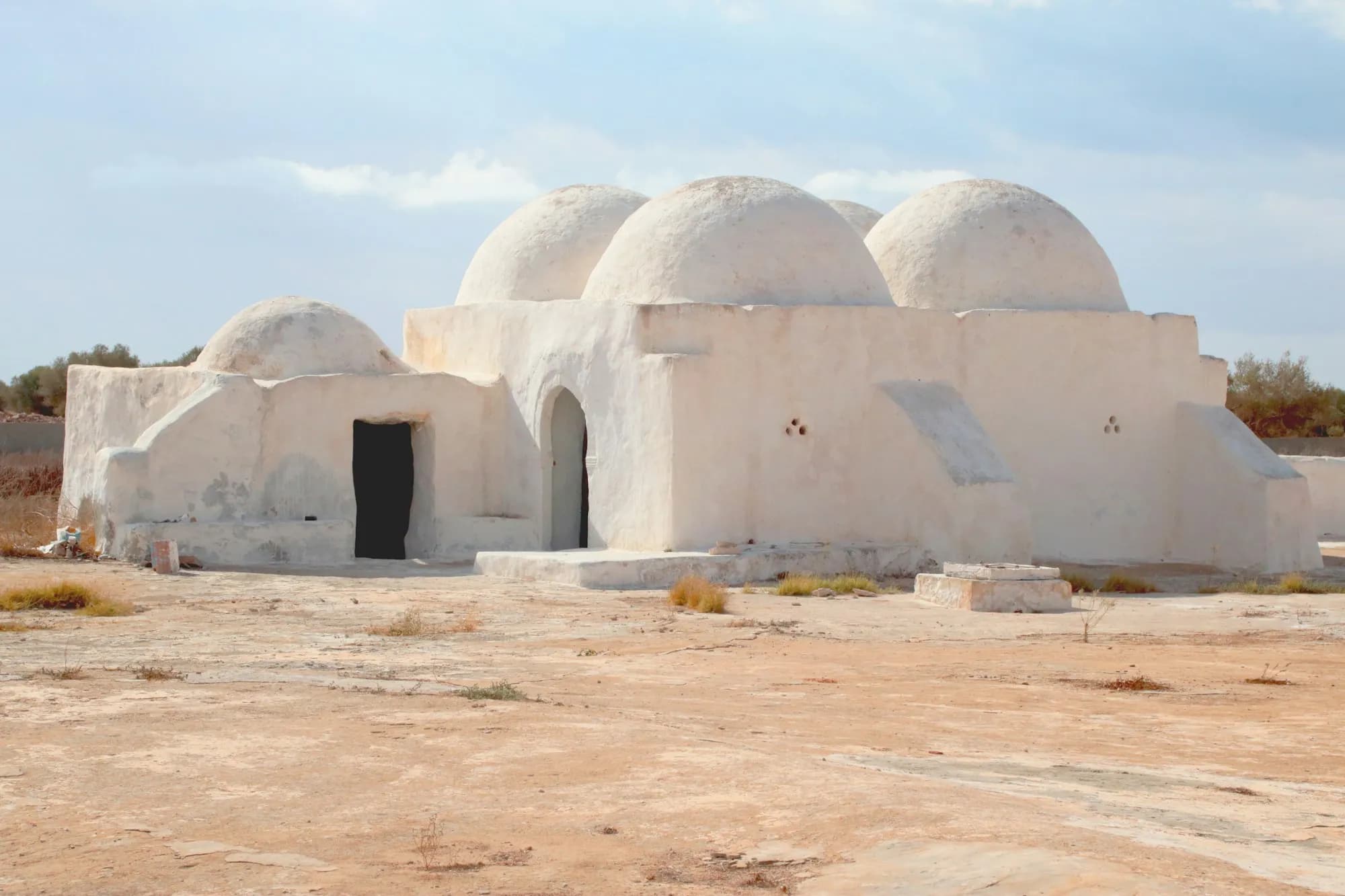
Djerba, off Tunisia's southern coast, combines sandy beaches and warm seas with whitewashed mosques, pottery villages, open-air street art and one of Africa's oldest synagogues. It's an easy, sunny base for exploring the Sahara.
Legend links Djerba with the island of the lotus-eaters in Homer's Odyssey, whose fruit made sailors forget their way home, and it's easy to see why. This flat, sun-drenched island in the Gulf of Gabès is ringed by beaches and dotted with olive groves, palms and menzels, traditional whitewashed family farmsteads. In 2023, UNESCO added Djerba to the World Heritage List for its distinctive pattern of island settlement.
Djerba has long been home to both Muslim and Jewish communities. The El Ghriba synagogue, near the village of Erriadh, is one of the oldest in Africa, the focus of an annual spring pilgrimage and an enduring symbol of the island's Jewish heritage. Many of Djerba's mosques are small, whitewashed and almost fortress-like, reflecting the island's Ibadi Muslim tradition and a long history of defending its coast.
Houmt Souk, the island's main town, has covered souks selling textiles, silver jewelry and spices, along with a seafront fortress. In Guellala, potters still shape local clay in their workshops, and in Erriadh the Djerbahood project has turned village walls into an open-air gallery of murals by Tunisian and international street artists.
The sandy northeast coast is the main resort area, with long beaches, water sports and thalassotherapy spas, while flamingos gather in the shallows of the Ras Rmel peninsula, better known as Flamingo Island. Djerba is also a gateway to the south: the underground homes of Matmata, the fortified granaries around Tataouine and the dunes of Douz are all within reach.
We'll balance beach days with cultural excursions and, if you like, a desert extension, as on our Tunisia Coast & Sahara journey. Djerba also pairs well with a few days in Tunis and Carthage.
El Ghriba synagogue
Visit one of Africa's oldest synagogues, richly decorated with blue tiles and a symbol of the island's Jewish heritage.
Djerbahood street art
Wander Erriadh's lanes, where murals by Tunisian and international artists cover the village walls.
Houmt Souk
Browse the covered markets for textiles, silver jewelry and spices, then walk out to the seafront fort.
Guellala pottery
Watch potters at work in a village long known for its clay, and take home a handmade piece.
Flamingo Island
Sail to the Ras Rmel peninsula to see flamingos and swim from a quiet stretch of sand.
Gateway to the Sahara
Continue to Matmata's underground homes, the ksour of Tataouine and the dunes around Douz.
Best months
Djerba enjoys a warm, dry climate with abundant sunshine. Spring, from April to June, and autumn, in September and October, are ideal, with warm days, pleasant sea temperatures from about late May, and comfortable conditions for sightseeing.
July and August are hot and busy with vacationers, perfect for pure beach time. Winter, from November to March, is mild and often sunny but too cool for most swimmers, which makes it a good season for culture and desert trips. Rain is scarce and falls mainly in autumn and winter.
Djerba–Zarzis International Airport (DJE), in the northwest of the island, has domestic flights from Tunis of about an hour, plus seasonal direct flights from several European cities.
The island is also linked to the mainland by an ancient causeway, El Kantara, in the southeast, and by a short car ferry between Ajim and Jorf. By road, Djerba is around six hours' drive from Tunis, and Matmata, Tataouine and Douz are all within a comfortable day's drive. On the island itself, taxis and private drivers make getting around easy, and the flat coastal roads are good for cycling.
Use our featured journeys as inspiration. We'll tailor the dates, hotels, activities, pace and budget around you.
8 daysCarthage, Roman Wonders, Oases & Djerba
Tell us how you like to travel and we’ll shape an itinerary — the pace, the places, the stays — around you. No payment to start planning.