 8 days
Tunisia Coast & Sahara
Carthage, Roman Wonders, Oases & Djerba
- Roman ruins, oases and a Sahara night
- Best Mar–May, Sep–Nov
From$2,500approx. ≈ £1,900approx. ≈ CA$3,450approx. ≈ A$3,800approx. ≈ €2,150per person sharing
North Africa
Carthage, Roman ruins, the Sahara and Djerba
Overview
Tunisia layers Carthaginian, Roman and Islamic history along a sunny Mediterranean coast. Explore the Tunis medina and Carthage, the amphitheater of El Djem, Saharan oases and the island of Djerba, all within easy reach.
Tunisia is North Africa's most compact surprise. In a country you can cross in a long day's drive, you'll find the ruins of Carthage, some of the finest Roman mosaics anywhere, whitewashed seaside villages, holy cities, and the dunes and oases of the Sahara. It's easy to reach from Europe, relaxed to travel, and it pairs deep history with long lunches by the sea.
Tunis is a capital of two faces: a UNESCO-listed medina of souks, mosques and palaces, and a French-era boulevard lined with cafés. The Bardo National Museum holds one of the world's great collections of Roman mosaics.
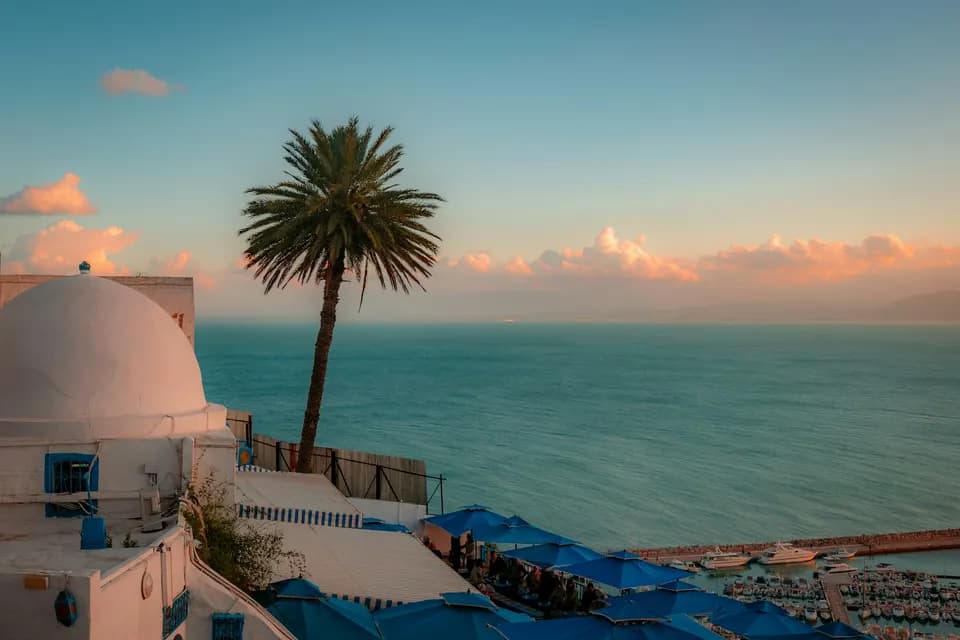
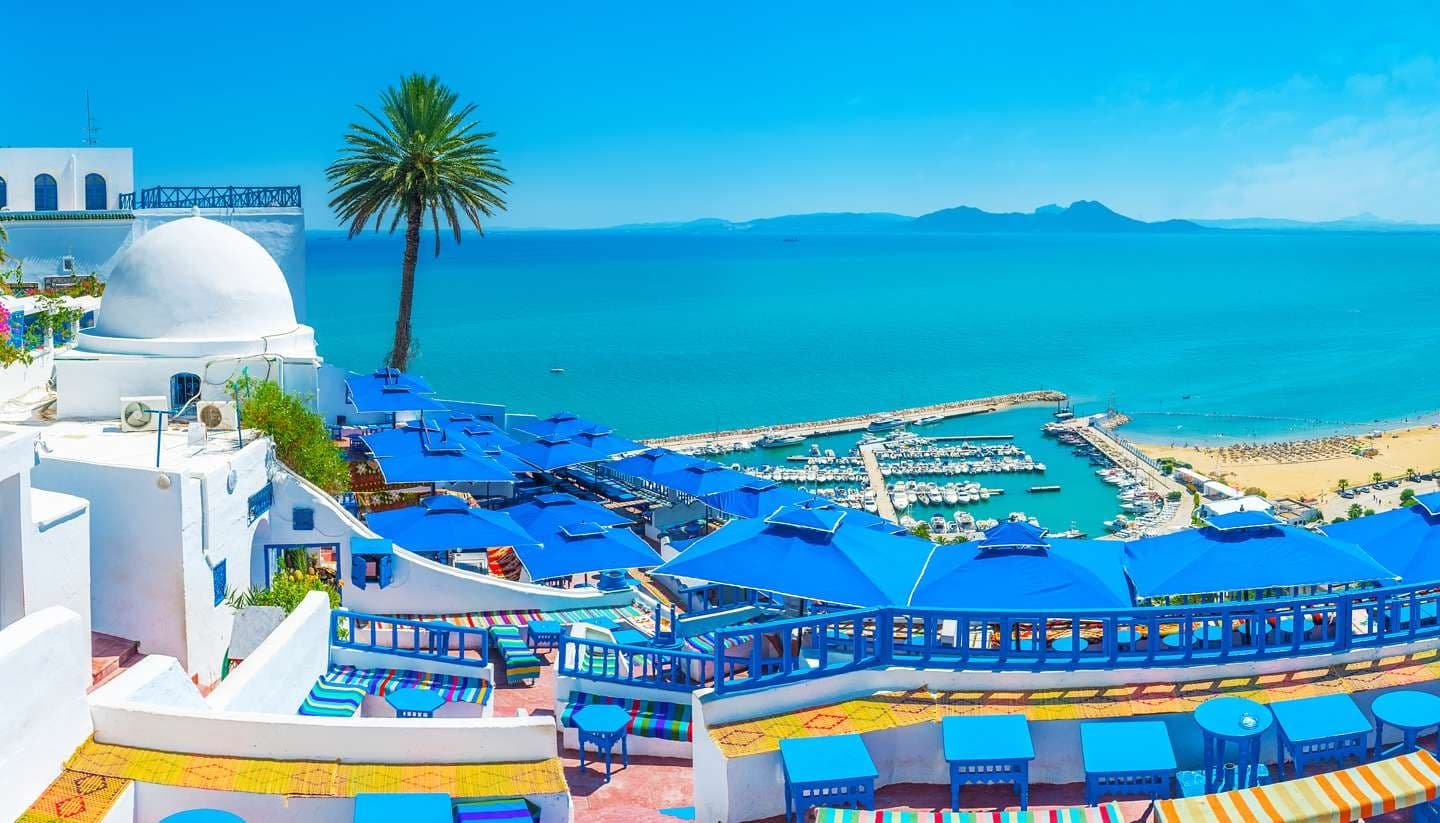
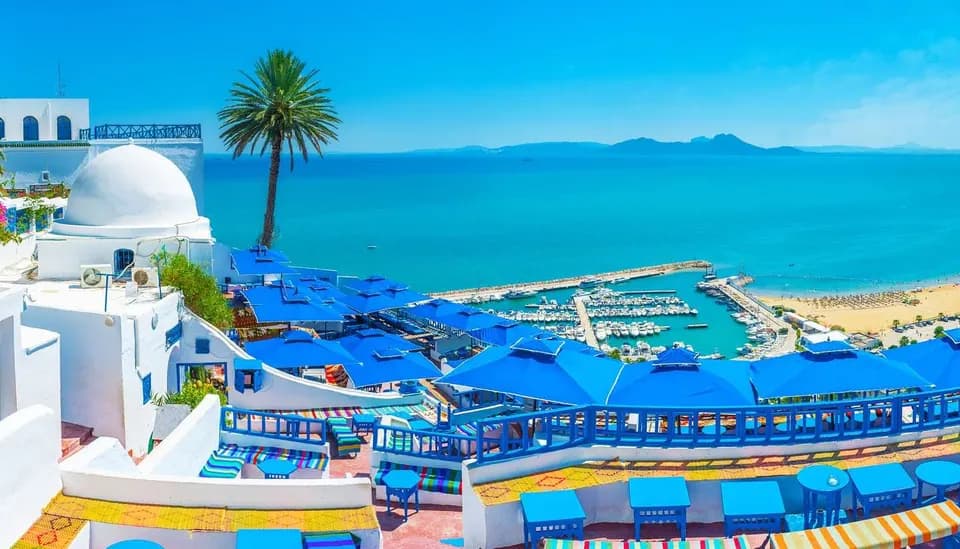
A short ride on the light railway brings you to the ruins of Carthage, once Rome's great rival, and to Sidi Bou Said, the blue-and-white village overlooking the Gulf of Tunis.
Tunisia has an extraordinary density of archaeological sites. El Djem's colossal amphitheater rises out of the olive groves, and the hilltop Roman town of Dougga, with its temples, theater and baths, is remarkably complete.
Kairouan, one of the earliest Islamic cities in North Africa, is home to the Great Mosque, whose courtyard visitors can usually see at set hours. Kairouan, El Djem, Dougga, Carthage and the medinas of Tunis and Sousse are all UNESCO World Heritage Sites.
In the south, the landscape turns to salt flats, palm oases and dunes. Tozeur and Nefta sit among date palms, Chott el Djerid shimmers with mirages, and Douz is the traditional gateway to the Sahara's Grand Erg Oriental. The underground homes of Matmata and the fortified granaries, or ksour, around Tataouine are unforgettable, and familiar to Star Wars fans.
Just offshore, Djerba blends beaches with a Jewish community of great antiquity, pottery villages and open-air street art.
Tunisia works well as a circuit, from Tunis and Carthage through the Roman and Islamic heartland and south to the desert and Djerba, or as a relaxed coastal stay with day trips. We arrange private drivers, expert local guides and a mix of boutique hotels in restored medina houses and seaside resorts. Our Tunisia Coast & Sahara journey is a flexible starting point for your own version.
Why visit Tunisia
Explore the remains of ancient Carthage, then wander the blue-and-white cliffside village for mint tea with sea views.
See one of the world's great collections of Roman mosaics, displayed in a former palace in Tunis.
Walk the arena and underground passages of a Roman amphitheater built for tens of thousands of spectators.
Visit one of the oldest Islamic cities in North Africa, known for its Great Mosque and its hand-knotted carpets.
Travel to Tozeur, Douz and the salt flats of Chott el Djerid, with a night among the dunes.
Relax on an island of beaches, whitewashed villages, pottery workshops and the historic El Ghriba synagogue.
Where to go
Island beaches, whitewashed villages and history
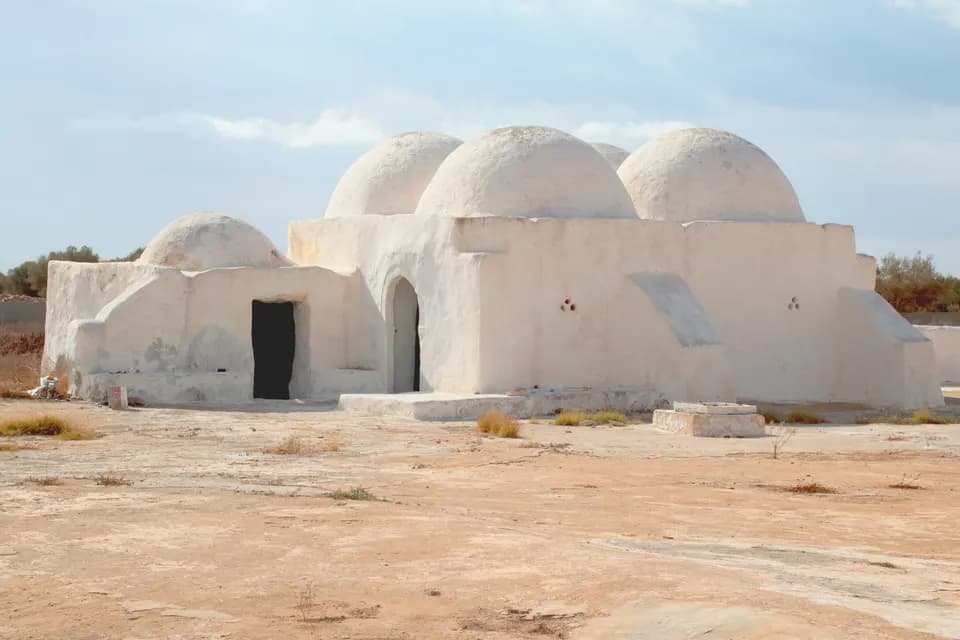
Djerba, off Tunisia's southern coast, combines sandy beaches and warm seas with whitewashed mosques, pottery villages, open-air street art and one of Africa's oldest synagogues. It's an easy, sunny base for exploring the Sahara.
Explore Djerba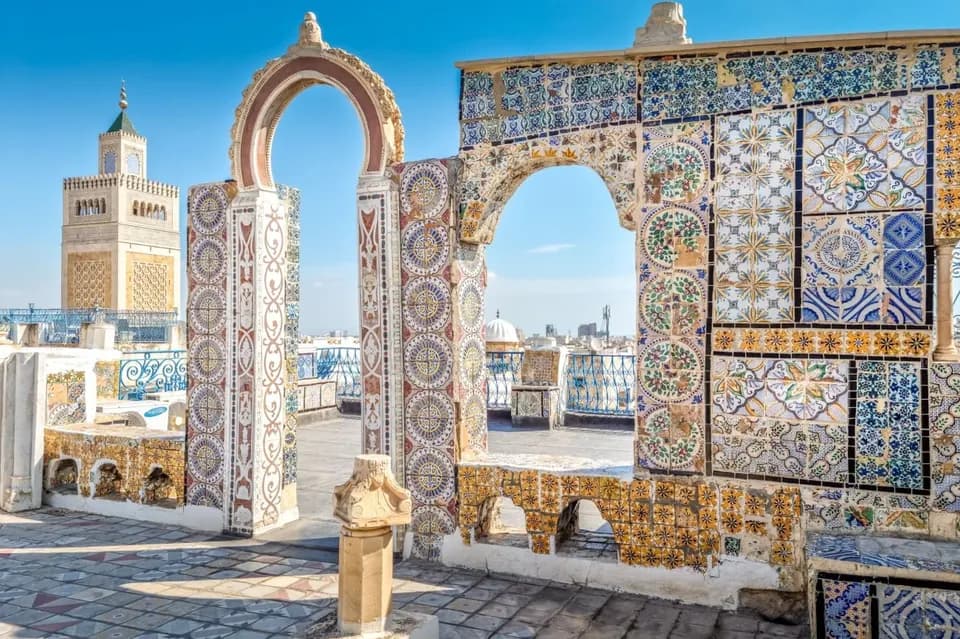
Medina, mosaics and Mediterranean suburbs
Tunis blends a UNESCO-listed medina, the superb Roman mosaics of the Bardo Museum and French-era boulevards with the seaside ruins of Carthage and the blue-and-white village of Sidi Bou Said, all linked by a short light-rail ride.
Explore TunisFeatured journeys
Use our featured journeys as inspiration. We'll tailor the dates, hotels, activities, pace and budget around you.
8 daysCarthage, Roman Wonders, Oases & Djerba
Plan your way
Tell us your dates, interests, travel style and budget. We’ll create an itinerary around you.
Free to start planning · No obligation · Tailored around you
When to go
Best months
Spring (March to May) and autumn (September to November) are ideal for combining Tunisia's cities, ruins and desert. Days are warm, the countryside is green in spring, and the sea is usually still inviting well into October.
Summer, from June to August, is beach season on the coast and in Djerba, with hot, dry weather and a lively holiday atmosphere. Inland and in the Sahara it's very hot, so desert trips are best kept short and built around early mornings and evenings.
Winter (December to February) is mild on the coast but cooler and sometimes rainy in the north, while the desert enjoys sunny days and cold nights, a fine time for the oases and dunes. Ramadan moves earlier each year; daytime rhythms slow down, and evenings come alive.
Travel information
Money. The Tunisian dinar generally isn't available before you arrive, so plan to change money at a bank or use an ATM on arrival, and keep your exchange receipts. Cards work in larger hotels and shops, but cash rules in the souks and small restaurants.
Tipping. Around 10 percent is appreciated in restaurants, and small tips are customary for guides, drivers and hotel staff.
Dress and etiquette. Dress is relaxed in resorts, but cover shoulders and knees in medinas, rural areas and religious sites. Non-Muslims can usually visit only certain mosques, often just the courtyard, at set hours.
Photography. Ask before photographing people, and avoid photographing police, military sites and government buildings.
Connectivity. 4G is good in cities and resort areas, and local SIM cards and eSIMs are easy to arrange.
Safety. Tourist areas are generally relaxed. Use common sense with valuables in busy medinas, and check your government's current travel advice, particularly for border regions.
For visas and health, see our entry requirements guidance and official sources.
Tell us how you want to travel. We’ll build the itinerary around your dates, interests and budget.