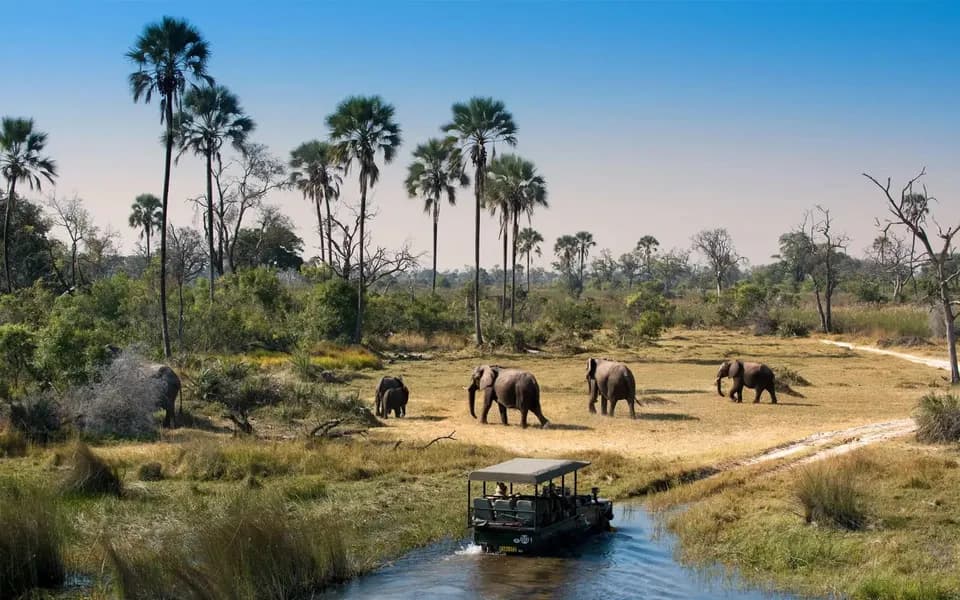
 9 days
Okavango & Victoria Falls
Falls, River & Delta
- Two fly-in camps in the Okavango Delta
- Best May–Oct
From$7,500approx. ≈ £5,650approx. ≈ CA$10,300approx. ≈ A$11,400approx. ≈ €6,450per person sharing
Southern Africa
Victoria Falls and wild river safaris
Overview
Zimbabwe is home to Victoria Falls, one of the great natural wonders of the world, and to famously well-trained safari guides. Add canoe and walking safaris in Mana Pools, elephant-rich Hwange, Lake Kariba and the ruins of Great Zimbabwe.
Zimbabwe is a country for travelers who want wild places and exceptional guiding. Its professional guiding qualification is widely regarded as one of the most demanding in Africa, and walking safaris are a specialty. Add the thundering spectacle of Victoria Falls, remote river wilderness along the Zambezi and a proud cultural heritage, and Zimbabwe richly rewards those who go.
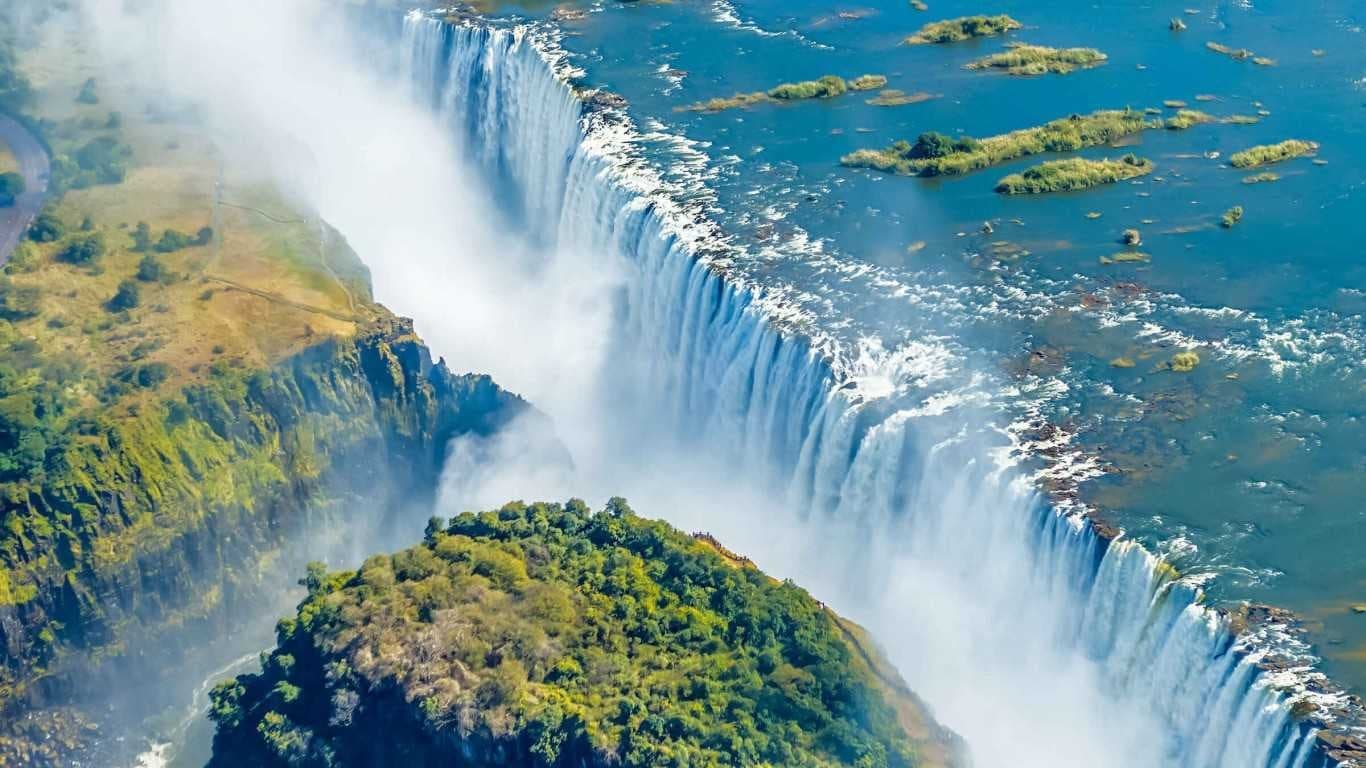
Victoria Falls, known locally as Mosi-oa-Tunya, "the smoke that thunders," is roughly 1.7 kilometers (just over a mile) wide. The Zimbabwean side offers most of the classic viewpoints, along a rainforest path that faces the main falls. From here you can take a helicopter flight, raft the Zambezi's rapids, cruise the upper river at sunset or cross into Zambia or Botswana for the day.
Hwange National Park, the largest in the country, is known for big elephant herds, as well as lions, African wild dogs and sable antelope. On the lower Zambezi, Mana Pools National Park, a UNESCO World Heritage Site, is a landscape of open floodplains and winterthorn woodland where you can walk with a guide among elephants or paddle a canoe past hippos.
Lake Kariba, a vast reservoir on the Zambezi, is made for houseboats, tiger fishing and sunsets behind the skeletal trees of its flooded valleys, with Matusadona National Park on its southern shore.
Great Zimbabwe, a monumental stone city built between the 11th and 15th centuries, gave the country its name and is a UNESCO World Heritage Site. The granite hills of Matobo National Park combine rock art, rhino tracking and deep spiritual significance, while the Eastern Highlands offer cool mountain air, waterfalls and forest trails.
Zimbabwe works well on its own or combined with its neighbors. Victoria Falls is a natural hub for Botswana's Chobe and Okavango regions, and our Okavango & Victoria Falls journey shows how they connect. Regular flights from Johannesburg also make the falls an easy two- or three-night extension to a South Africa trip. We'll recommend the best season for each park, handle the cross-border logistics and match you with guides and camps that suit your interests.
Why visit Zimbabwe
Walk the rainforest path facing the falls, where the spray drifts over you and rainbows arc above the gorge.
Explore the Zambezi floodplains on foot or by canoe with rigorously trained professional guides.
Watch large elephant herds gather at waterholes in the dry season in the country's largest national park.
Cruise at sunset past drowned trees, or stay aboard a houseboat on this vast lake on the Zambezi.
Walk among the towering dry-stone walls of the medieval city that gave the country its name.
Track rhinos on foot and discover ancient rock art among dramatic granite hills near Bulawayo.
Where to go
Featured journeys
Use our featured journeys as inspiration. We'll tailor the dates, hotels, activities, pace and budget around you.
9 daysFalls, River & Delta
Plan your way
Tell us your dates, interests, travel style and budget. We’ll create an itinerary around you.
Free to start planning · No obligation · Tailored around you
When to go
Best months
The dry season, from about May to October, is the best time for safaris. Vegetation thins, animals gather at water, and walking and canoeing conditions in Mana Pools are at their best, though by October the Zambezi Valley can be very hot. Some remote camps open only in the dry season.
Victoria Falls changes character through the year. After the rains, from about February to May, the falls are at their most thunderous, but the spray can hide the view and soak you on the path. From about August to December, water levels drop, views are clearer and white-water rafting is typically at its best, although parts of the falls can run thin by November.
The rainy season, roughly November to March, brings green landscapes, dramatic storms and superb birdlife, and rates are often lower.
Travel information
Money. US dollars are the most widely used currency for travelers, alongside the local Zimbabwe Gold (ZiG). Bring clean, recent US dollar notes in small denominations for tips and incidentals, since change can be scarce, and don't rely on ATMs. Cards are accepted at most hotels and lodges.
Tipping. Tips are customary for guides, trackers, drivers and camp staff, usually in US dollars, and we'll send current guidelines.
Dress. Neutral safari colors are ideal. Leave camouflage-print clothing at home: it's associated with the military, and civilians aren't permitted to wear it.
Photography. Ask before photographing people, and never photograph government buildings, police, military sites or official motorcades. Drones require permits.
Connectivity. Mobile coverage is good in Victoria Falls and the main towns but patchy in the parks. Power cuts happen, but hotels and lodges usually have backup power.
Safety. Keep valuables secure in towns, and always follow your guide's instructions around wildlife.
For visas and health, including crossings to Zambia or Botswana, see our entry requirements guidance and official sources.
Tell us how you want to travel. We’ll build the itinerary around your dates, interests and budget.